
CY-15A
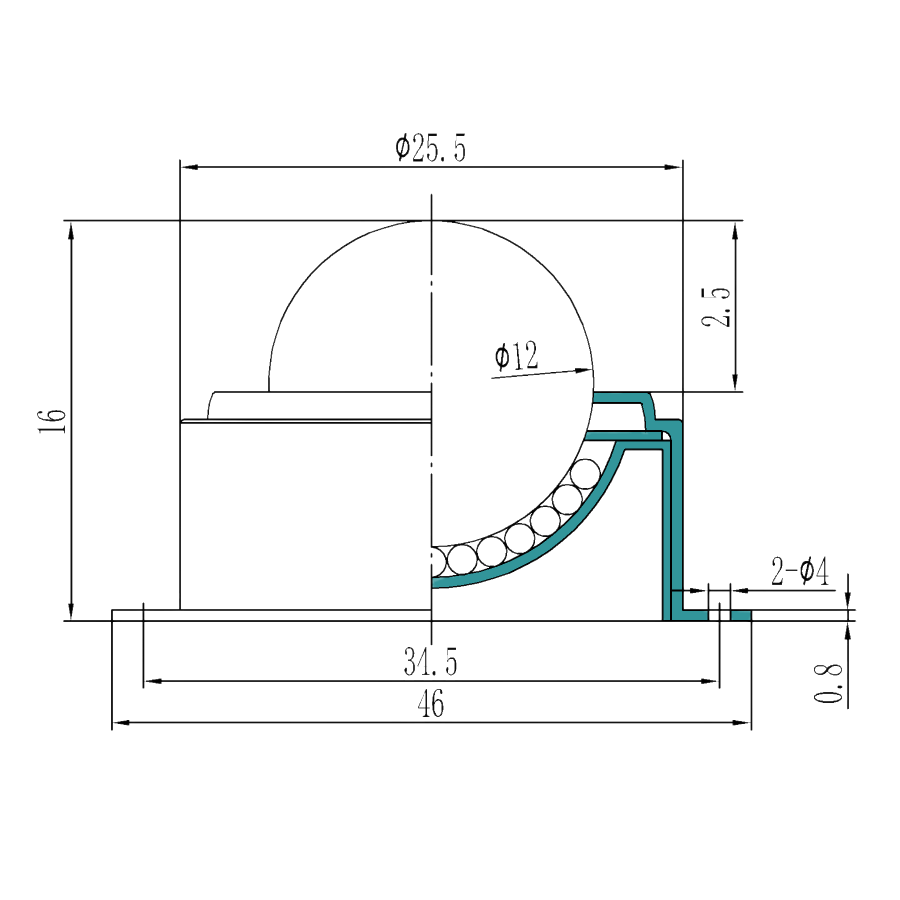
- Inner diameter:
- 15.875 mm
- Outer diameter:
- 50 mm
- Width:
- 21 mm
- Mass:
- 0.030 kg
We will provide you with the most suitable solution.
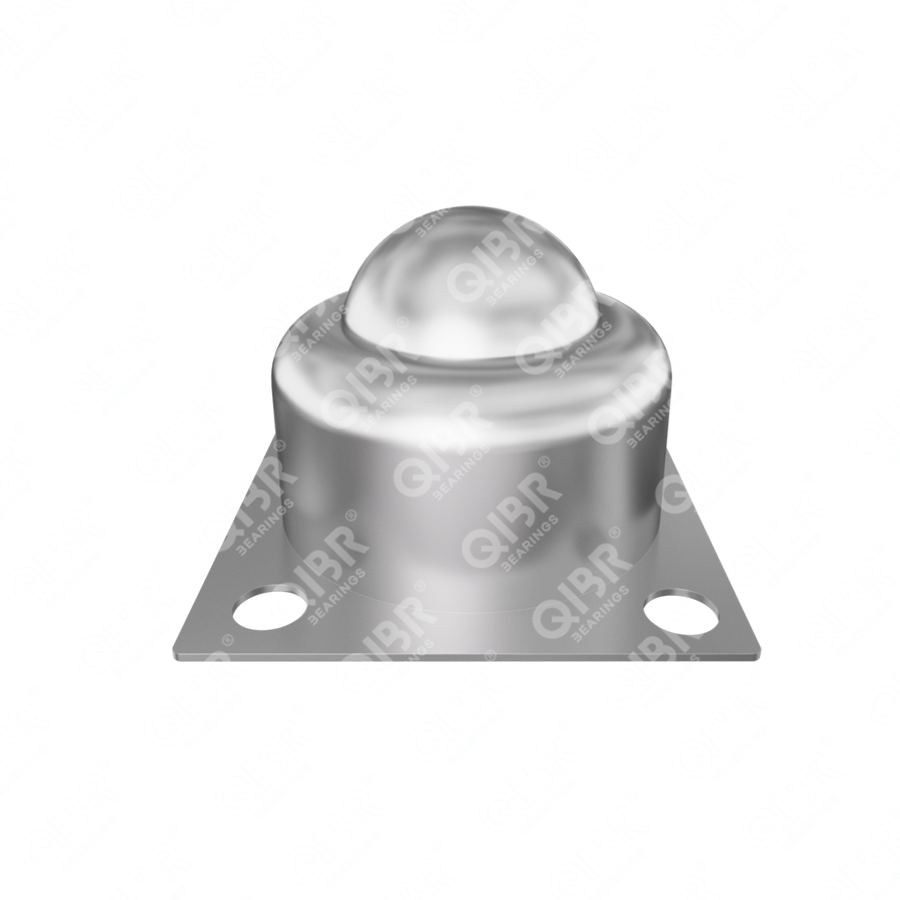
Image may differ from product. See technical specification for details.
Specifications
Seris - CY-15A
Description
QIBR - CY-15A Universal Ball Bearing Advantages and Applications
CY-15A Universal Ball Bearing, high load-bearing capacity, strong corrosion resistance, Loading capacity is 5 kg,Weight is 0.030 kg, suitable for excavators, surgical robots and wind turbines, etc., and is the most widely used bearing in working conditions with high load-bearing capacity requirements.
QIBR - CY-15A Universal Ball Bearing Characteristics
CY-15A Universal Ball Bearing, low friction, improved efficiency. CY-15A Universal Ball Bearing, can bear radial load and a little axial load at the same time, suitable for mechanical equipment with high efficiency requirements.
CY-15A Universal Ball Bearing Product Features and Advantages
Multi-Degree-of-Freedom Movement: The ball supports motion in various directions, allowing for free rotation across multiple axes.
High Precision and Stability: Spherical contact provides gap-free motion, enhancing transmission precision and stability.
Strong Angle Adjustment Capability: The bearing can handle significant angular deviations and can be adjusted as needed, making it adaptable to various working environments.
Low Vibration and Noise: The spherical contact surface reduces friction during movement, lowering operational noise and effectively cushioning against impacts and vibrations.
Application: Widely used in automotive, agricultural equipment, transmission systems, feeding systems, processing systems, mechanical manufacturing, and packaging machinery auxiliary equipment.
QIBR - CY-15A Universal Ball Bearing Optimization
Process Optimization:High-precision machining processes ensure the fit between the ball and the race, improving motion smoothness.
Housing Material: The housing material can be selected based on bearing operational requirements, such as zinc-plated carbon steel, stainless steel, reinforced nylon, etc.
Ball Material: The ball material can be chosen according to the bearing's working environment or customer requirements, such as carbon steel balls, zinc-plated carbon steel balls, bearing steel balls, etc.
Further Customization: QIBR can design and optimize bearings according to customer drawings and operational requirements.
QIBR - CY-15A Universal Ball Bearing Quality Control
Dimension measurement: Various professional high-precision instruments are used to measure the bearing’s dimensions, with an accuracy of up to 0.001mm.
Rotation accuracy: A dial gauge measures minor surface flaws or deviations, with measurement accuracy reaching 0.001mm.
Hardness measurement: The surface hardness of the bearing is measured using a hardness tester, with an accuracy of ±0.5HRC.
Metallographic analysis: A professional metallographic microscope is used to analyze the internal metallographic structure of the metal.
Axial Clearance: Special tools for measuring the axial clearance of universal bearings are used to determine the clearance.
Noise monitoring: A vibration meter monitors vibrations during operation, providing noise data.
Raw material control: Steel and parts are sourced from ISO 14001-certified suppliers, ensuring product stability while promoting sustainable development.
Features & Benefits
Universal ball is suitable for electronics, hardware, machinery, chemical industry, food, forest, mining, books, supermarkets, rubber and other industries. It is widely used in transmission systems, feeding systems, processing systems, processing machinery and packaging machinery auxiliary equipment.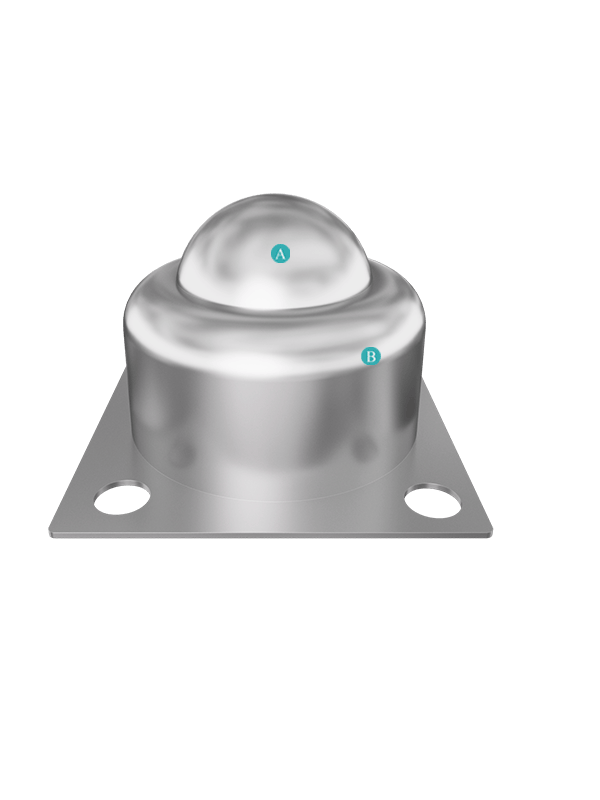
Downloads