
162.20.0450.890.11.1503
- Inner diameter:
- 336 mm
- Outer diameter:
- 536 mm
- Width:
- 62 mm
- Mass:
- 48 kg
We will provide you with the most suitable solution.
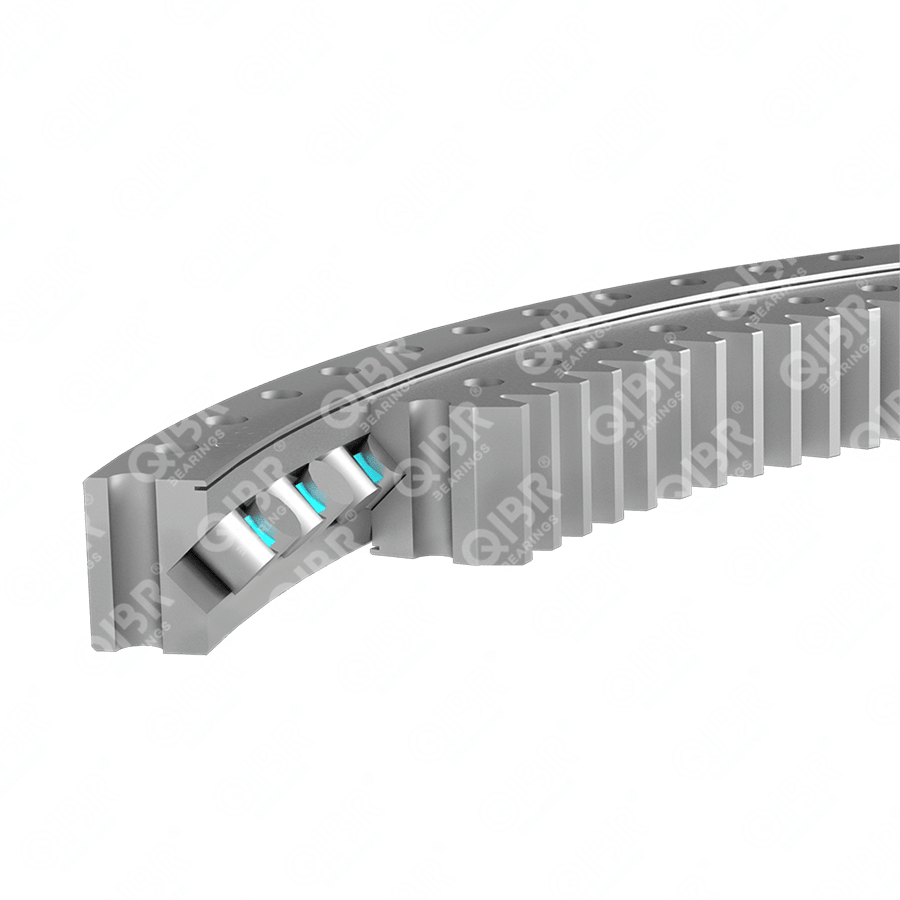
Image may differ from product. See technical specification for details.
Specifications
Seris - 162.20.0450.890.11.1503
Description
QIBR - 162.20.0450.890.11.1503 Slewing Bearing Advantages and Applications
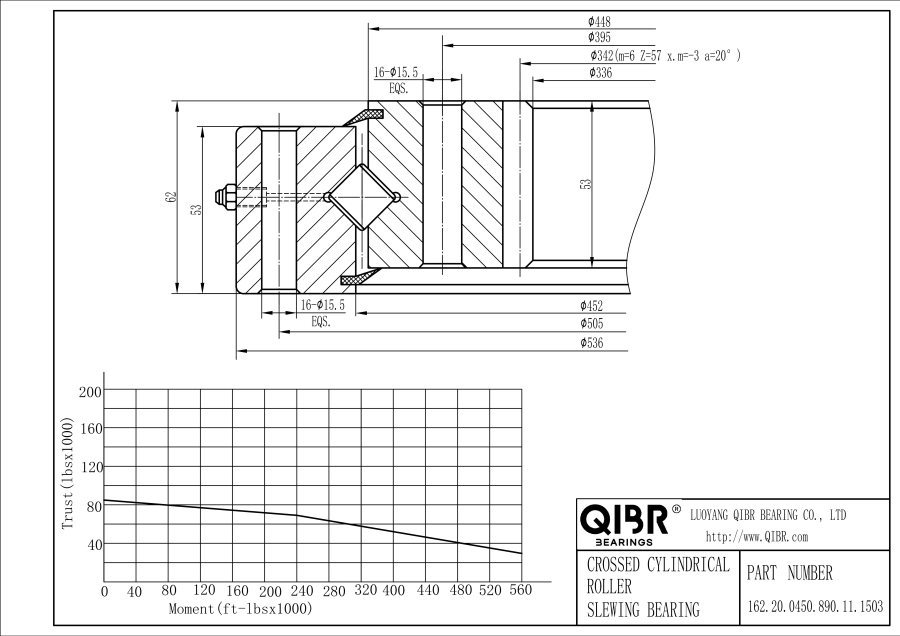
162.20.0450.890.11.1503 Slewing Bearing, with good rotation performance and high positioning accuracy, Inner diameter (Di) is 336 mm,Outer diameter (Da) is 536 mm,Overall height (H) is 62 mm,Weight is 48 kg, suitable for belt spreading machines, graders, tunneling machines and Ferris wheels, etc., and is the most widely used bearing in working conditions with high precision requirements.
QIBR - 162.20.0450.890.11.1503 Slewing Bearing Characteristics
162.20.0450.890.11.1503 Slewing Bearing, small wear, strong durability, long life. 162.20.0450.890.11.1503 Slewing Bearing, can bear the combined effects of radial load, axial load and overturning moment at the same time, suitable for mechanical equipment that needs to work under high load.
162.20.0450.890.11.1503 Slewing Bearing Features and Advantages
Compact design: Compact structure, it can be installed in space-constrained environments, and has a wider range of applications.
High load capacity: It can withstand axial, radial and overturning moments at the same time, suitable for heavy-duty applications.
Superior precision: Maintain high precision during use and reduce errors in equipment operation.
High temperature and wear resistance: Made of high-temperature bearing steel, with good wear resistance and strength.
Application: Widely used in lifting machinery, engineering machinery, transportation machinery, mining machinery, metallurgical machinery, medical equipment, ships, warships, radar, wind power generation and other fields.
QIBR - 162.20.0450.890.11.1503 Slewing Bearing Optimization
Grease replacement: Replace grease with other greases such as SFK, Mobil, Krupp, etc. to optimize the working performance and use conditions of the bearing.
Coating optimization: Provide other coatings such as zinc plating or nickel plating to enhance corrosion resistance and wear resistance and extend its service life in harsh environments.
Process optimization: Optimize the bearing production process, increase the bearing operating temperature range, and improve the bearing accuracy and stability.
More customization: QIBR can optimize the bearing structure design according to customers’ drawings or equipment requirements to meet equipment needs.
QIBR - 162.20.0450.890.11.1503 Slewing support bearing quality control
Dimension measurement: Use a variety of professional high-precision instruments to measure multiple dimensions of the bearing, with the highest accuracy up to 0.01mm.
Rotation accuracy: Use a dial indicator to measure small flaws or deviations on the bearing surface, with a measurement accuracy of up to 0.01mm.
Hardness measurement: Use a Leeb hardness tester to measure the bearing surface hardness, with a measurement accuracy of ±6HLD.
Metallographic analysis: Use a professional metallographic microscope to analyze the internal metallographic structure of the metal.
Geometric tolerance: Use a roundness meter to measure the bearing geometry and relative position.
Noise monitoring: Use a vibration meter to monitor the vibration during operation and obtain noise data.
Features & Benefits
The slewing bearing consists of five essential components: the inner ring, which rotates; the outer ring, which remains stationary; rolling elements that facilitate movement; spacers for even distribution; and seals that protect against contaminants and retain lubrication.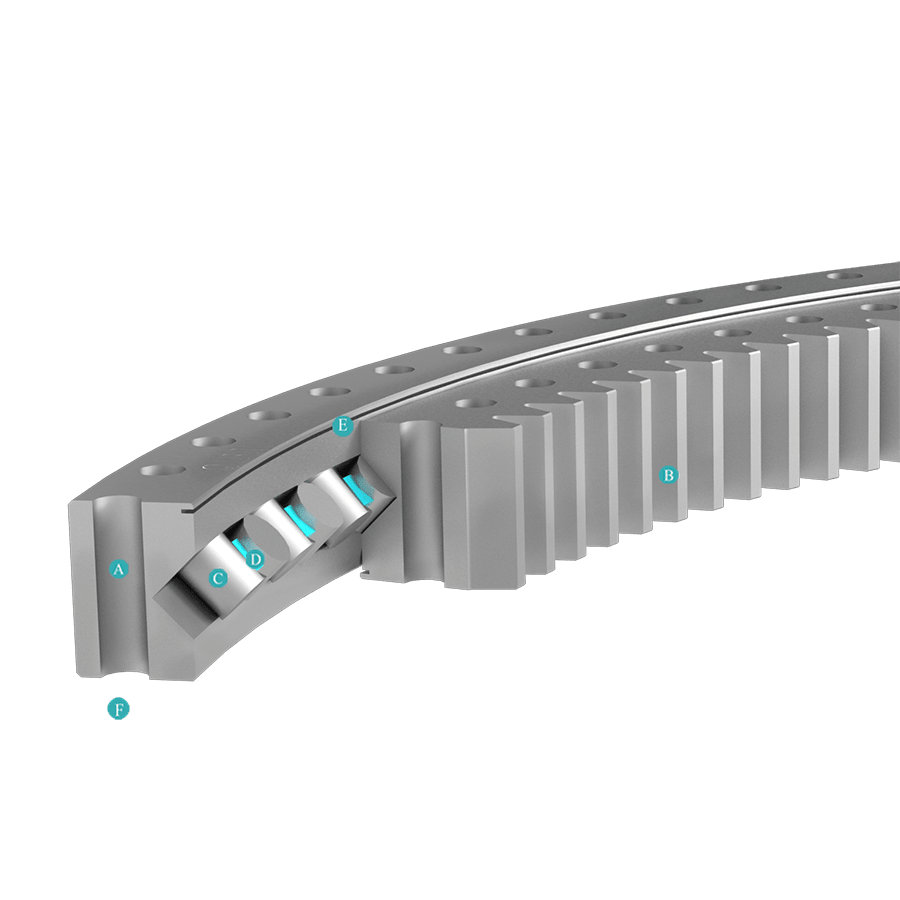
Downloads