
STO17
- Inner diameter:
- 17 mm
- Outer diameter:
- 40 mm
- Width:
- 15.8 mm
- Mass:
- 107 g
We will provide you with the most suitable solution.
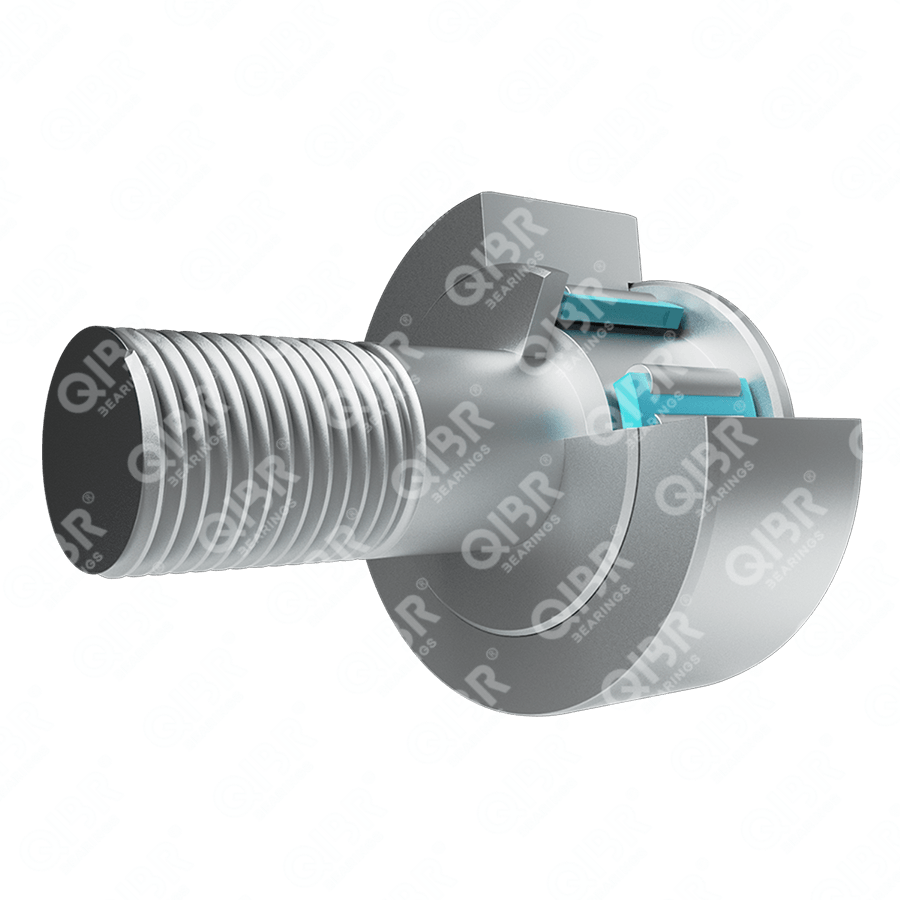
Image may differ from product. See technical specification for details.
Specifications
Seris - STO17
Description
QIBR - STO17 Track Rollers Advantages and Applications
STO17 Track Rollers, compact structure, high precision, low friction, Outer diameter (D) is 40 mm, {$Total length (B)$} is {$Total length (B)_value$}, Mass is 107 g, suitable for internal combustion engines, automatic machine tools and screen printing, etc., and is most widely used in working conditions with high precision requirements.
QIBR - STO17 Track Rollers Characteristics
STO17 Track Rollers, long life, improved efficiency. STO17 Track Rollers, can withstand radial load and axial load, suitable for mechanical equipment with high durability requirements.
STO17 Cam Followers Features and Advantages
High load capacity: The radial load capacity is particularly high, allowing it to withstand axial loads caused by misalignment or tilt.
Mitigation of Uneven Loads: The spherical outer ring bearings can alleviate uneven loads resulting from installation errors.
Wear Resistance and Low Friction: They reduce wear and sliding friction, thereby extending service life and improving operational efficiency.
Reduced Deformation and Stress: The thick outer ring minimizes deformation and bending stress under high loads, ensuring the stability and reliability of the bearing.
Application: Widely used in fields such as automation machinery, CNC machine tools, industrial robots, automotive industry, material handling equipment, construction machinery, and agricultural equipment.
QIBR - STO17 Cam Followers Optimization
High-Performance Materials: Bearing materials are replaced based on different working conditions, such as GCr15, 100Cr6, and bearing steel.
Surface Heat Treatment: Heat treatments, such as nitriding and carburizing, are used to enhance the surface hardness and wear resistance of the bearings.
Surface Coatings: Surface coatings are applied according to customer requirements, such as chrome plating, nickel plating, or PTFE coatings.
More customization: QIBR can design and optimize bearings based on customer drawings and operational requirements.
QIBR - STO17 Cam Followers quality control
Dimension measurement: Various high-precision instruments are used to measure multiple dimensions of the bearings, with maximum precision reaching 0.001mm.
Rotation accuracy: A micrometer is used to measure small defects or deviations on the bearing surface, achieving measurement precision of 0.001mm.
Hardness measurement: Hardness is measured using a hardness tester, with a precision of ±0.5HRC.
Metallographic analysis: A professional metallographic microscope is used to analyze the internal metallographic structure of the metal.
Geometric Tolerance: A profile projector is used to measure the geometric shape and relative position of the bearings.
Noise monitoring: Vibration meters monitor the vibration during operation to obtain noise data.
Raw material control: Steel and parts are purchased from suppliers certified by ISO 14001 to ensure product stability and promote sustainable development.
Features & Benefits
A cam follower, also known as a track follower, is a specialized type of roller or needle bearing designed to follow cam lobe profiles. Cam followers come in a vast array of different configurations, however the most defining characteristic is how the cam follower mounts to its mating part; stud style cam followers use a stud while the yoke style has a hole through the middle.
Downloads