Newsroom
Why Is Bearing Rigidity Important for Thin-Section Ball Bearings?
Thin-section ball bearings are widely used in robotics, semiconductor equipment, medical devices, optical systems, aerospace, and precision automation. Their lightweight design and compact cross-section make them an ideal solution for applications where installation space and weight are critical.
When selecting a thin-section ball bearing, engineers often focus on load capacity, rotational speed, and accuracy. However, another equally important factor is often overlooked—bearing rigidity.
Bearing rigidity directly affects positioning accuracy, system stability, vibration performance, and service life. Understanding its importance helps engineers select the right bearing for demanding precision applications.
What Is Bearing Rigidity?
Bearing rigidity refers to a bearing's ability to resist elastic deformation under external loads.
In simple terms, the higher the rigidity, the less the bearing deforms under the same operating conditions. Lower deformation helps maintain shaft alignment, rotational accuracy, and consistent motion throughout the machine's operating cycle.
For precision equipment, even a slight amount of deformation can negatively affect positioning accuracy and overall system performance. 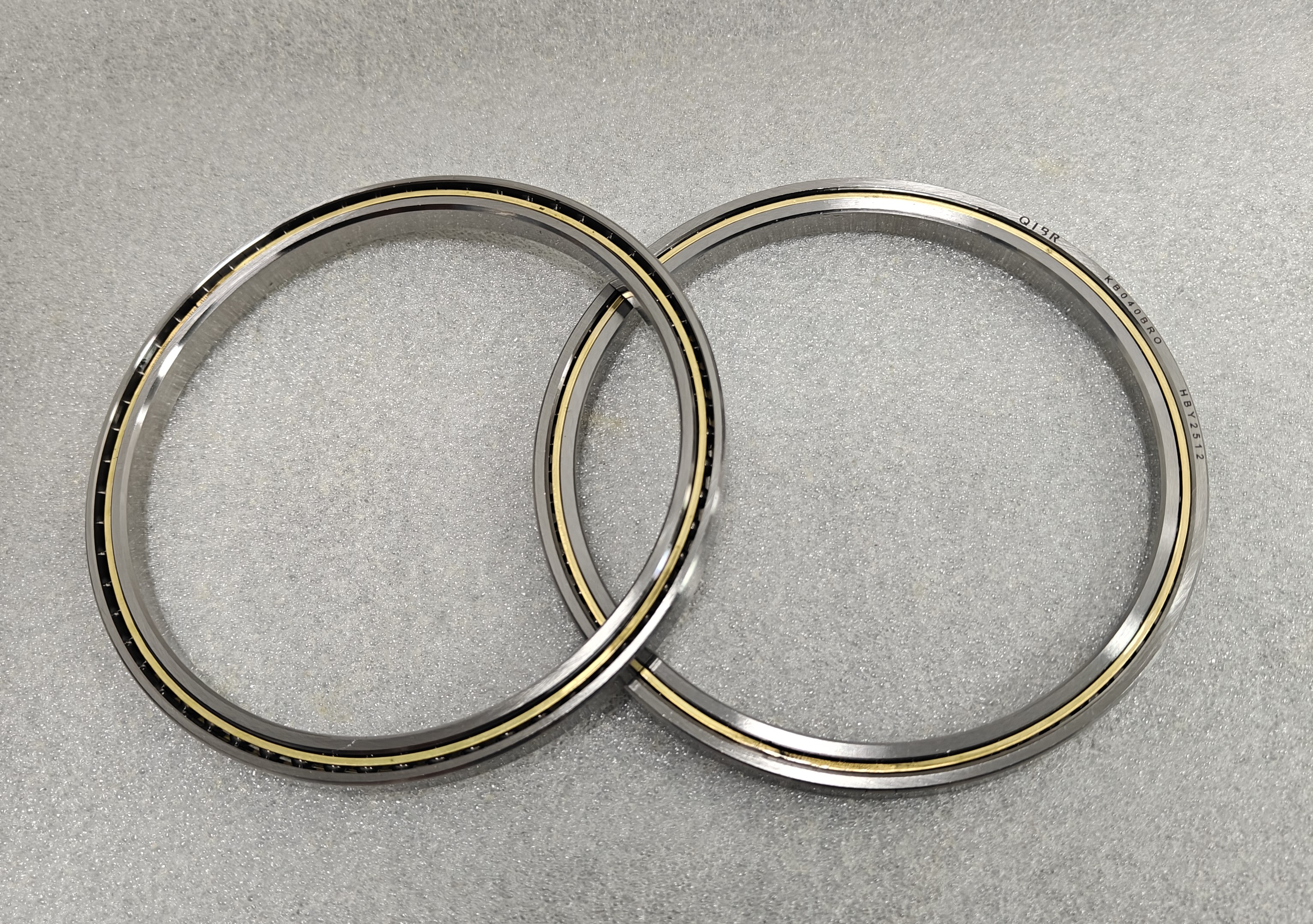
Why Is Bearing Rigidity Important?
Higher Positioning Accuracy
Precision equipment often performs repeated positioning tasks with extremely tight tolerances.
If a bearing lacks sufficient rigidity, elastic deformation may occur under load, causing slight shaft displacement and reducing positioning accuracy.
Higher bearing rigidity helps maintain stable positioning and improves repeatability.
Improved System Stability
Robots, precision machine tools, and semiconductor equipment frequently operate under dynamic loads.
A rigid bearing minimizes shaft deflection and vibration, allowing the entire system to operate more smoothly and reliably.
This contributes to improved machining quality, measurement accuracy, and long-term equipment stability.
Better Load Distribution
Bearings with appropriate rigidity distribute loads more evenly across the balls and raceways.
Uniform load distribution helps reduce localized stress, minimize wear, and extend bearing service life.
Enhanced Dynamic Performance
Modern automation equipment is designed for rapid acceleration, deceleration, and continuous motion.
Higher bearing rigidity helps reduce deformation during dynamic movements, resulting in:
- Faster response
- Improved motion control
- Better repeatability
- Lower vibration
These advantages are particularly valuable in high-speed precision applications.
Comparing Different Thin-Section Ball Bearing Types
Different thin-section ball bearing designs provide different levels of rigidity depending on their internal geometry and intended application.
Thin-Section Deep Groove Ball Bearings
Thin-section deep groove ball bearings are primarily designed to support radial loads while providing smooth, low-friction operation.
They are suitable for high-speed applications where moderate rigidity is sufficient.
Typical applications include electric motors, automation equipment, and precision instruments.
Thin-Section Angular Contact Ball Bearings
Thin-section angular contact ball bearings are designed to support combined radial and axial loads.
Their contact angle provides higher rigidity than deep groove ball bearings, making them ideal for robotic joints, precision positioning systems, medical equipment, and machine tools.
When positioning accuracy and structural stiffness are critical, angular contact bearings are often the preferred solution.
Thin-Section Four-Point Contact Ball Bearings
Thin-section four-point contact ball bearings can simultaneously support radial loads, axial loads in both directions, and moment loads.
Their unique raceway design makes them particularly suitable for rotary tables, robotic arms, radar systems, and other compact rotating mechanisms that require high structural stability. 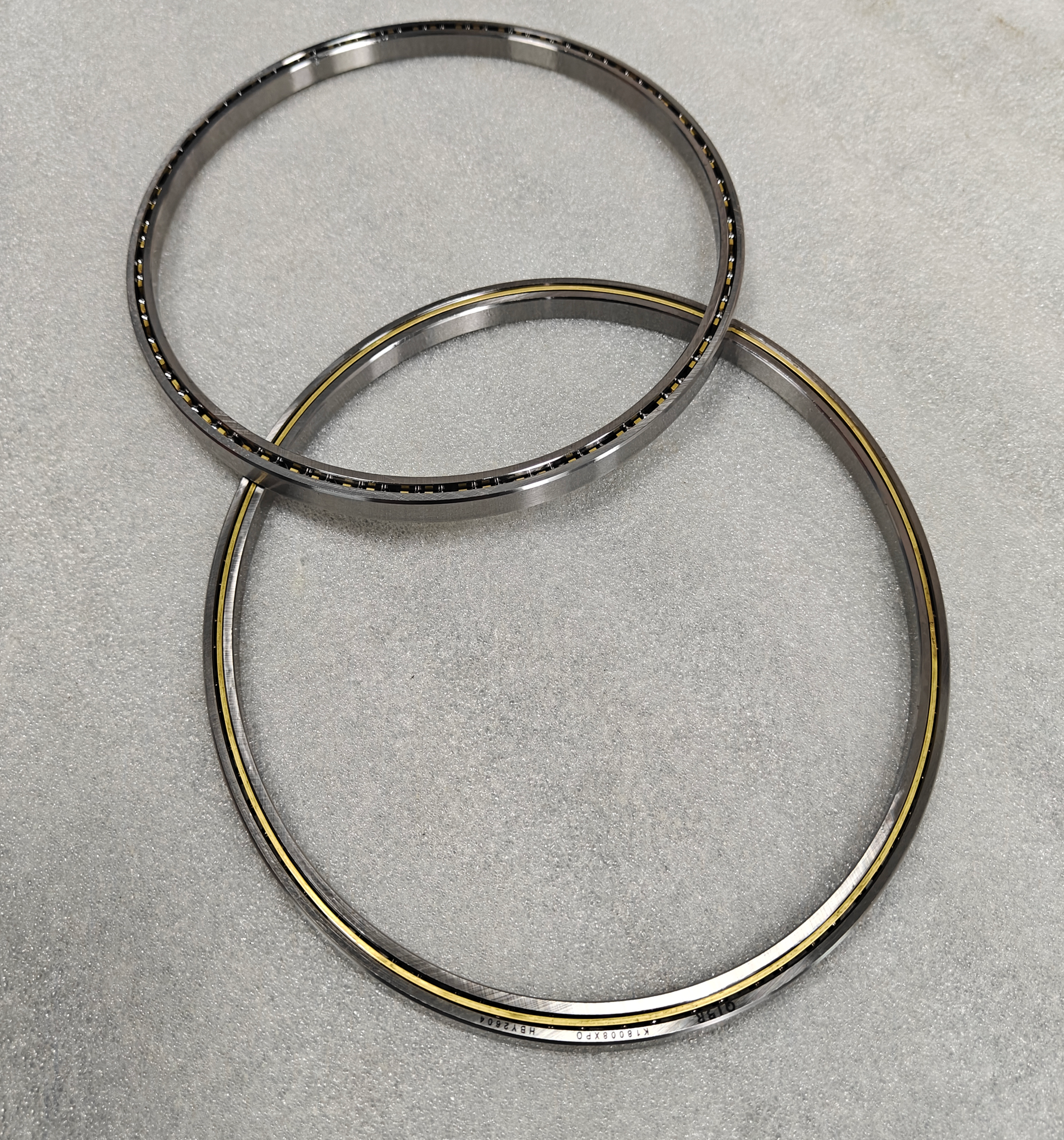
Factors That Influence Bearing Rigidity
Bearing rigidity is affected by several factors, including:
- Bearing internal design
- Contact angle
- Bearing size
- Applied preload
- Shaft and housing accuracy
- Mounting quality
- Operating load conditions
Considering these factors during the equipment design stage helps maximize bearing performance and system reliability.
Typical Applications Requiring High Rigidity
High-rigidity thin-section ball bearings are commonly used in:
- Industrial robots
- Collaborative robots
- Semiconductor manufacturing equipment
- Medical imaging systems
- Optical inspection equipment
- Precision rotary tables
- Automated assembly equipment
- Aerospace positioning systems
In these applications, rigidity is closely related to positioning accuracy, repeatability, vibration control, and overall equipment performance.
Conclusion
Bearing rigidity is one of the most important performance characteristics of thin-section ball bearings. It directly influences positioning accuracy, vibration levels, system stability, and bearing service life.
Whether selecting Thin-Section Deep Groove Ball Bearings, Thin-Section Angular Contact Ball Bearings, or Thin-Section Four-Point Contact Ball Bearings, engineers should carefully evaluate rigidity alongside load capacity, speed, and installation space.
Choosing the appropriate bearing design not only improves machine performance but also helps achieve the compact, lightweight, and high-precision solutions required by today's advanced industries.