Newsroom
Why Is Bearing Preload Important for Thin-Section Ball Bearings?
Thin-section ball bearings are widely used in robotics, medical devices, semiconductor equipment, optical systems, and precision automation. As these industries continue to demand higher accuracy, greater rigidity, and smoother motion, bearing preload has become an important consideration in bearing selection and system design.
Although preload is often associated with high-precision applications, many engineers underestimate its influence on bearing performance. Proper preload can improve rigidity, positioning accuracy, and running stability, while incorrect preload may lead to excessive friction, heat generation, and premature bearing failure.
What Is Bearing Preload?
Bearing preload is the application of a controlled internal load to a bearing during installation or assembly. This preload eliminates internal clearance between the rolling elements and raceways before the bearing begins operating.
The primary purpose of preload is to increase bearing stiffness and maintain stable contact between the balls and raceways under varying operating conditions.
For thin-section ball bearings used in precision equipment, preload is often essential for achieving consistent performance. 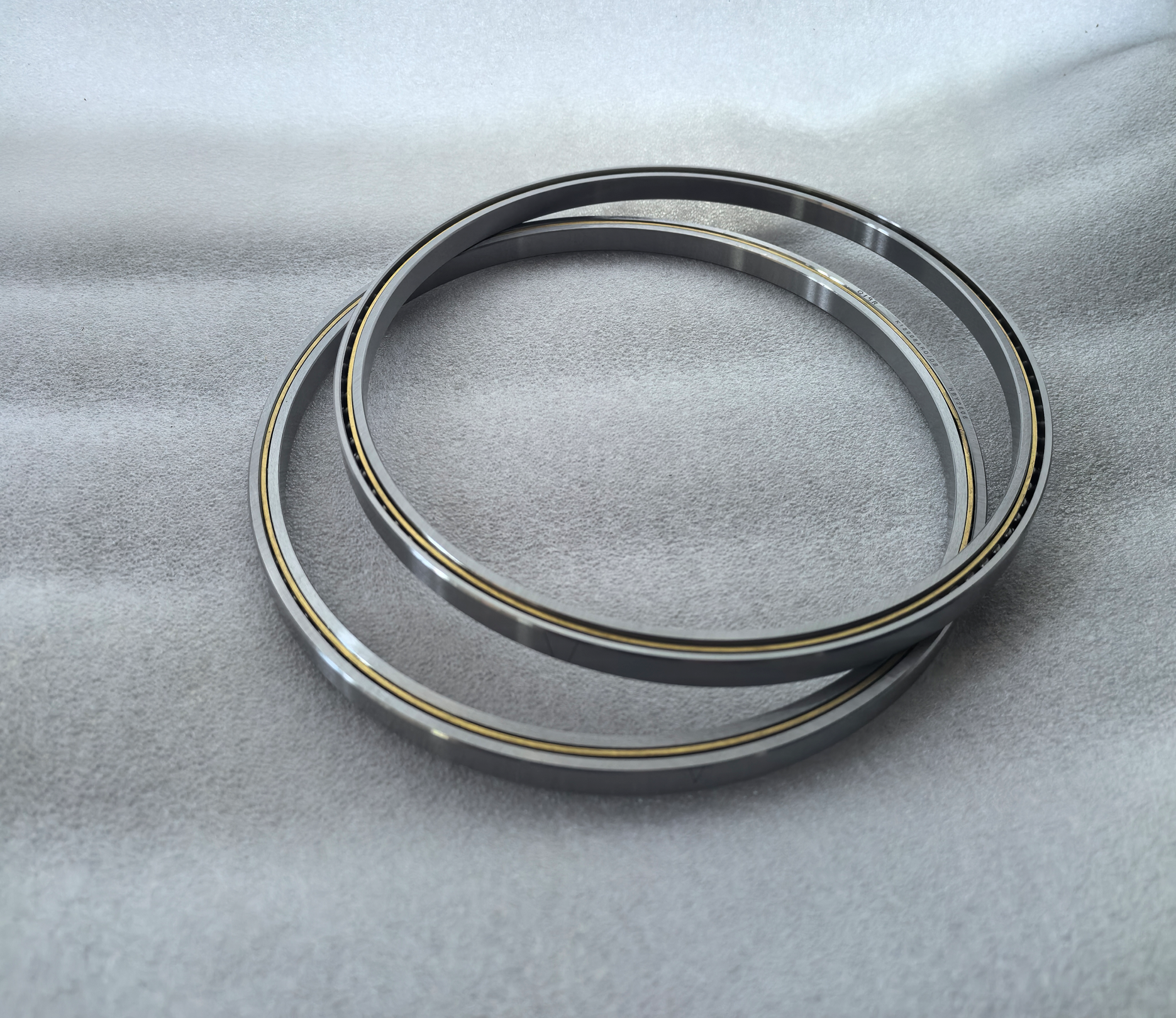
Why Is Bearing Preload Important?
Improved Bearing Rigidity
One of the primary benefits of preload is increased rigidity.
Without sufficient preload, small internal movements may occur when the bearing is subjected to external loads. These movements can reduce positioning accuracy and affect machine stability.
Proper preload minimizes elastic deformation and helps the bearing maintain a more rigid support structure.
Higher Positioning Accuracy
Precision positioning systems require accurate and repeatable motion.
Applying the correct preload reduces shaft displacement and internal movement, allowing the bearing to maintain higher positioning accuracy during continuous operation.
This is particularly important for robotic joints, semiconductor equipment, and optical positioning systems.
Reduced Vibration and Noise
Internal clearance may cause slight movement of the rolling elements during operation.
Proper preload keeps the balls in continuous contact with the raceways, reducing vibration and improving running smoothness.
As a result, equipment can achieve lower noise levels and more stable performance.
Better Dynamic Performance
Modern automation equipment frequently starts, stops, and changes direction.
A properly preloaded bearing responds more consistently to these dynamic operating conditions by reducing unwanted movement inside the bearing.
This helps improve motion control, repeatability, and overall machine performance.
The Risks of Excessive Preload
While preload offers many advantages, excessive preload can negatively affect bearing performance.
Too much preload may result in:
- Increased friction
- Higher operating temperature
- Reduced rotational speed
- Accelerated wear
- Shorter bearing service life
For this reason, preload should always be determined according to the application's load, speed, and operating conditions.
Which Thin-Section Ball Bearings Commonly Use Preload?
Thin-Section Deep Groove Ball Bearings
Thin-section deep groove ball bearings are primarily designed for radial loads and smooth, high-speed operation.
In most applications, they operate with normal internal clearance rather than intentional preload.
Thin-Section Angular Contact Ball Bearings
Thin-section angular contact ball bearings are the most common choice for preloaded arrangements.
Their contact angle allows them to support combined radial and axial loads while providing higher rigidity and positioning accuracy.
They are widely used in robotic joints, medical equipment, precision machine tools, and semiconductor manufacturing systems.
Thin-Section Four-Point Contact Ball Bearings
Thin-section four-point contact ball bearings can support radial loads, axial loads in both directions, and moment loads within a compact structure.
Depending on the equipment design, preload may also be applied to improve structural stability and positioning performance in precision rotary systems. 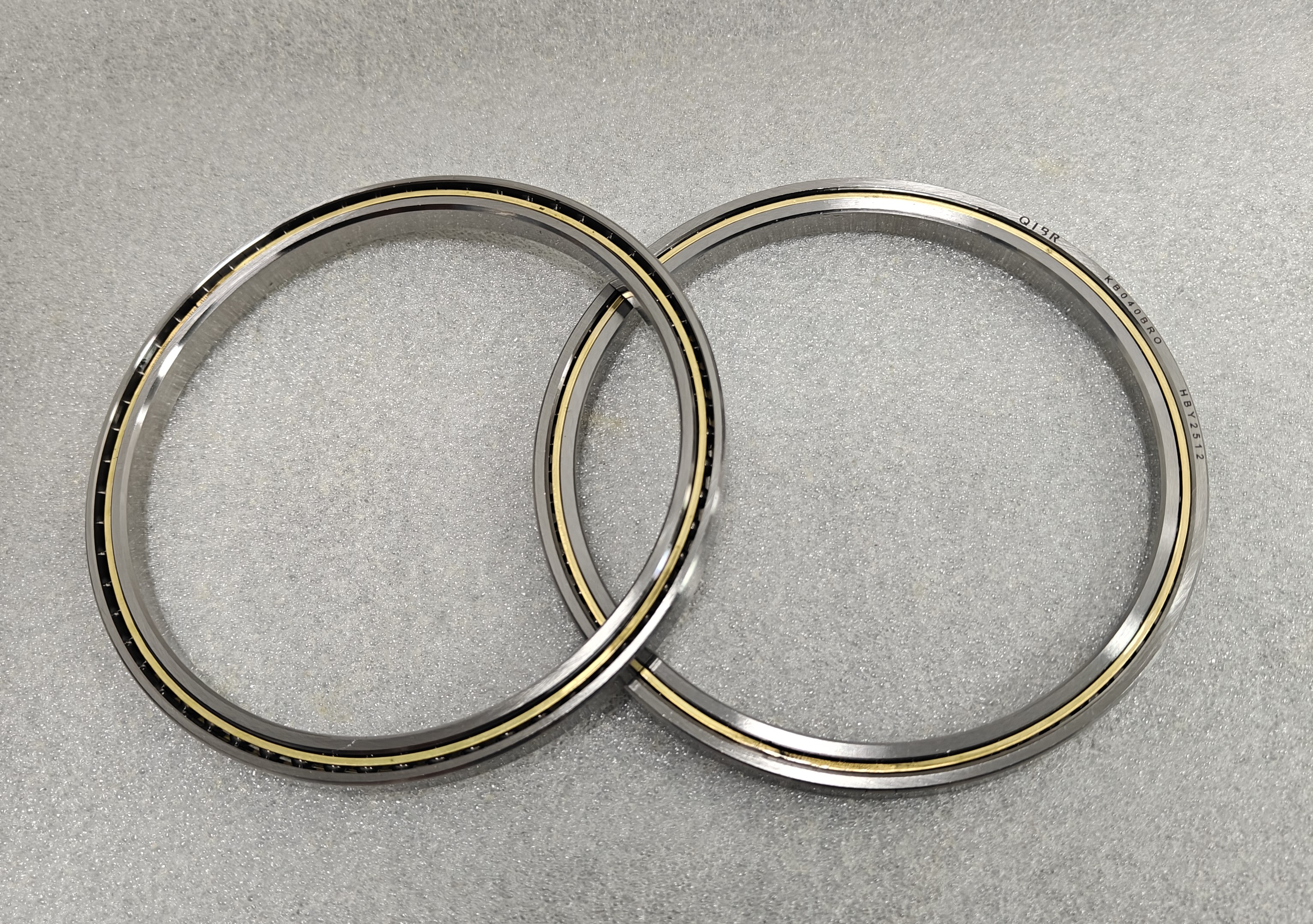
Factors to Consider When Selecting Preload
The appropriate preload depends on several factors, including:
- Bearing type
- Operating load
- Rotational speed
- Required positioning accuracy
- Shaft and housing rigidity
- Operating temperature
Selecting the correct preload requires balancing rigidity with rotational performance to ensure reliable long-term operation.
Typical Applications
Preloaded thin-section ball bearings are commonly used in:
- Industrial robots
- Collaborative robots
- Semiconductor equipment
- Medical imaging systems
- Precision rotary tables
- Optical inspection equipment
- Aerospace positioning systems
In these applications, preload contributes to higher rigidity, improved accuracy, and greater operational stability.
Conclusion
Bearing preload is a key factor in maximizing the performance of thin-section ball bearings. When properly applied, it enhances rigidity, positioning accuracy, vibration control, and dynamic performance.
Whether selecting Thin-Section Angular Contact Ball Bearings for high-precision positioning or Thin-Section Four-Point Contact Ball Bearings for compact rotary systems, engineers should carefully evaluate preload requirements alongside load, speed, and operating conditions.
A well-designed preload strategy not only improves bearing performance but also helps precision equipment achieve greater reliability and longer service life.