Newsroom
Why Does Bearing Weight Matter in Precision Equipment Design?
When engineers select bearings for precision equipment, they often focus on load capacity, accuracy, speed, and service life. However, another factor is becoming increasingly important in modern engineering design: bearing weight.
As industries move toward lighter, smaller, and more energy-efficient equipment, bearing weight can significantly influence system performance. This is especially true in robotics, medical devices, semiconductor equipment, aerospace systems, and other high-precision applications.
Weight Reduction Supports Compact Equipment Design
Modern equipment is constantly evolving toward miniaturization and lightweight construction.
In applications such as:
- Industrial robots
- Collaborative robots
- Medical devices
- Optical systems
- Semiconductor equipment
Every gram matters.
Reducing the weight of rotating components helps lower the overall system weight while providing engineers with greater design flexibility.
This is one of the key reasons why Thin-Section Bearings are increasingly used in advanced equipment. 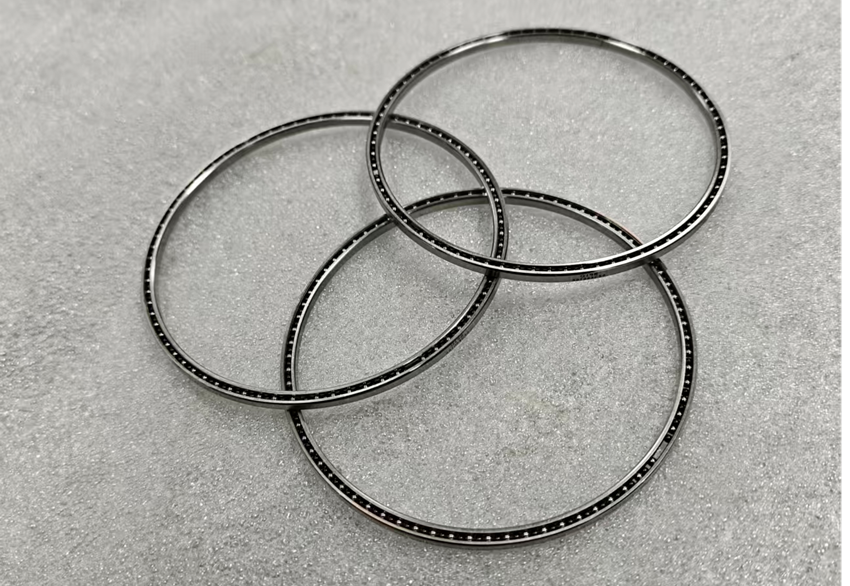
Lower Weight Means Lower Rotational Inertia
For moving systems, weight is not the only concern. Rotational inertia is often even more important.
Heavier rotating components require more energy to accelerate and decelerate. In contrast, lighter bearings can help:
- Improve acceleration performance
- Enhance dynamic response
- Reduce start-stop delays
- Increase operating efficiency
In robotic joints and precision positioning systems, reducing rotational inertia can significantly improve motion control performance.
Improved Positioning Accuracy
Precision equipment frequently performs rapid movements and repeated positioning operations.
When moving components are heavier, larger inertial forces are generated during acceleration and deceleration. These forces may contribute to:
- Increased vibration
- Reduced positioning accuracy
- Slower response times
- Greater mechanical stress
By reducing component weight, engineers can achieve smoother motion and more accurate positioning performance.
Increased Energy Efficiency
Energy efficiency has become a major design consideration across many industries.
Lighter rotating systems typically require:
- Lower driving torque
- Smaller motor output
- Reduced power consumption
For equipment operating continuously over long periods, these improvements can contribute to significant energy savings and lower operating costs. 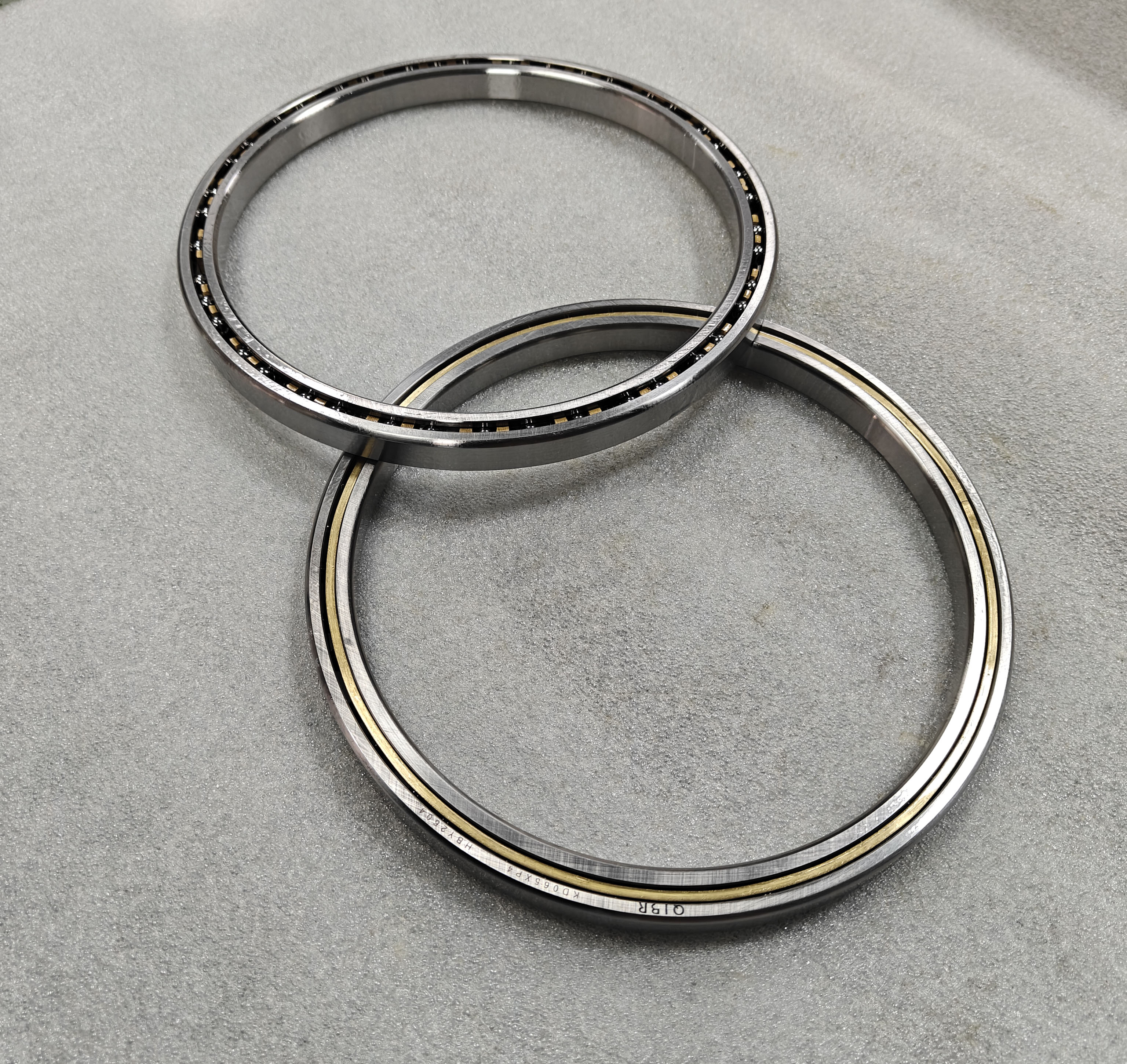
Why Thin-Section Bearings Are Ideal for Lightweight Designs
Thin-Section Bearings are specifically designed to provide excellent performance while minimizing size and weight.
Compared with conventional bearings, they offer:
- Reduced weight
- Smaller installation space
- Lower rotational inertia
- Greater design flexibility
These advantages make thin-section bearings particularly attractive for high-performance equipment.
Common types include:
Thin Section Deep Groove Ball Bearings
Suitable for high-speed applications with primarily radial loads.
Thin Section Angular Contact Ball Bearings
Designed for applications requiring higher rigidity and combined radial and axial load capacity.
Thin Section Four-Point Contact Ball Bearings
Ideal for supporting radial loads, axial loads, and moment loads within a compact structure.
Typical Applications
Lightweight bearing designs are widely used in:
- Industrial robots
- Collaborative robots
- Medical imaging equipment
- Semiconductor manufacturing systems
- Aerospace equipment
- Optical positioning systems
In these applications, reducing weight can directly improve efficiency, responsiveness, and overall system performance.
Conclusion
Bearing weight is no longer just a specification on a drawing—it has become an important factor in modern equipment design.
By reducing weight and rotational inertia, engineers can improve positioning accuracy, increase energy efficiency, and optimize overall machine performance.
As industries continue to pursue lightweight and compact solutions, thin-section bearings are expected to play an increasingly important role in next-generation precision equipment.