Newsroom
Why Do Thin Section Bearings Use a Constant Cross Section?
Thin-section bearings are widely used in robotics, medical equipment, semiconductor machinery, aerospace systems, and precision automation. Unlike conventional bearings, one of their most distinctive features is the constant cross section design.
Regardless of the bearing bore size, the cross-sectional dimensions remain the same. This unique design principle allows engineers to achieve lightweight, compact, and highly efficient mechanical systems without compromising performance.
But why is a constant cross section so important? The answer lies in both mechanical design and system optimization.
What Is a Constant Cross Section?
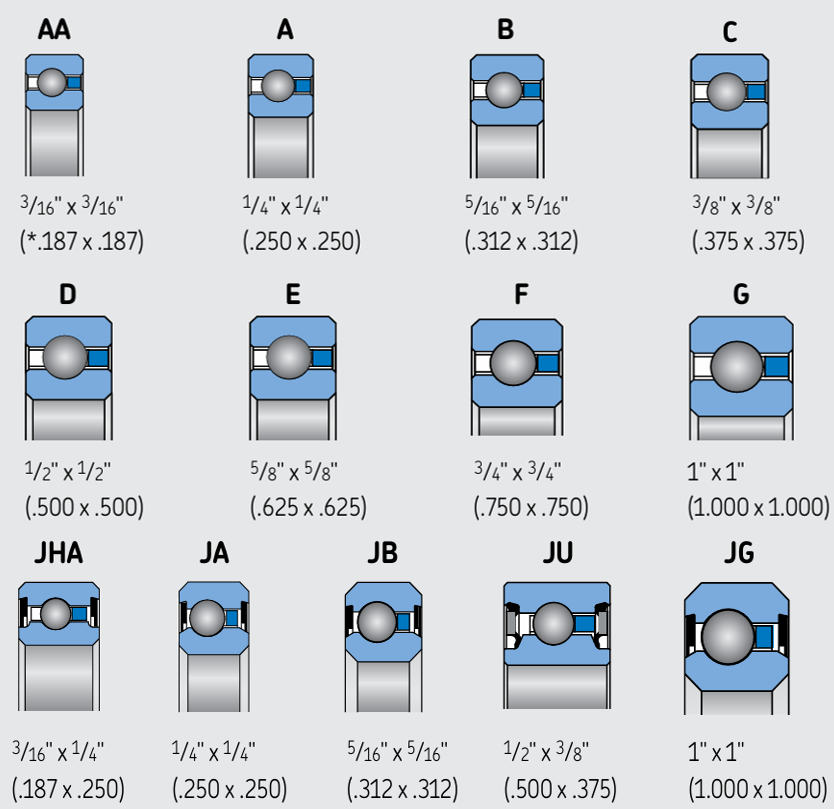
Unlike standard bearings, whose cross-sectional dimensions generally increase with bore size, thin-section bearings maintain the same cross-sectional height and width across an entire series.
This means that bearings with different bore diameters can share identical cross-sectional dimensions while only the inner and outer diameters change.
This design provides engineers with greater flexibility when designing equipment of different sizes.
Reduced Weight Without Sacrificing Performance
Weight reduction has become an important objective in modern machinery.
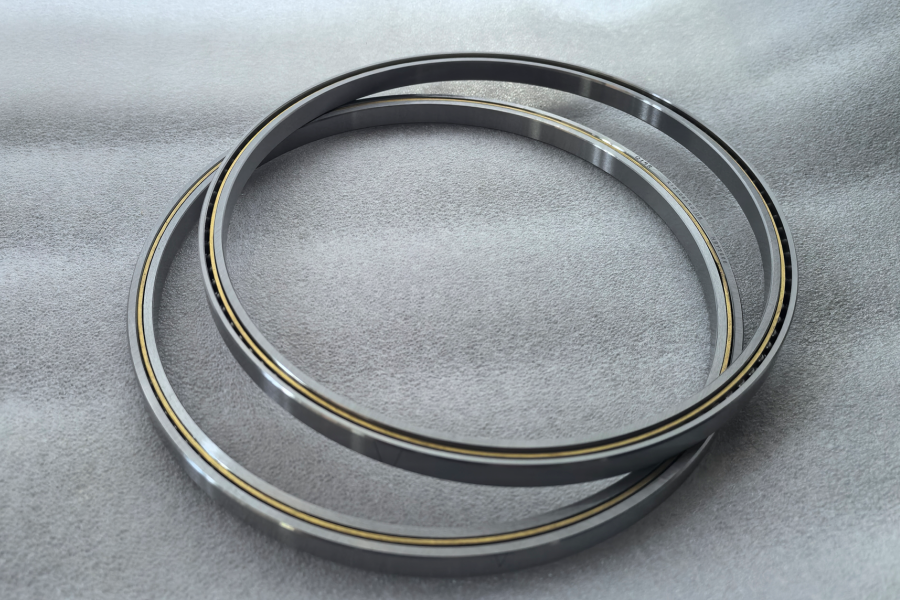
A constant cross section minimizes material usage while maintaining the bearing's load-carrying capability. Compared with conventional bearings of similar bore size, thin-section bearings are significantly lighter.
Lower bearing weight contributes to:
- Reduced overall machine weight
- Lower rotational inertia
- Faster acceleration and deceleration
- Improved energy efficiency
These advantages are particularly valuable in robots, medical devices, and aerospace applications.
More Compact Equipment Design
As equipment becomes smaller and more integrated, installation space becomes increasingly limited.
Because thin-section bearings occupy less radial space, engineers can design more compact systems while leaving additional room for motors, sensors, gears, or other critical components.
This makes thin-section bearings an excellent solution for:
- Industrial robots
- Collaborative robots
- Medical imaging equipment
- Semiconductor manufacturing equipment
- Optical inspection systems
Greater Design Flexibility
One of the biggest advantages of a constant cross section is design standardization.
Since different bore sizes share the same cross-sectional dimensions, engineers can modify shaft diameters without significantly changing the surrounding housing or assembly structure.
This simplifies:
- Product development
- Equipment upgrades
- Component standardization
- Inventory management
For manufacturers producing multiple machine sizes, this flexibility can reduce both design time and production costs.
Improved Dynamic Performance
Lighter rotating components generate lower inertia during motion.
This allows precision equipment to achieve:
- Faster response times
- Smoother motion
- Better positioning accuracy
- Reduced vibration
These characteristics are essential for high-speed automation systems and precision positioning equipment.
Different Thin-Section Bearing Types for Different Applications
Thin-section bearings are available in several designs to meet different operating requirements.
Thin Section Deep Groove Ball Bearings
Designed primarily for radial loads and high-speed operation, making them suitable for compact motors, automation equipment, and precision instruments.
Thin Section Angular Contact Ball Bearings
Designed to support combined radial and axial loads while providing higher rigidity, making them ideal for robotic joints and precision positioning systems.
Thin Section Four-Point Contact Ball Bearings
Capable of supporting radial loads, axial loads in both directions, and moment loads simultaneously, making them an excellent choice for rotary tables, robotics, and compact rotating assemblies.
Although their internal structures differ, all three bearing types benefit from the constant cross section concept, enabling compact and lightweight equipment designs.
Conclusion
The constant cross section is one of the defining characteristics of thin-section bearings and one of the primary reasons they are widely used in modern precision equipment.
By reducing weight, saving installation space, improving design flexibility, and supporting high-performance motion systems, thin-section bearings help engineers develop more compact, efficient, and reliable machines.
As industries continue to pursue lightweight and high-precision solutions, the constant cross section design will remain a key advantage of thin-section bearing technology.