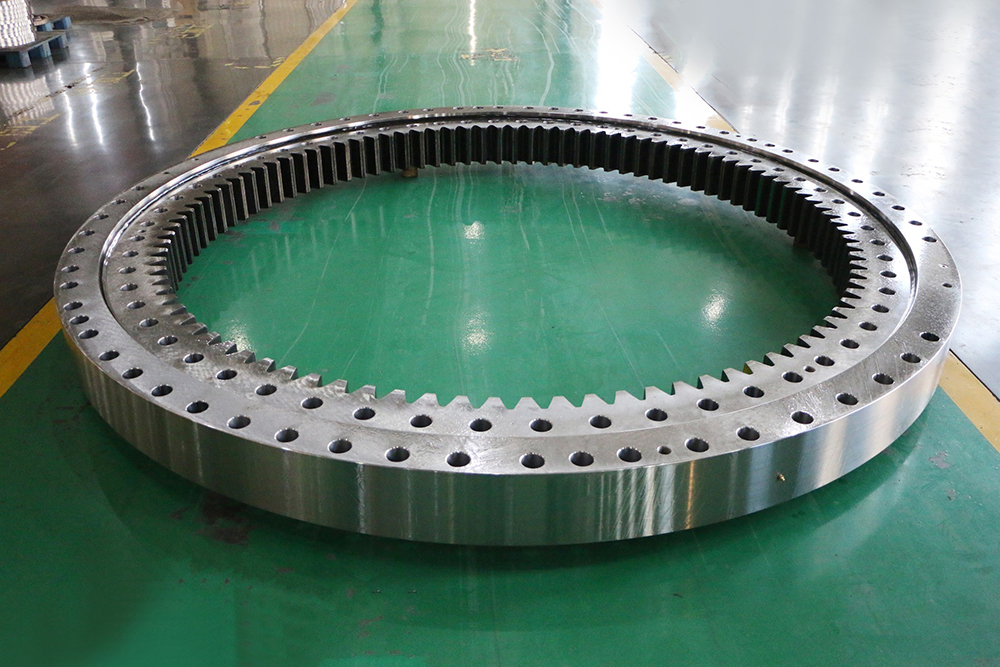
Thin-section ball bearings are widely used in robotics, medical equipment, semiconductor manufacturing, optical systems, and precision automation. Their compact size and lightweight design make them ideal for applications where space and weight are limited.
However, the performance of a thin-section ball bearing depends not only on its design and manufacturing quality. Proper installation is equally important. Because of their thin cross section, improper installation can cause deformation, misalignment, or uneven load distribution, directly affecting bearing performance and service life.
Why Is Installation So Important?
A bearing must maintain its designed internal geometry during operation. If excessive force, misalignment, or improper fits are introduced during installation, the raceways and rolling elements may no longer operate under their intended conditions.
This can result in:
-
Increased friction
-
Higher vibration and noise
-
Reduced rotational accuracy
-
Increased operating temperature
-
Premature wear
-
Shortened bearing service life
For precision equipment, even a small installation error can affect the performance of the entire system.
1. Proper Shaft and Housing Fits
The shaft and housing should be manufactured according to the recommended dimensional and geometric tolerances.
An excessively tight fit may deform the bearing rings and increase internal stress. An excessively loose fit may allow unwanted movement between the bearing and mounting components.
For thin-section ball bearings, maintaining appropriate fits is especially important because of their relatively small cross section.
2. Maintain Proper Alignment
The shaft and housing should be accurately aligned before installation.
Misalignment can create uneven loading across the balls and raceways, increasing friction and vibration.
In applications such as robotic joints, precision rotary tables, and optical equipment, accurate alignment is particularly important for maintaining positioning accuracy.
3. Avoid Excessive Installation Force
Installation force should be applied carefully and appropriately.
Never apply installation force through the rolling elements. Excessive or improperly directed force can damage the raceways or rolling elements.
Using suitable installation tools and applying force to the correct bearing ring helps protect the bearing during assembly. 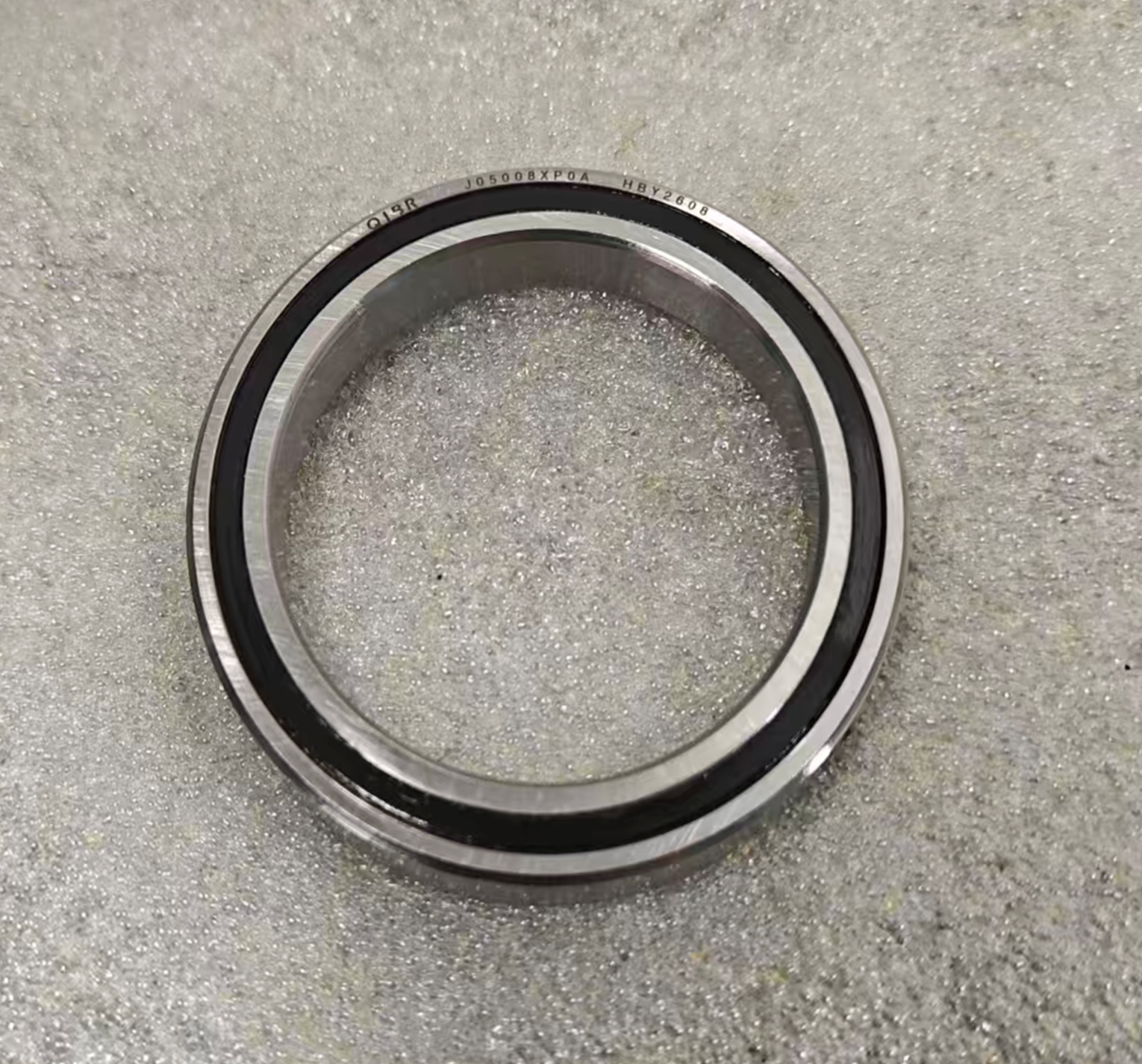
4. Keep the Bearing and Mounting Surfaces Clean
Contamination is another common cause of bearing problems.
Dust, metal particles, moisture, and other contaminants can enter the bearing or remain on the shaft and housing surfaces during installation.
Before assembly, the bearing, shaft, housing, and surrounding components should be clean and free from burrs or foreign particles.
5. Consider Preload and Internal Clearance
For applications using Thin-Section Angular Contact Ball Bearings (Type A), preload may be an important part of the bearing system.
Incorrect preload can increase friction and temperature or reduce rigidity and positioning accuracy.
The preload or internal clearance should therefore be determined according to the application requirements rather than adjusted arbitrarily during installation.
6. Pay Attention to Lubrication
Proper lubrication is essential for reducing friction and wear.
The type and quantity of lubricant should be selected according to the bearing speed, temperature, load, and operating environment.
Too little lubricant can result in insufficient lubrication, while excessive grease can increase friction and operating temperature.
Installation Considerations for Different Types
Thin-Section Deep Groove Ball Bearings (Type C)
Type C bearings are commonly used for radial loads and high-speed applications.
During installation, accurate fits, alignment, and proper lubrication are important for maintaining smooth, low-friction rotation.
Thin-Section Angular Contact Ball Bearings (Type A)
Type A bearings are often used in applications requiring higher rigidity and positioning accuracy.
Installation accuracy and preload control are particularly important to achieve the desired performance.
Thin-Section Four-Point Contact Ball Bearings (Type X)
Type X bearings can support radial loads, axial loads in both directions, and moment loads.
Accurate mounting and alignment help ensure proper load distribution and stable operation, especially in compact rotary mechanisms.
A Simple Installation Checklist
Before operating a thin-section ball bearing, engineers should check:
-
Shaft and housing dimensions
-
Fit and alignment
-
Mounting surface condition
-
Bearing cleanliness
-
Installation force and tools
-
Lubrication
-
Preload or internal clearance
-
Operating conditions
Taking these steps during assembly can prevent many problems before the equipment starts operating.
Conclusion
For thin-section ball bearings, proper installation is just as important as bearing selection and manufacturing quality.
Accurate fits, proper alignment, controlled installation force, clean mounting surfaces, appropriate lubrication, and correct preload all contribute to stable bearing performance and longer service life.
Whether using Thin-Section Deep Groove Ball Bearings (Type C), Thin-Section Angular Contact Ball Bearings (Type A), or Thin-Section Four-Point Contact Ball Bearings (Type X), careful installation helps ensure that the bearing can deliver the accuracy, reliability, and performance expected from the design.