Newsroom
Why Are Spherical Roller Bearings Used in Ball Mills?
Ball mills operate under demanding conditions. They handle heavy loads, continuous rotation, vibration, and sometimes shaft or housing misalignment. For these applications, Spherical Roller Bearings are often selected because they can provide high load-carrying capacity and accommodate misalignment.
So, why are Spherical Roller Bearings commonly used in ball mills?
1. They Can Handle Heavy Radial Loads
A ball mill can be extremely heavy, especially when it is filled with grinding media and material. The bearing supporting the mill shaft must therefore withstand substantial radial loads.
Spherical Roller Bearings use two rows of rollers, allowing them to carry significantly higher radial loads than many standard ball bearings of similar size. This makes them suitable for heavy-duty equipment such as ball mills.
2. They Can Accommodate Shaft Misalignment
During operation, the mill shaft may experience slight deflection or misalignment due to heavy loading, thermal expansion, foundation deformation, or installation conditions.
The spherical raceway of a Spherical Roller Bearing allows the inner ring and rollers to adjust relative to the outer ring. This self-aligning capability helps the bearing maintain proper contact even when small alignment errors occur.
3. They Are Suitable for Continuous Operation
Ball mills often operate for long periods, sometimes continuously in mining and mineral processing plants. Bearing reliability is therefore extremely important.
With appropriate bearing selection, lubrication, installation, and maintenance, Spherical Roller Bearings can provide reliable performance under continuous heavy-duty operating conditions. 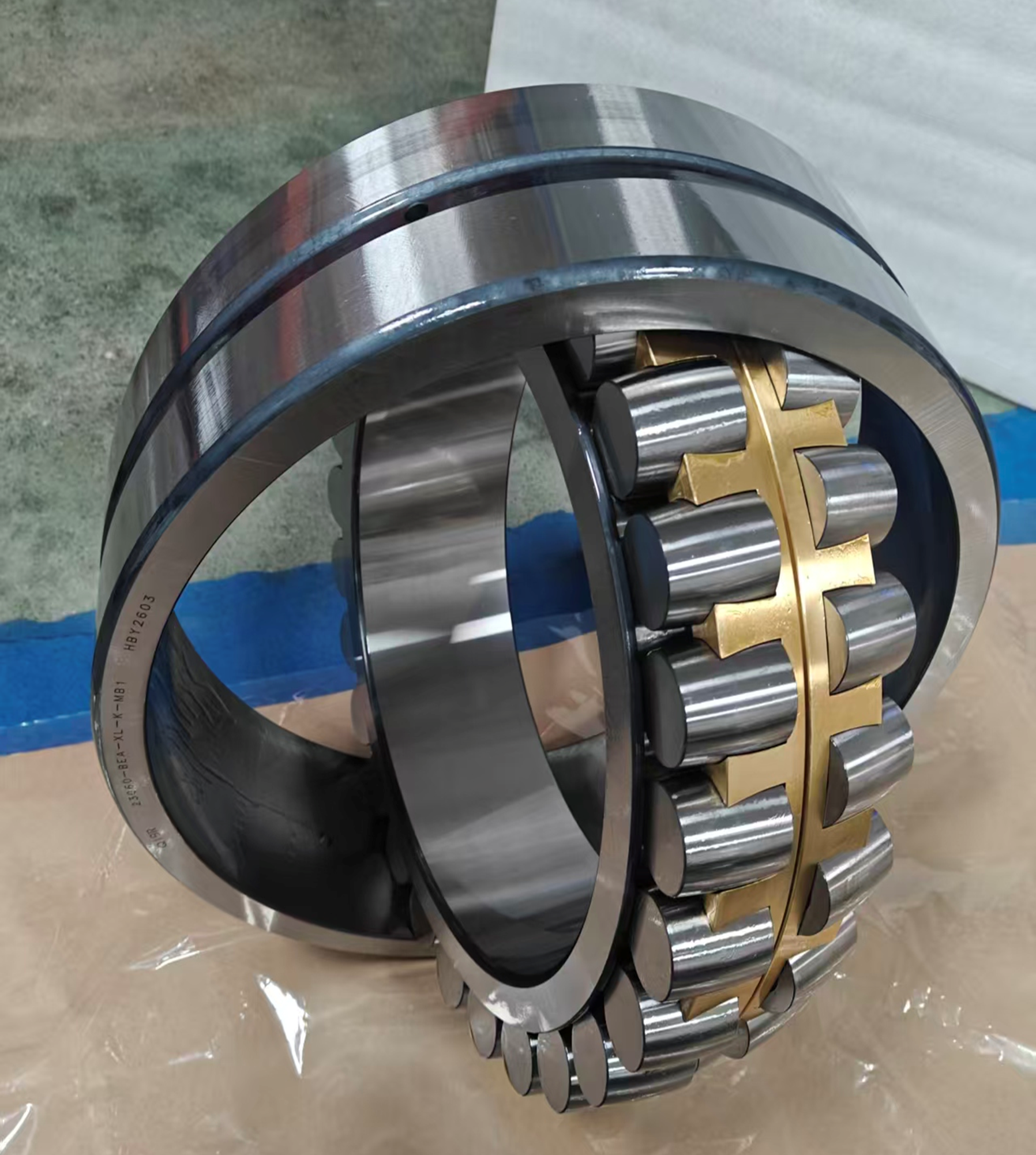
4. They Can Handle Combined Loads
Although radial loads are usually dominant in ball mill applications, the bearing may also experience axial loads caused by the equipment structure and operating conditions.
Spherical Roller Bearings can accommodate radial loads together with moderate axial loads, making them more versatile than bearings designed primarily for radial loading.
5. Large Sizes Are Available
Ball mills can have very large shafts and housings, requiring bearings with large bore diameters and high load ratings.
Spherical Roller Bearings are available in a wide range of sizes, including large and extra-large designs. This makes them suitable for large industrial equipment where bearing capacity and dimensional compatibility are critical.
What Should Be Considered When Selecting a Ball Mill Bearing?
Choosing a bearing for a ball mill is not simply a matter of matching the shaft diameter. Engineers should consider:
- Radial and axial loads
- Shaft speed
- Shaft and housing dimensions
- Possible shaft deflection and misalignment
- Lubrication method
- Operating temperature
- Required service life
- Installation and maintenance conditions
- Bearing internal clearance
- Bore design, such as cylindrical or tapered bore
For large ball mills, correct bearing selection is especially important because bearing failure can result in significant equipment downtime and maintenance costs. 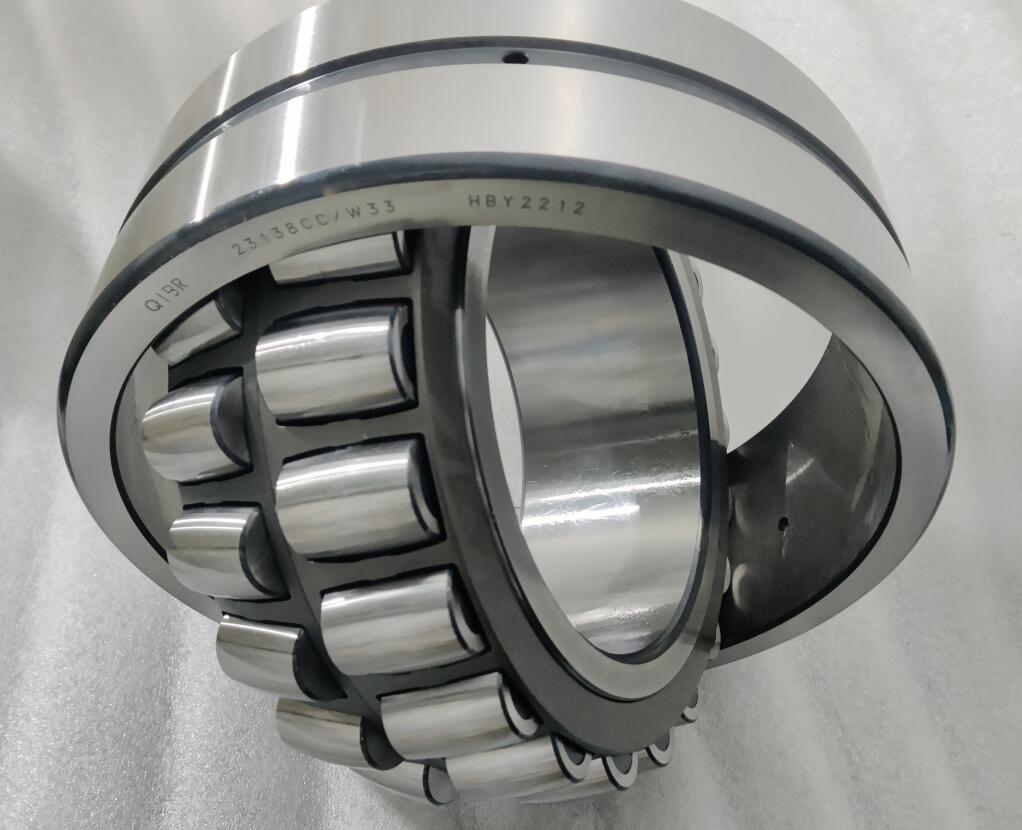
Conclusion
Spherical Roller Bearings are widely used in ball mills because they combine high radial load capacity, self-aligning capability, and suitability for demanding continuous-duty applications.
However, the correct bearing size, internal clearance, lubrication, mounting method, and operating conditions must all be considered to achieve reliable service life.
For large ball mill applications, a detailed review of the operating conditions and technical parameters is recommended before selecting the final bearing.