Newsroom
What Causes Premature Failure of Thin Section Bearings?
Thin section bearings are widely used in robotics, medical equipment, semiconductor machinery, automation systems, and aerospace applications due to their compact design and lightweight construction.
Although thin section bearings are designed for high precision and long service life, premature failures can still occur if they are not properly selected, installed, or maintained.
Understanding the most common causes of bearing failure can help engineers improve equipment reliability, reduce downtime, and maximize bearing performance.
Improper Installation
One of the most common causes of premature bearing failure is incorrect installation.
Because thin section bearings have relatively thin rings and compact structures, they are more sensitive to mounting conditions than standard bearings.
Common installation mistakes include:
- Excessive mounting force
- Misalignment during assembly
- Uneven bolt tightening
- Improper shaft or housing fits
These issues may lead to deformation, increased friction, and reduced operating accuracy. 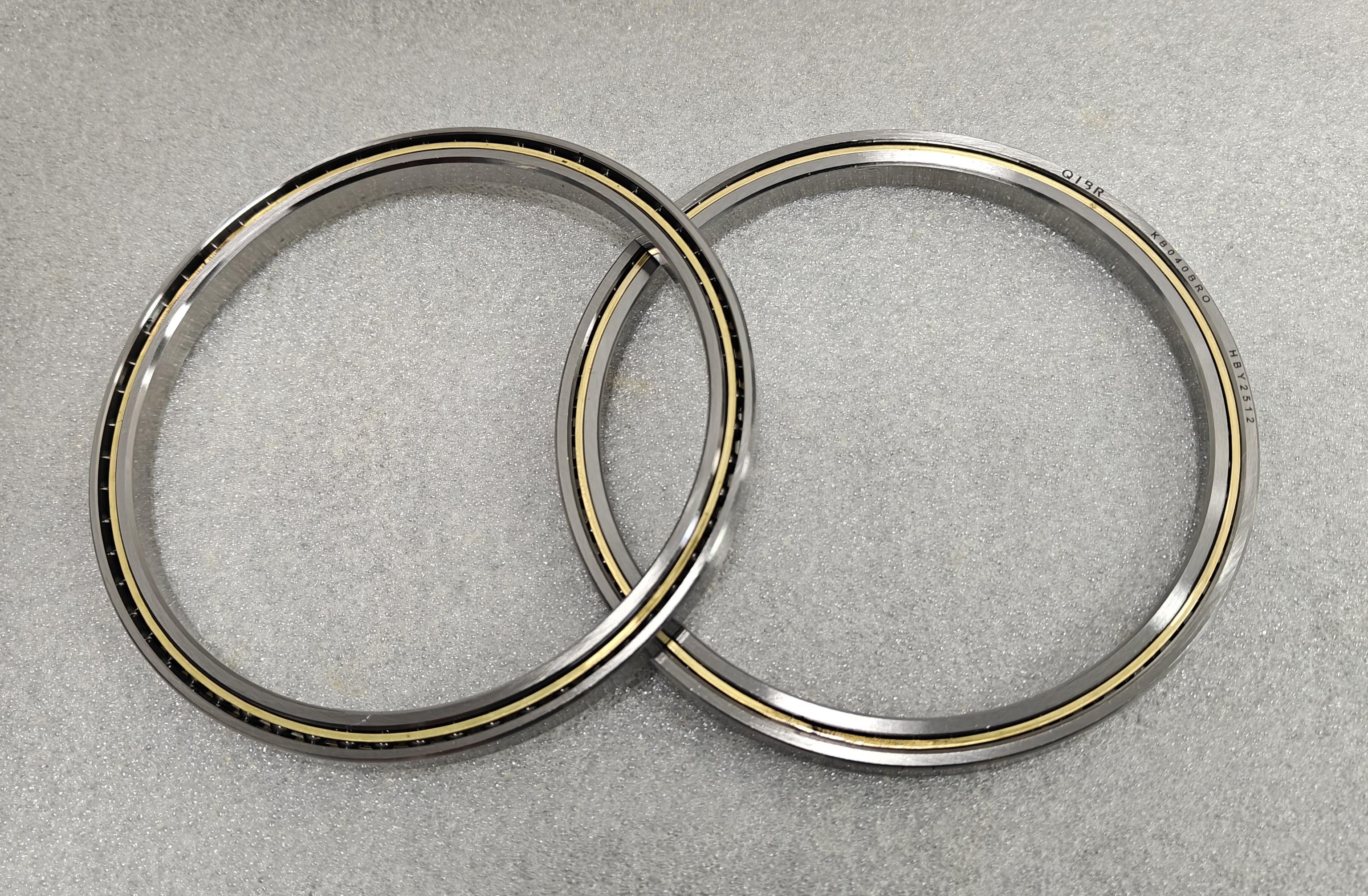
Insufficient or Incorrect Lubrication
Proper lubrication is essential for bearing performance.
Insufficient lubrication can cause:
- Increased friction
- Excessive heat generation
- Accelerated wear
- Reduced bearing life
At the same time, using an unsuitable lubricant may also affect performance, especially in high-speed or high-precision applications.
Selecting the correct lubricant and relubrication interval is critical for long-term reliability.
Contamination
Dust, metal particles, moisture, and other contaminants can significantly shorten bearing life.
Contamination may cause:
- Raceway damage
- Increased vibration
- Higher operating temperatures
- Premature wear
In environments where contaminants are present, appropriate protection measures and regular maintenance should be considered.
Incorrect Load Selection
Thin section bearings are available in different designs, including:
- Thin Section Deep Groove Ball Bearings
- Thin Section Angular Contact Ball Bearings
- Thin Section Four-Point Contact Ball Bearings
Each type is designed for specific load conditions.
Using the wrong bearing type may result in excessive stress and premature failure.
For example:
- Deep groove ball bearings are primarily designed for radial loads.
- Angular contact bearings are better suited for combined radial and axial loads.
- Four-point contact bearings can support axial loads in both directions and moment loads.
Proper bearing selection is essential for achieving the expected service life. 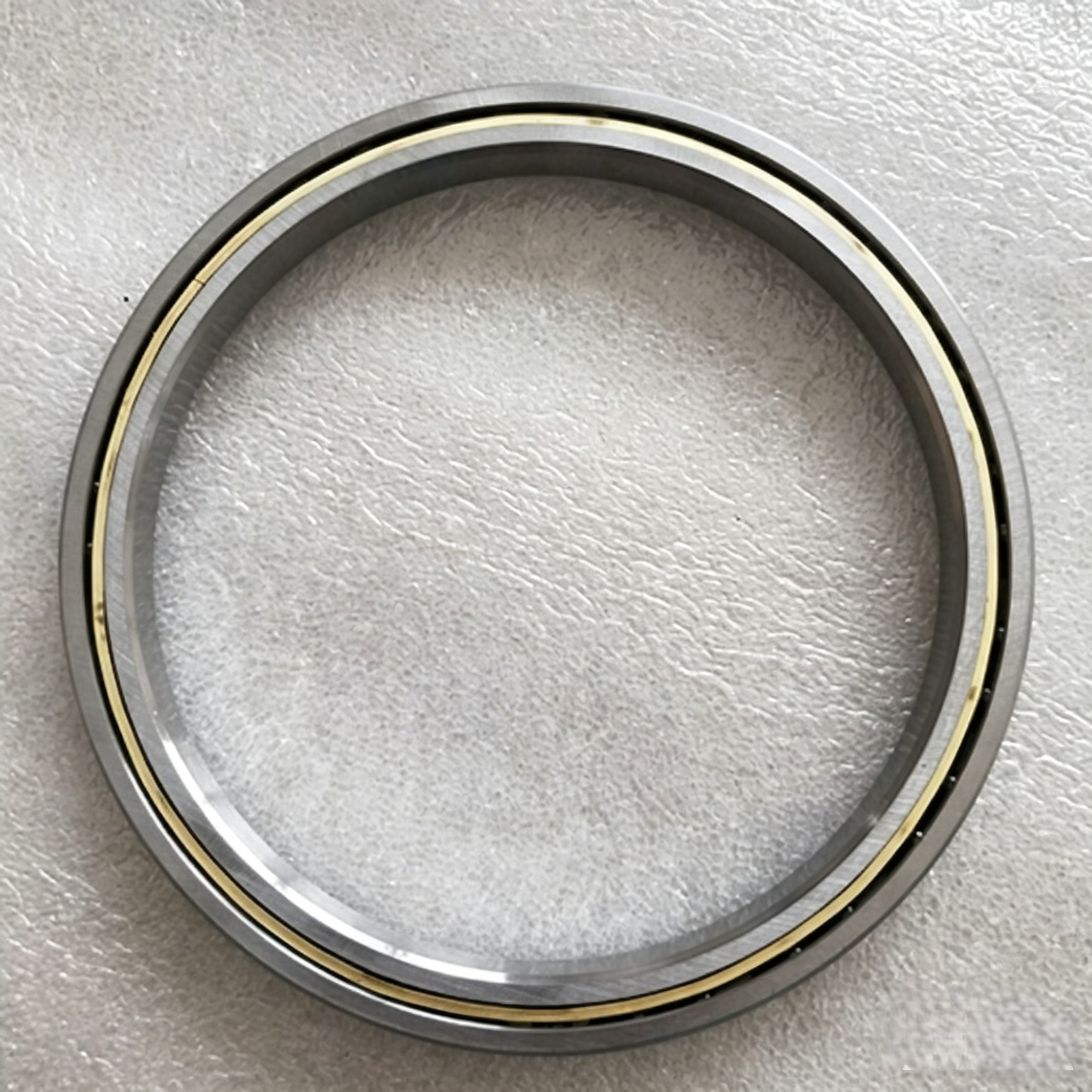
Excessive Preload
Preload can improve rigidity and positioning accuracy in precision equipment.
However, excessive preload may lead to:
- Increased operating temperature
- Higher friction
- Reduced rotational performance
- Accelerated fatigue
The preload level should always be selected according to the application's requirements.
Poor Housing and Shaft Accuracy
Even a high-quality bearing cannot perform properly if surrounding components lack sufficient accuracy.
Problems such as:
- Out-of-round housings
- Excessive shaft runout
- Poor machining tolerances
can generate uneven load distribution and negatively affect bearing life.
Bearing performance depends on the accuracy of the complete assembly system.
Operating Beyond Design Limits
Every bearing has specific limits regarding:
- Load capacity
- Speed
- Temperature
- Operating environment
Exceeding these limits can dramatically shorten service life and increase the risk of failure.
When selecting a bearing, engineers should evaluate actual operating conditions rather than relying solely on dimensional compatibility.
Conclusion
Premature failure of thin section bearings is often caused by installation errors, lubrication issues, contamination, improper bearing selection, excessive preload, or poor system accuracy.
By understanding these common failure factors and applying proper engineering practices, users can significantly improve bearing performance and extend service life.
In many cases, preventing bearing failure begins long before the bearing is installed—it starts with selecting the right bearing for the application.