Newsroom
Thin Section Deep Groove Ball Bearings vs. Thin Section Four-Point Contact Bearings: Which One Should You Choose?
2026-07-17Thin section ball bearings are widely used in robotics, medical equipment, aerospace, semiconductor equipment, and automation systems because they provide high precision while reducing weight and saving installation space.
Among the most common types are Thin Section Deep Groove Ball Bearings and Thin Section Four-Point Contact Bearings. Although they have similar dimensions, they are designed for different load conditions and applications.
This guide explains the key differences to help you choose the right bearing.
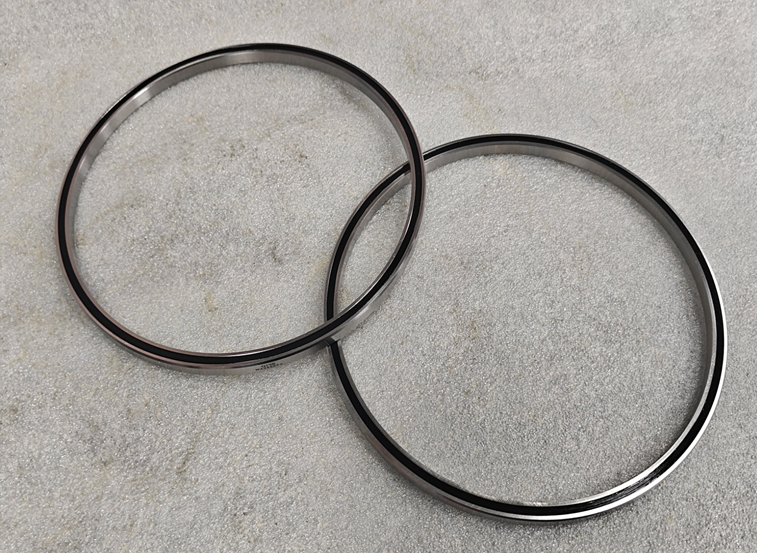
1. What Is a Thin Section Deep Groove Ball Bearing?
Thin Section Deep Groove Ball Bearings are designed primarily for radial loads while also supporting moderate axial loads in both directions.
Advantages
- High-speed operation
- Low friction and smooth running
- Low noise
- Long service life
- Cost-effective
Typical Applications
- Electric motors
- Medical devices
- Packaging equipment
- Automation machinery
- Optical instruments
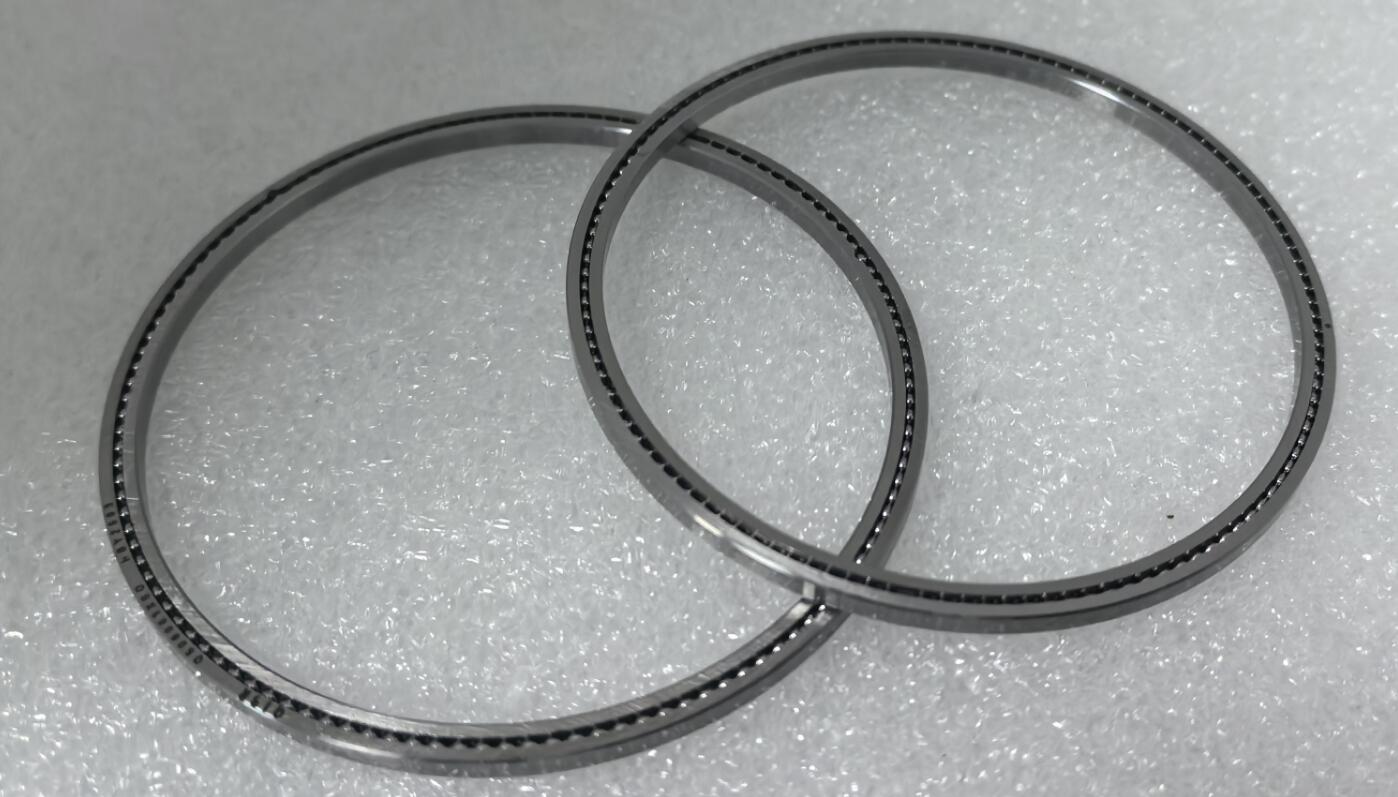
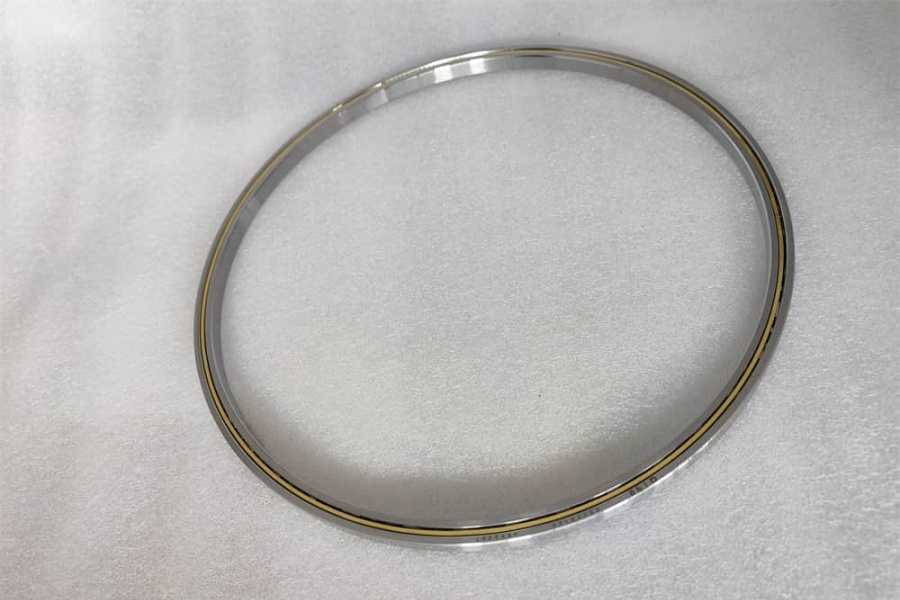
2. What Is a Thin Section Four-Point Contact Bearing?
Thin Section Four-Point Contact Bearings feature a Gothic arch raceway that allows each ball to contact the raceway at four points. This design enables one bearing to carry radial loads, axial loads, and moment loads simultaneously.
Advantages
- Excellent axial load capacity
- High rigidity
- Saves installation space
- Can replace two angular contact bearings in many applications
Typical Applications
- Industrial robots
- Robotic joints
- Rotary tables
- Aerospace equipment
- Precision positioning systems
3. Comparison
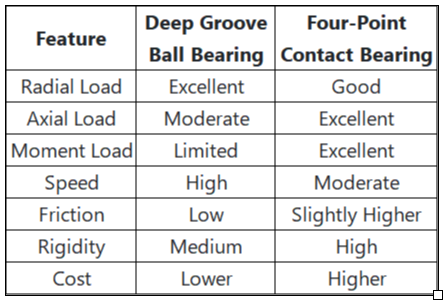
4. Which Bearing Should You Choose?
Choose Thin Section Deep Groove Ball Bearings if your application requires:
- High rotational speed
- Low friction
- Mainly radial loads
- Cost-effective performance
Choose Thin Section Four-Point Contact Bearings if your equipment requires:
- Heavy axial loads
- Moment load capacity
- Compact design
- Precise positioning
5. Conclusion
Both Thin Section Deep Groove Ball Bearings and Thin Section Four-Point Contact Bearings offer excellent performance, but they are designed for different operating conditions.
If your application focuses on high speed and radial load capacity, a deep groove ball bearing is the ideal choice. If your equipment must handle combined loads, axial forces, and overturning moments, a four-point contact bearing will provide superior performance.
Selecting the right bearing based on your application's load requirements and operating conditions will improve reliability, extend service life, and maximize equipment performance.