Newsroom
Thin-Section Ball Bearings: The Core Guarantee of Accurate Performance for Medical Robots
2026-07-15 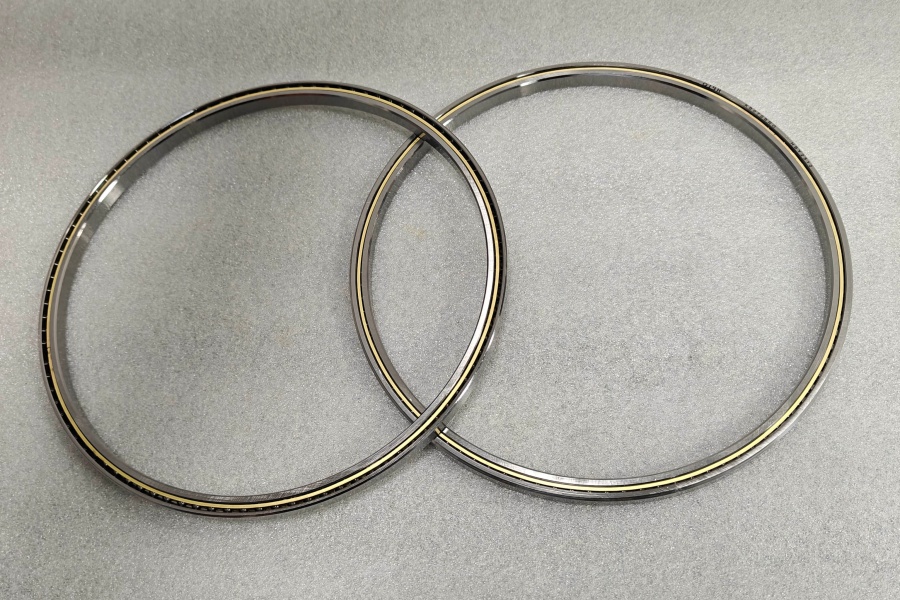 With the rapid advancement of medical technology, precision medical equipment is continually evolving toward intelligent upgrades. As a flagship product of high-end medical devices, intelligent surgical manipulators deliver superior operational accuracy, clinical safety and comfortable control experience for surgeons, all of which are closely related to the selection of their core component — precision bearings. Focusing on the R&D and manufacturing of high-precision bearings, Luoyang QIBR Bearing Co., Ltd. provides products with highly adaptable technical advantages to meet the extreme operating conditions of intelligent surgical manipulators.
I. Stringent Operating Requirements for Intelligent Surgical Manipulators
1. Extreme precision and low friction: For sophisticated procedures such as vascular intervention, intelligent surgical manipulators are required to deliver and release guidewires, balloons, and stents at the sub-millimeter level. This demands bearings with a low friction coefficient and ultra-high rotational accuracy, ensuring that the surgeon’s operations are transmitted to the robotic terminal in real time and accurately for smooth movement.
2. Sterility and corrosion resistance: Operating rooms require sterile environments, and medical equipment must withstand repeated sterilization, fumigation, gamma ray irradiation, and erosion from various disinfectants. Bearings must resist corrosion and maintain stable performance after multiple sterilization cycles.
3. Low noise and low vibration: During surgery, any mechanical noise or micro-vibration may distract surgeons and even affect surgical outcomes. Therefore, bearings must operate steadily and quietly to ensure undisturbed motion transmission.
4. Compact design: To facilitate flexible deployment across hospital departments, intelligent surgical manipulators tend to be miniaturized and lightweight. This requires bearings to withstand multi-directional composite loads within limited installation space. 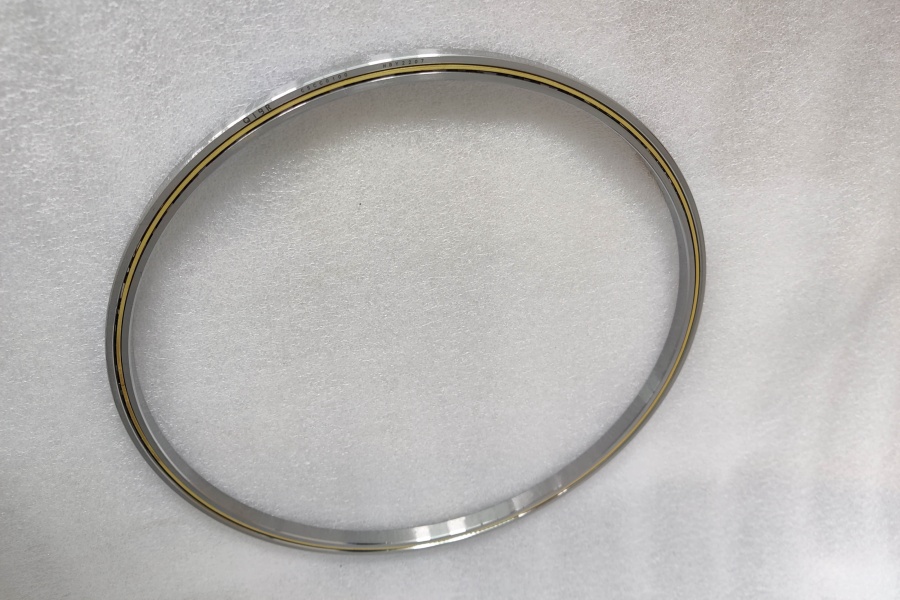
II. Advantages and Applications of Thin-Wall Bearings
Thin-section ball bearings serve as the ideal solution for the aforementioned stringent conditions. Featuring ultra-thin cross-sections and lightweight structures, they significantly save installation space and bear composite radial, axial, and overturning moment loads simultaneously. These properties make them critical components for manipulators, joints, and other parts with strict space and weight constraints.
Adopting high-rigidity design and precision machining technology, thin-section ball bearings manufactured by Luoyang QIBR Bearing Co., Ltd. maintain reliable load-bearing capacity while achieving lightweight design, providing a stable motion control platform for intelligent surgical manipulators.
III. Material Selection and Technical Solutions
Material selection is essential for balancing product performance, safety, and cost. The mainstream material solutions are as follows:
440C stainless steel: Offers excellent corrosion resistance and hardness, suitable for medical environments requiring frequent sterilization.
Medical-grade non-toxic lubricating grease: Harmless to the human body and capable of reducing friction and wear.
Stainless steel sealing structure: Prevents pollutant intrusion and extends service life.
Ceramic balls: Features low density, high hardness, and superior wear resistance, and supports non-magnetic performance to meet the special requirements of MRI and other scenarios.
The combination of these materials ensures the comprehensive performance of bearings in terms of high precision, low noise, corrosion resistance, and long service life. 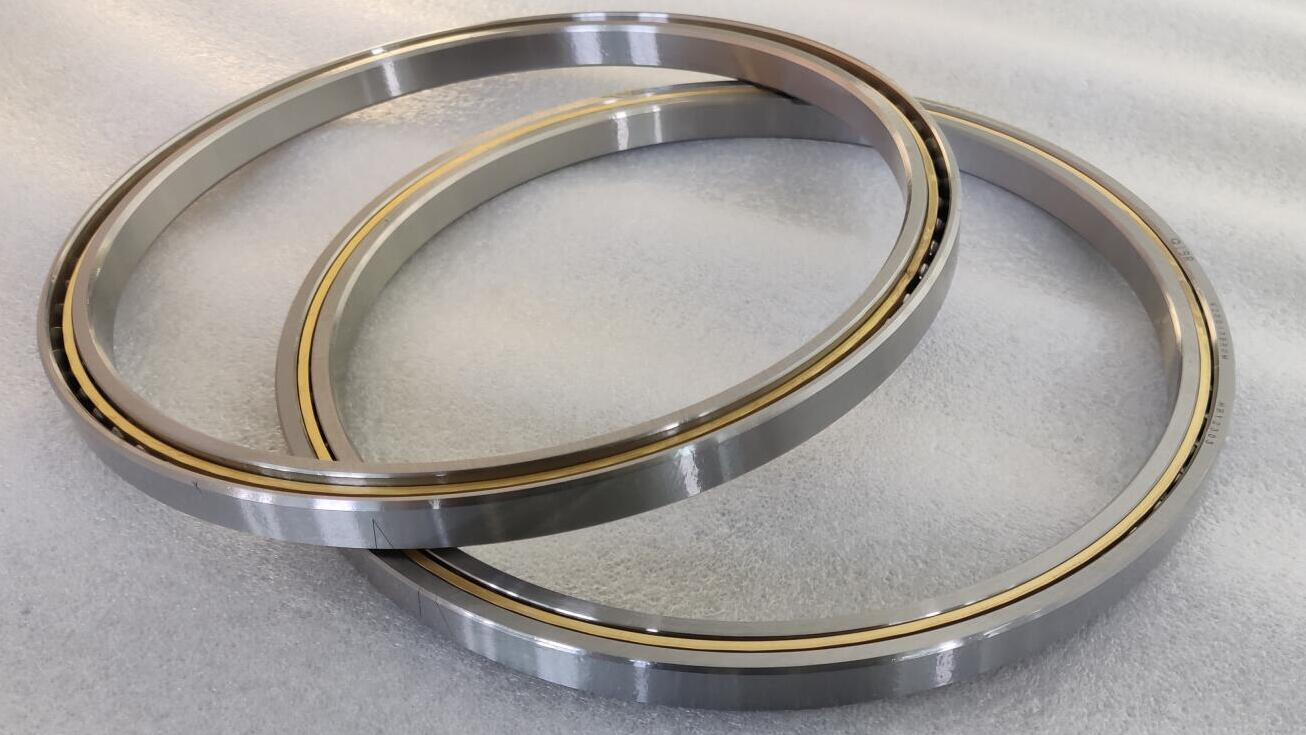
IV. Cross-Field Precision Applications
In addition to intelligent surgical manipulators, thin-section ball bearings are widely applied in X-ray equipment and other medical imaging and diagnosis devices:
X-ray tube rotating bracket: Supports high-speed and stable rotation of X-ray tubes, requiring bearings with thin cross-sections and low-noise operation.
CT slip ring assembly: Ensures continuous power and signal transmission between high-voltage generators and X-ray tubes, with thin-wall bearings guaranteeing high-precision rotation and minimal vibration.
Collimator / Multi-Leaf Collimator (MLC): Adjusts the shape of radiation beams, with thin-wall bearings providing micro-positioning accuracy and compact installation adaptability.
Detector array rotating mechanism (CBCT / mobile CT): Supports synchronous rotation of detectors, and relies on the constant-section design of thin-wall bearings to maintain structural rigidity and lightweight performance.
For these application scenarios,thin-section ball bearings are mostly designed with stainless steel materials, sealed structures or four-point contact structures, fully meeting the stringent requirements of medical equipment for high cleanliness, corrosion resistance, high repetitive positioning accuracy and long-term operational reliability.