Newsroom
Solutions to the Machining Challenges of Thin Section Bearings
2026-05-29Thin section bearings, meaning those with smaller wall thicknesses, are generally considered thin section parts in engineering practice, where the ratio of diameter to wall thickness is greater than 15. Thin section bearings are characterized by their lighter weight, compact structure, and low moment of inertia. They are widely used in high-end products such as industrial robots, aircraft, satellites, and medical devices, and the market is growing rapidly. The bearing industry typically quantifies this by the inner and outer ring wall thickness coefficient K (the ratio of outer ring outer diameter to outer groove diameter D/De, and the ratio of inner ring inner groove diameter to inner diameter di/d). When 1.04 < K ≤ 1.14, it is considered a thin section bearing. 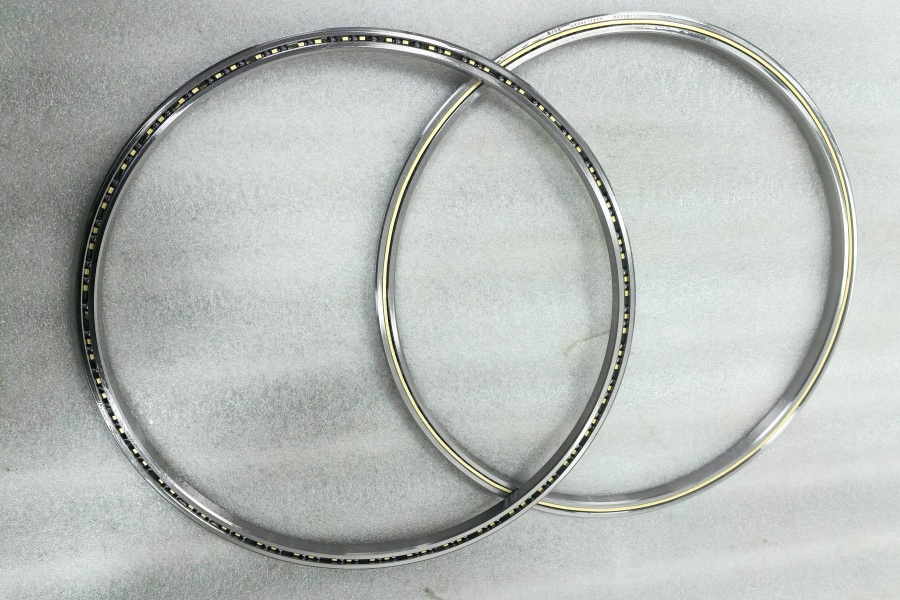
1. In the forging process, for large-sized thin section bearing rings with small length-to-diameter ratios, a method of forging two or more pieces together is used. After rough grinding, wire cutting is used to separate the rings. This reduces the machining difficulty of the forging process, minimizes ring deformation and end-face machining allowance, saves raw materials, and improves production efficiency.
2. Machining: Generally, issues such as clamping and positioning, excessive cutting force, unreasonable fixture design, thermal deformation during cutting, and vibration during cutting alter machining accuracy. To reduce deformation caused by excessive machining stress, rough turning is performed using steel soft jaws with a large envelope contact area and without quenching, such as using a multi-point clamping chuck (12-point or 24-point clamp); changing the positioning and clamping scheme (changing radial clamping to end-face positioning and clamping); adjusting process parameters (high-speed cutting, small depth of cut, larger tool principal cutting edge angle, smaller tool tip radius, appropriate selection of cutting fluid, etc.). An additional tempering is performed after rough turning to eliminate stress. Then, the end face is soft-ground, and the ring is finished turned. 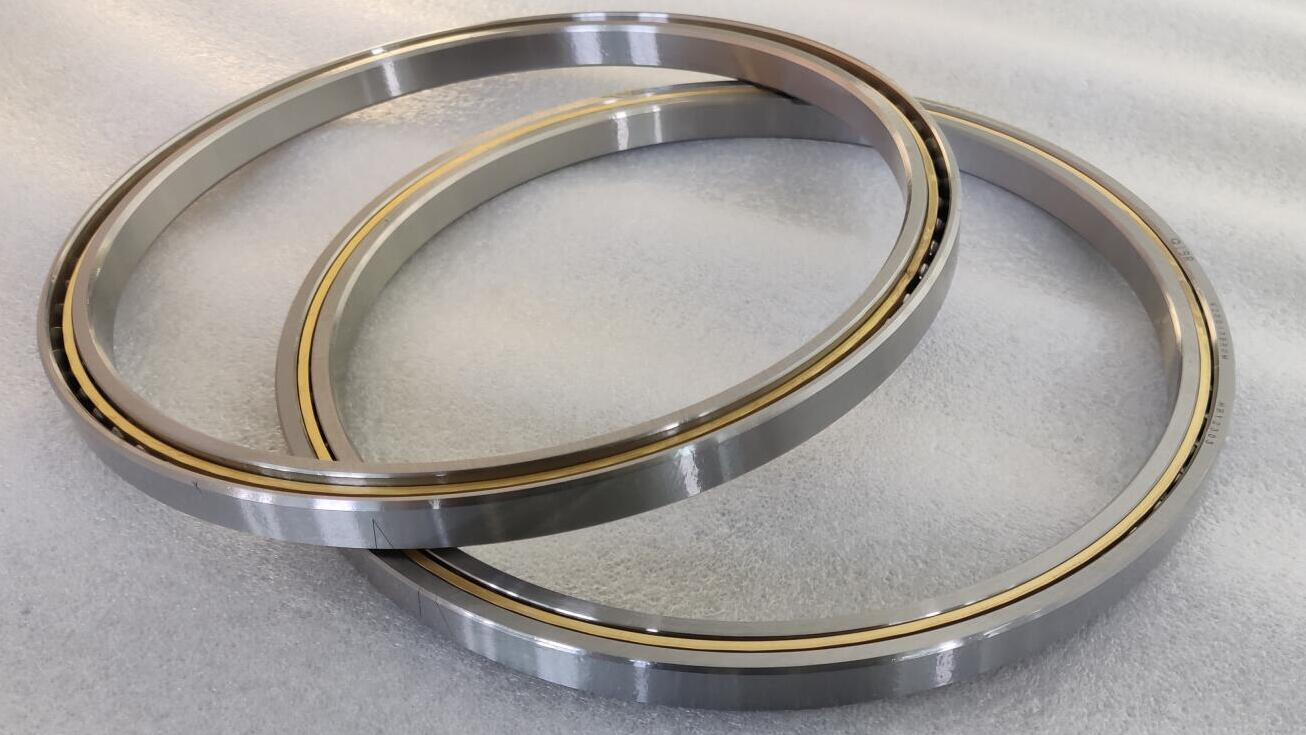
3. During heat treatment, the internal structure of the ring undergoes a phase transformation, mainly from austenite to martensite, resulting in decreased density and volume expansion, generating structural stress. Additionally, the ring undergoes rapid quenching and cooling from a high-temperature (generally 830–840℃ for Thin section products) expansion state, generating thermal stress. When these two internal stresses exceed the material's yield strength, permanent plastic deformation will occur. Deformation is typically controlled by die hardening.
4. Common aspects of grinding include: selecting appropriate equipment, tools, processing methods, and grinding parameters. This includes methods such as using reinforcing rings, employing a "one-to-two" grinding structure, and using multiple fine adjustments to the outer diameter surface on the machine tool. Intermediate tempering stabilization treatments are also used to ensure quality meets process requirements. 
Thin section bearings have disadvantages. Their smaller cross-sectional area and radial wall thickness result in poor rigidity and make them particularly prone to deformation. Therefore, during turning, heat treatment, and grinding processes, special protective machining methods are required to prevent the bearing rings from exceeding roundness and flatness tolerances, resulting in elliptical shapes, rounded edges, and end face warping.
When using thin section bearings, it is crucial to pay attention to these issues and maintain them properly during use to extend their service life and save costs.