Newsroom
The Three Musketeers of Thin Section Ball Bearing "Health Checkups"
2026-05-29In predictive maintenance of industrial equipment, early detection of thin section ball bearing "sub-health" conditions is crucial to avoiding sudden downtime. Currently, the three main monitoring methods—vibration analysis, acoustic emission testing, and oil analysis—each have their strengths and weaknesses, applicable to different stages of thin section ball bearing life. 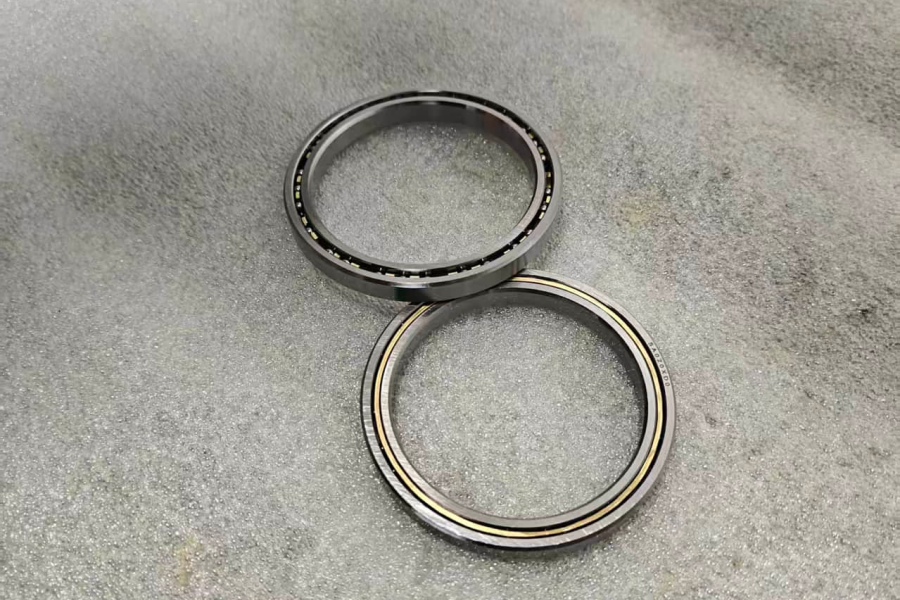
According to relevant research data, acoustic emission technology is extremely sensitive to early damage such as micro-cracks and surface spalling. It can capture high-frequency elastic waves released from microscopic fractures within the material, thus providing early warnings in the nascent stage of a fault, making it the "earliest sentinel to detect anomalies." However, its drawbacks include sensitivity to environmental noise and complex signal interpretation, requiring specialized algorithms. 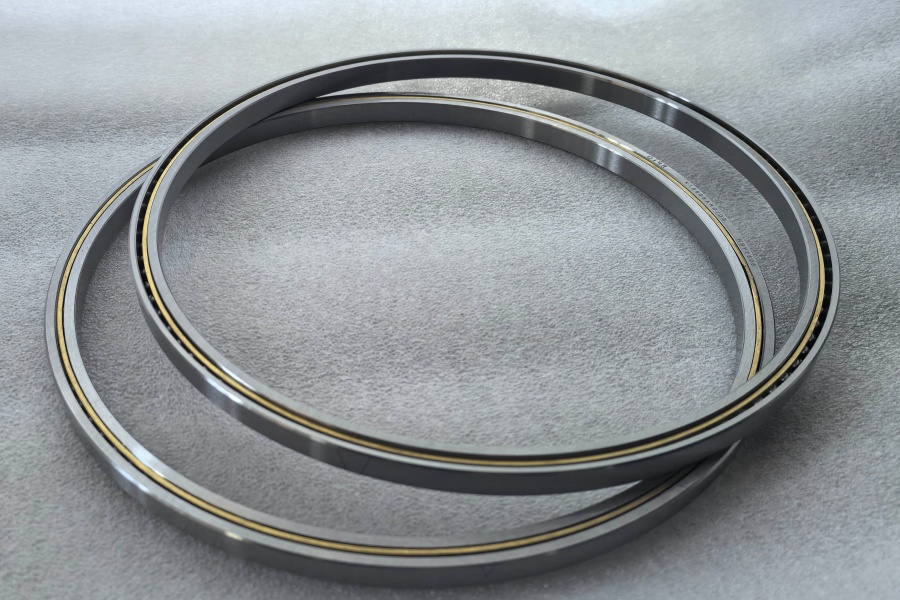
In contrast, vibration analysis performs better in the later stages of a fault. When a thin section ball bearing exhibits significant wear, raceway damage, or cage loosening, the vibration spectrum will display characteristic frequencies and their harmonics. It boasts high diagnostic accuracy, mature technology, and widespread application. However, in the early stages of a fault, the vibration signal changes are weak and often difficult to distinguish from background noise, easily missing the "golden window" for diagnosis. 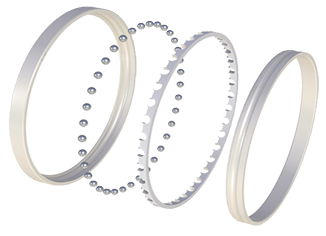
Oil analysis takes a different approach, directly reflecting the wear condition of thin section ball bearings by detecting the composition, concentration, and morphology of metallic abrasive particles in the lubricating oil. It is particularly suitable for diagnosing problems such as progressive wear, lubrication failure, or contamination intrusion. However, it cannot pinpoint the specific location of the fault, nor can it monitor transient impact events in real time, resulting in a relatively slow response time. 
In practical applications, single technologies often have blind spots. For example, a wind turbine gearbox case showed that acoustic emission detected a microcrack in the inner ring two weeks in advance, vibration analysis only identified the characteristic frequency a week later, while oil analysis detected a surge in ferrous abrasive particles after the fault had worsened. This illustrates that integrating multiple technologies is the best strategy for achieving full lifecycle monitoring.