Newsroom
Lubrication: The Key to Thin Section Ball Bearing Material Performance
2026-05-29As the "joints" of mechanical equipment, the service stability, service life, and operational accuracy of thin section ball bearings directly determine the overall operating conditions of the equipment. However, the core properties of thin section ball bearing materials, such as wear resistance, temperature resistance, and fatigue resistance, are not constant. Lubrication conditions are a crucial external factor affecting their performance. A high-quality lubrication system can fully unleash the inherent advantages of the material, while a harsh lubrication environment will accelerate material wear, induce failure, and significantly shorten the service life of the thin section ball bearing. In the operation of modern precision machinery and heavy-duty industrial equipment, the compatibility between lubrication and thin section ball bearing materials is crucial to ensuring the efficient and stable operation of the equipment. 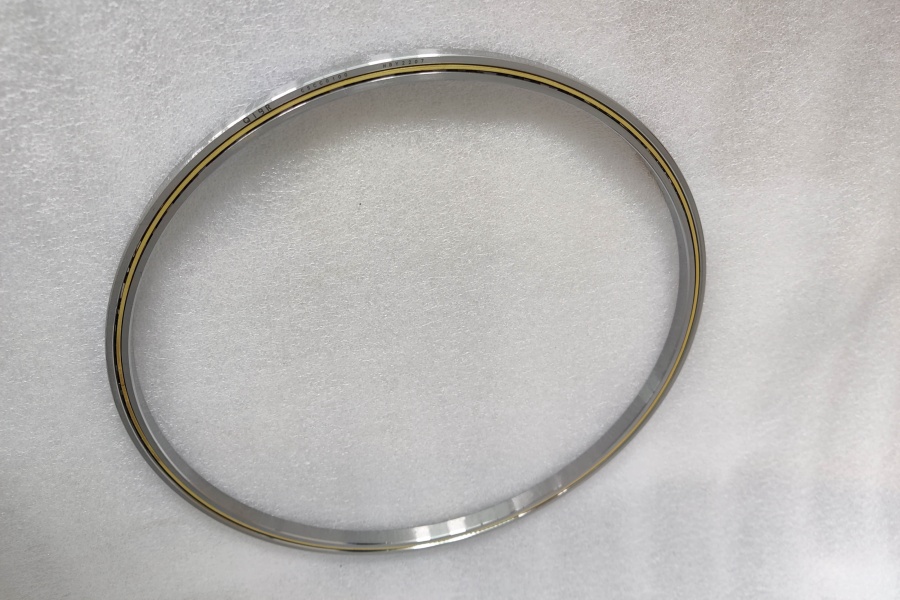
Good lubrication conditions are the fundamental guarantee for the optimal performance of thin section ball bearing materials. During operation, high-speed relative friction occurs between the inner and outer rings, rolling elements, and cage. A qualified lubricant can form a uniform and dense oil film on the material surface, completely isolating the friction pairs. This oil film can fundamentally change the friction state of the material, transforming the thin section ball bearing from dry friction to fluid friction, significantly reducing the coefficient of friction. For mainstream thin section ball bearing materials such as steel, ceramics, and alloys, high-quality lubrication can effectively reduce surface wear and avoid common damage such as scratches, spalling, and seizing. Simultaneously, the lubricant possesses excellent heat dissipation properties, effectively carrying away the high temperatures generated by friction and preventing problems such as softening, thermal deformation, and decreased hardness in the thin section ball bearing material due to localized overheating, thus stabilizing the material's mechanical properties. Furthermore, the lubricating film can cover the micropores on the material surface, isolating it from air, moisture, and corrosive media, delaying oxidation and corrosion, and improving the corrosion resistance and operational stability of the thin section ball bearing. 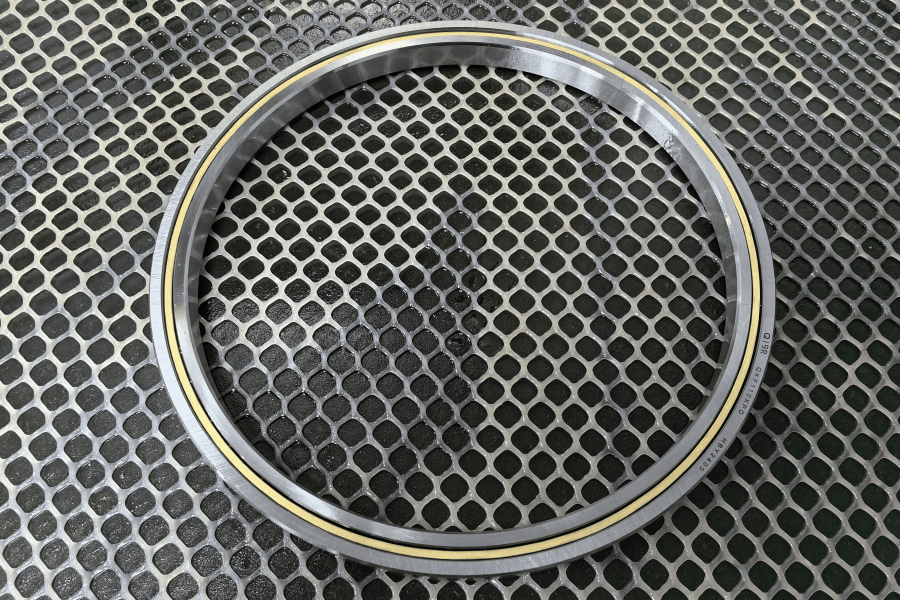
Conversely, poor lubrication conditions will continuously deplete the performance of the thin section ball bearing material, leading to multiple failure problems. Insufficient lubrication and ruptured lubricating oil film are the most common operating defects. In such cases, the friction pairs of the thin section ball bearing are in direct contact, and intense friction generates a large amount of heat, causing wear of the hardened layer on the material surface and fatigue damage to the base metal thin section ball bearings that are chronically lacking oil will experience pitting, spalling, and cracking, significantly reducing their fatigue resistance. Meanwhile, inferior lubricating oils and aged, deteriorated lubricants lose their film-forming ability, and impurities and particles can mix into the friction interface, causing abrasive wear on thethin section ball bearing material. This abrasion damages the material's precision surface and compromises the bearing's fit accuracy. Under extreme conditions of high temperature, high speed, and heavy load, improper lubrication selection can cause ordinary lubricants to fail rapidly, leading to prolonged exposure of the thin section ball bearing material to harsh high-temperature and high-pressure environments, resulting in thermal fatigue, plastic deformation, and complete loss of its original mechanical properties. 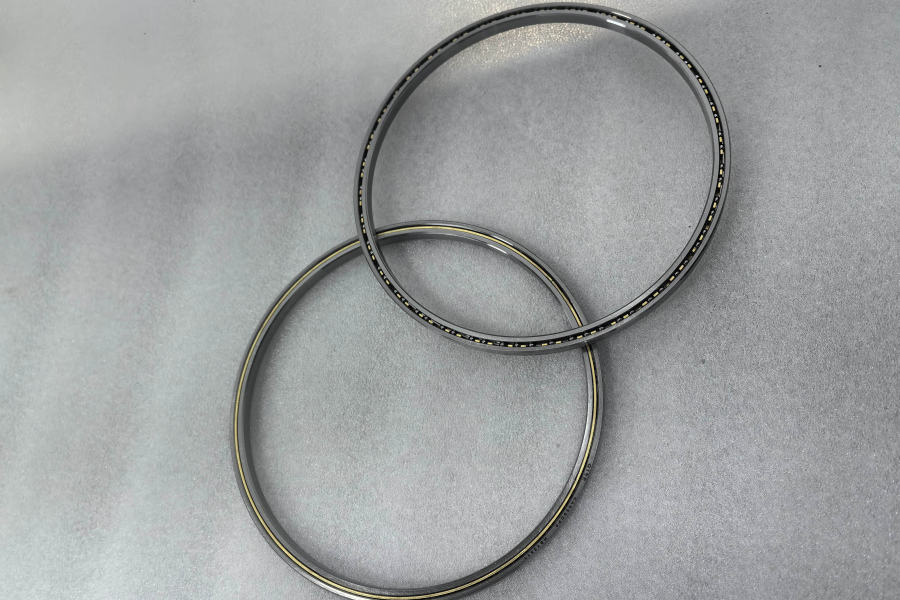
Different materials of thin section ball bearings have varying suitability for lubrication conditions; precise matching of the lubrication solution is essential to maximizing the material's advantages. Carbide thin section ball bearings have high hardness and wear resistance, but are also brittle. They are best suited for lubricants with moderate viscosity and extreme pressure resistance to buffer impact friction and prevent material chipping damage. Ceramic thin section ball bearings exhibit outstanding high-temperature resistance, corrosion resistance, and lightweight characteristics, making them suitable for specialized low-temperature lubricating media and avoiding surface contamination caused by high-temperature carbonization of traditional lubricating oils. Polymer composite thin section ball bearings have good self-lubricating properties, simplifying the lubrication system under light load conditions, while requiring auxiliary lubrication to improve wear resistance under heavy load conditions. Blindly applying lubrication solutions, even with high-quality materials, can lead to wasted performance or premature failure.