Newsroom
Installation for Double‑row Full‑complement Cylindrical Roller Bearings (without outer ring)
2026-08-19 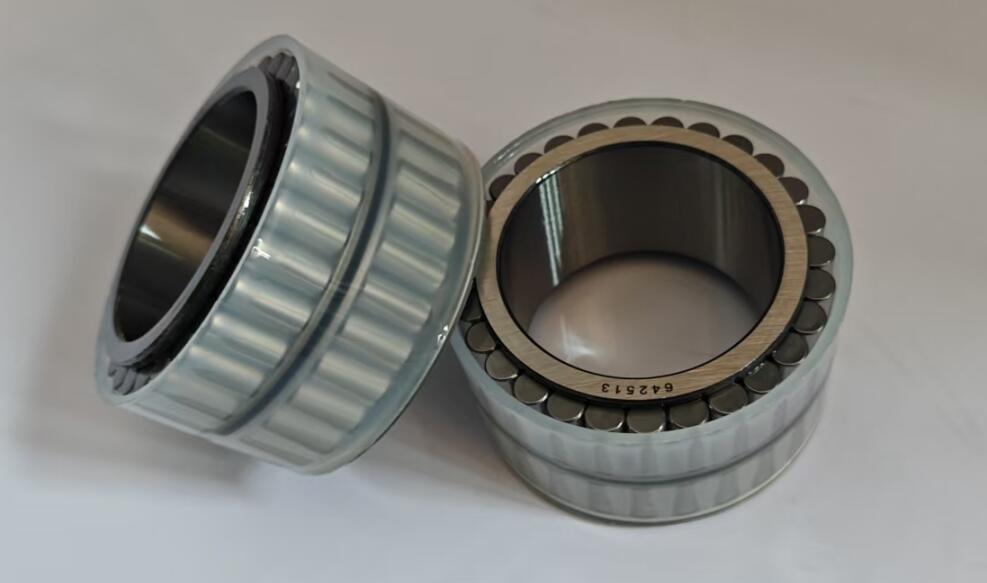 Double‑row full‑complement cylindrical roller bearings without outer ring rely directly on the housing bore surface acting as the outer raceway; only inner‑ring + double‑row roller‑cage assembly is supplied.
Pre‑installation preparation
Thoroughly clean the shaft, housing bore and bearing assembly. Remove burrs, chips and contaminants. Inspect housing bore raceway surface for scratches, dents or corrosion.
Verify dimensional tolerances of the double‑row full‑complement cylindrical roller bearings without outer ring: shaft fit for inner ring, housing bore (functional outer raceway), shoulder height, chamfers.
Apply thin film of recommended grease / oil onto inner ring bore, shaft journal, housing bore raceway and roller surfaces.
Prepare pressing sleeve, hydraulic press, dial indicator; never strike bearing directly with hammer.
Note: Full‑complement design has no spacer between rollers; avoid dropping or distorting the roller‑cage unit.
Step‑by‑step mounting procedure
1. Mount inner‑ring & double‑row roller‑cage assembly onto shaft
1). If inner ring has interference fit on shaft:
- Small size: Press‑fit with pressing sleeve, force applied only against inner‑ring end face, NOT on rollers/cage. Press until inner‑ring abuts shaft shoulder firmly.
- Large size: Use induction heating (80‑110 °C, max 120 °C). Slide heated inner‑ring + roller‑cage assembly onto shaft quickly. Allow to cool completely before next operation.
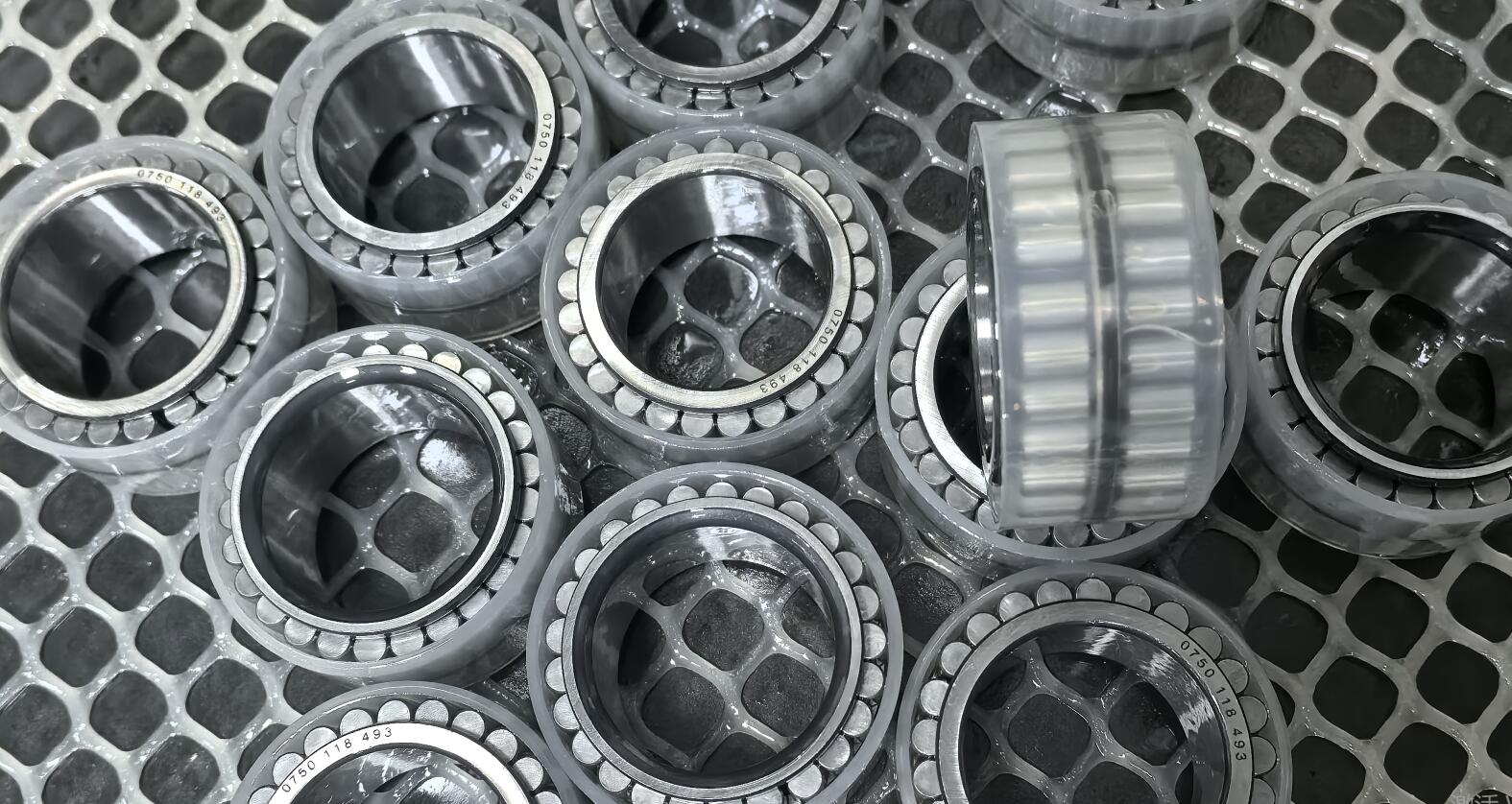
2). For tapered bore inner ring: Drive inner ring up the tapered seat by hydraulic nut to set correct radial internal clearance. Lock with locking nut / lock washer.
2. Insert shaft‑bearing assembly into housing
Align shaft concentrically with housing bore. Feed the double‑row rollers gently into housing bore. The housing inner bore serves as outer raceway for both roller rows. Avoid tilting, which may jam rollers or deform cage.
3. Axial location & locking
Install shaft shoulder, spacer rings, lock‑nuts or end‑covers to fix axial position of the bearing assembly. Ensure both roller rows sit fully within housing raceway width. Apply specified torque for locking fasteners.
4. Clearance check & rotation test
- Turn shaft manually. No sticking, grinding or uneven resistance is permitted.
- Measure residual radial internal clearance with dial gauge to confirm it meets specification. Adjust spacer thickness if clearance is out‑of‑range.
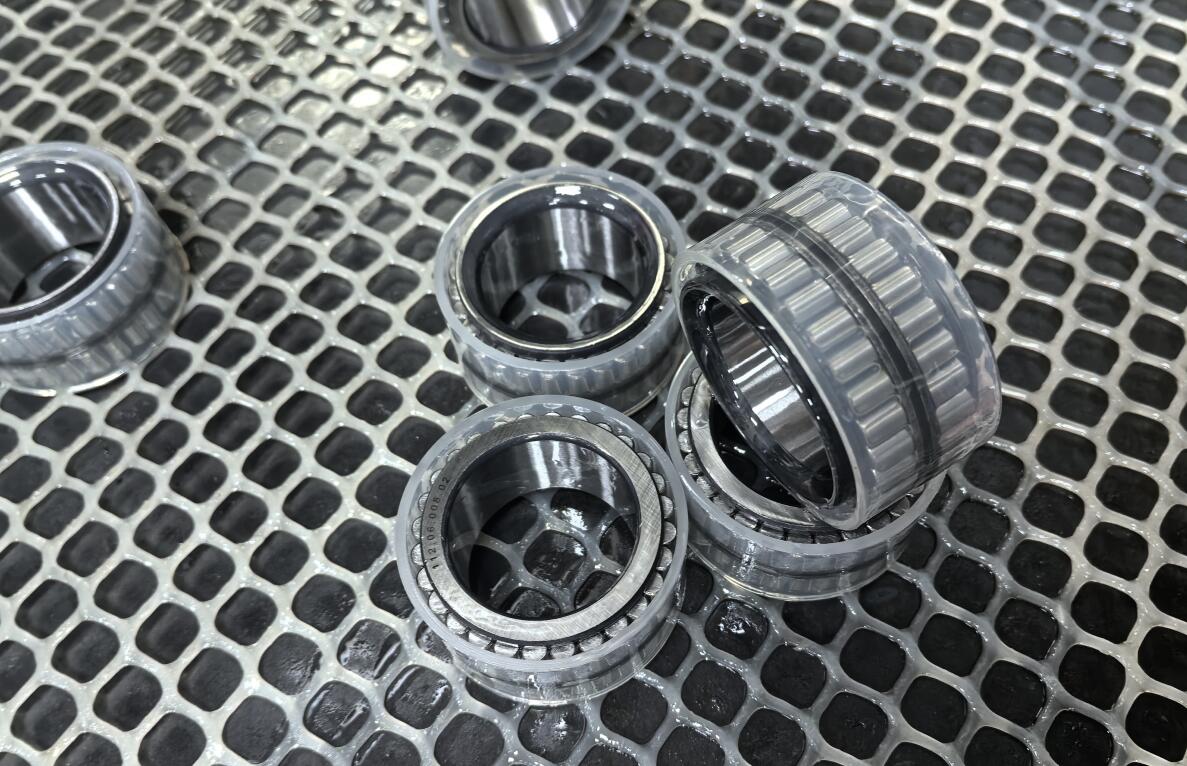
5. Sealing & final lubrication
Fit shaft seals / end‑plate seals. Top‑up correct quantity of grease. Avoid over‑greasing to prevent overheating.
Critical warnings
- Mounting force must never transmit through rollers. Force only acts on inner‑ring end face.
- Housing bore surface hardness, roughness and dimensional tolerance must meet drawing requirements — it functions as the outer raceway. Damaged housing bore directly causes early bearing failure.
- Keep assembly environment clean. Dust particles between rollers and housing raceway lead to rapid wear.
- Do not hammer cage or roller assembly. Cage deformation will cause roller skewing and breakage under heavy load.
If you are interested in double‑row full‑complement cylindrical roller bearings without outer ring, don't hesitate to contact us.