Newsroom
How to Prevent Deformation in Ultra-Thin-Section Ball Bearings
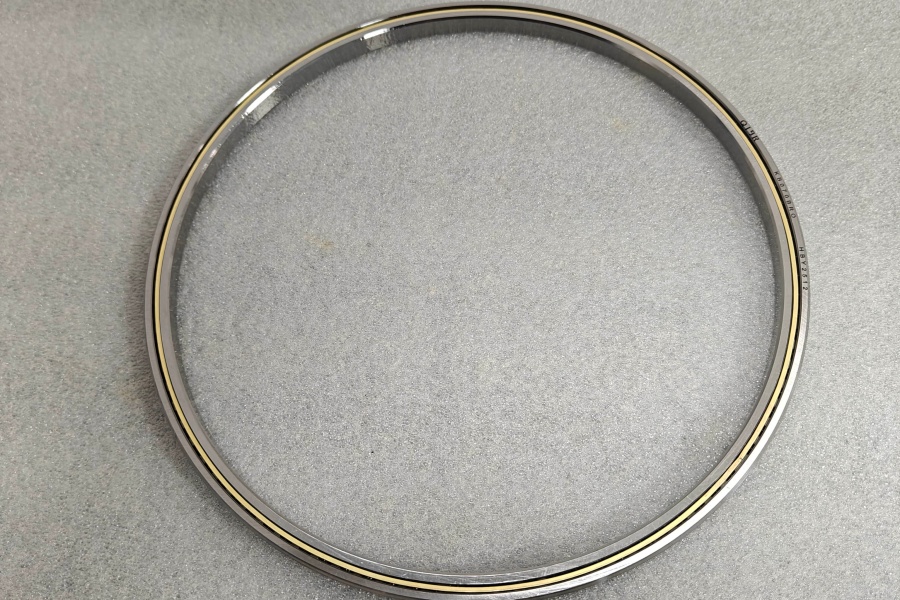
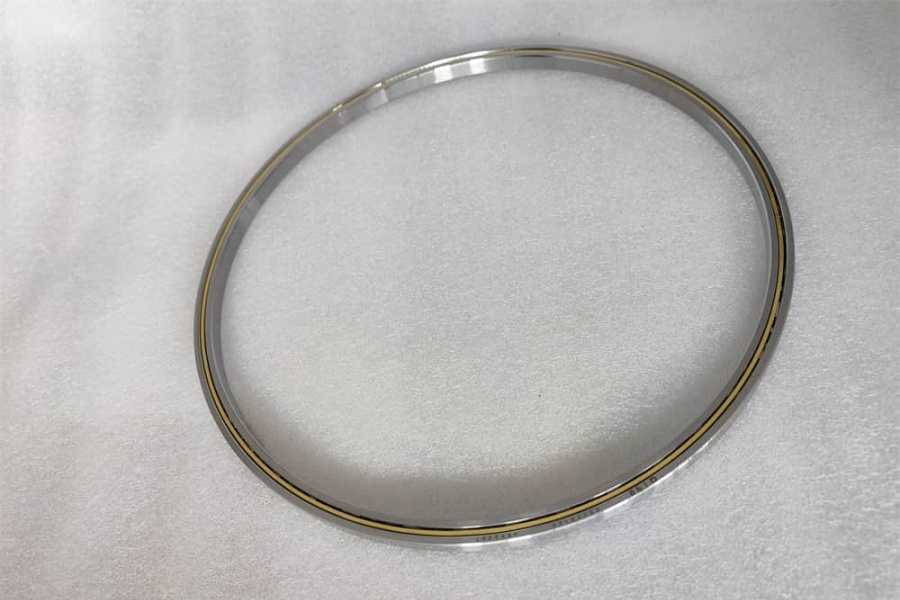
2026-06-12Ultra-thin-section ball bearings are widely used in robotics, medical equipment, semiconductor machinery, aerospace systems, and other high-precision applications where compact design and lightweight construction are critical. However, due to their thin cross-sections, these bearings are more sensitive to installation conditions and structural deformation than conventional bearings.
Even minor distortion can negatively affect bearing performance, leading to increased friction, reduced accuracy, premature wear, and shortened service life. Understanding the causes of deformation and implementing proper preventive measures are essential for ensuring reliable operation.
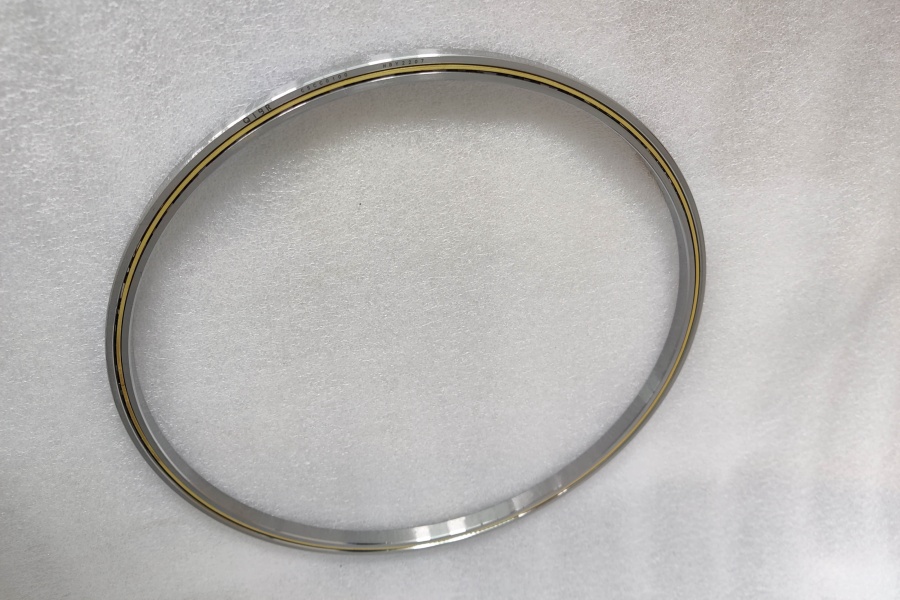
1. Why Are Ultra-Thin-Section Ball Bearings More Susceptible to Deformation?
Compared with standard bearings, ultra-thin-section ball bearings feature significantly reduced wall thickness. While this design provides substantial space and weight savings, it also means the bearing rings have lower structural rigidity.
As a result, excessive installation force, improper fits, housing inaccuracies, or uneven loads can easily cause ring deformation. Once deformation occurs, internal bearing clearances may change, resulting in increased torque, vibration, and operating temperatures.
2. Common Causes of Bearing Deformation
I. Excessive Interference Fit
One of the most common causes of deformation is excessive interference between the bearing and mating components.
When the shaft or housing tolerance is too tight, the bearing rings may become distorted during installation. This distortion can affect the raceway geometry and compromise bearing performance.
Recommendation:
- Follow the bearing manufacturer's recommended fit tolerances.
- Avoid unnecessarily tight shaft and housing fits.
- Verify dimensional accuracy before assembly.
II. Poor Housing Accuracy
Even if the bearing itself is manufactured with high precision, an out-of-round or improperly machined housing can transfer deformation directly to the bearing.
Housing inaccuracies may include:
- Roundness errors
- Cylindricity errors
- Surface irregularities
- Misalignment
Recommendation:
- Maintain high machining accuracy for bearing seats.
- Inspect housing dimensions before installation.
- Ensure proper alignment of mating components.
III. Improper Installation Methods
Using hammers or applying force through rolling elements during installation can permanently damage thin-section bearings.
Because ultra-thin-section bearings have reduced ring thickness, they are particularly vulnerable to installation-related distortion.
Recommendation:
- Use professional bearing installation tools.
- Apply mounting force only to the ring being fitted.
- Avoid impact loading during assembly.
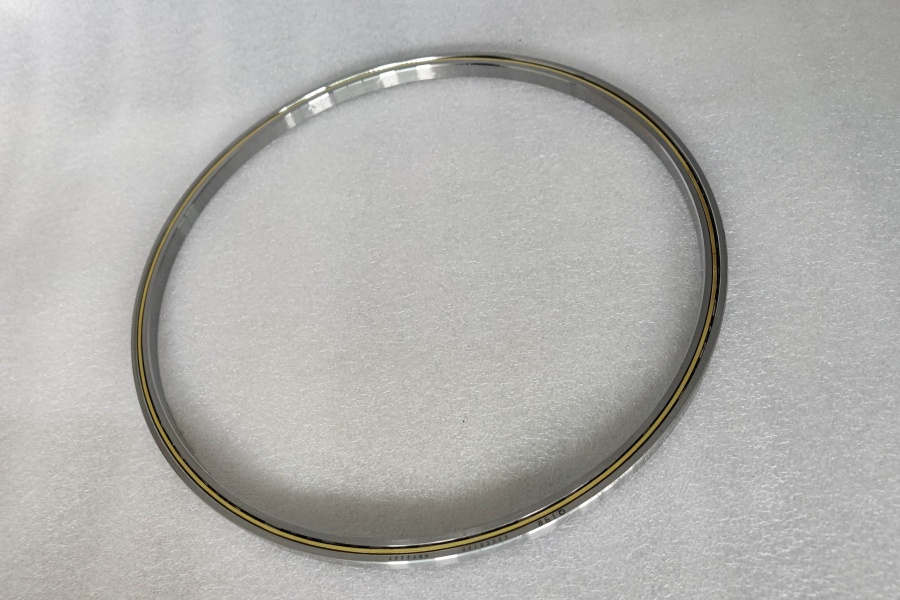
IV. Uneven Structural Support
Thin-section bearings require uniform support around the entire circumference.
If the mounting surface contains gaps, uneven contact areas, or localized stresses, the bearing may deform during operation.
Recommendation:
- Ensure flat and rigid mounting surfaces.
- Verify proper support around the entire bearing seat.
- Eliminate localized loading conditions whenever possible.
V. Excessive External Loads
Thin-section bearings require uniform support around the entire circumference.
If the mounting surface contains gaps, uneven contact areas, or localized stresses, the bearing may deform during operation.
Although ultra-thin-section ball bearings can carry significant loads relative to their size, exceeding their design limits can lead to permanent deformation.
Overloading may occur due to:
- Unexpected shock loads
- Improper equipment design
- Miscalculated operating conditions
Recommendation:
- Perform accurate load calculations.
- Select bearings with sufficient safety margins.
- Consider application-specific operating conditions.
3. The Importance of Proper Internal Clearance
Internal clearance plays a critical role in thin-section bearing performance.
When deformation occurs, internal clearance may decrease significantly or even become negative. This can increase friction, generate excessive heat, and accelerate bearing wear.
Engineers should carefully consider:
- Fit conditions
- Thermal expansion
- Operating loads
- Bearing preload requirements
Selecting the correct internal clearance helps compensate for unavoidable operating influences and improves long-term reliability.
4. Design Considerations for Minimizing Deformation
To maximize bearing performance, equipment designers should:
- Optimize housing rigidity.
- Minimize structural deflection.
- Use precision-machined mounting surfaces.
- Ensure proper shaft alignment.
- Avoid excessive preload.
- Distribute loads evenly throughout the system.
These design practices can significantly reduce deformation risks while improving rotational accuracy.
5. How QIBR Supports High-Precision Bearing Applications
QIBR manufactures ultra-thin-section ball bearings designed for demanding industrial environments. Our engineering team works closely with customers to provide guidance on:
- Bearing selection
- Fit recommendations
- Installation practices
- Load analysis
- Custom application solutions
Through strict quality control and precision manufacturing processes, QIBR helps customers achieve reliable performance and extended bearing service life.
6. Conclusion
QIBR manufactures ultra-thin-section ball bearings designed for demanding industrial environments. Our engineering team works closely with customers to provide guidance on:
Preventing deformation in ultra-thin-section ball bearings requires attention to every stage of the application process, from bearing selection and housing design to installation and operation. By controlling fits, improving structural accuracy, and following proper mounting procedures, engineers can fully utilize the advantages of thin-section bearings while maintaining high precision and long-term reliability.
For applications requiring compact design, lightweight construction, and exceptional performance, proper deformation control is a key factor in achieving optimal bearing operation.