Newsroom
How does thin section ball bearing differ from other bearings?
2026-05-29With the proliferation of modern equipment, the requirements for bearings have become increasingly stringent. One type of bearing is the thin section ball bearing. How does it differ from other bearings?
thin section crossed roller bearings: The RA series thin section crossed roller bearings (split outer ring type) are small, lightweight crossed roller bearings with very thin outer and inner ring walls. They are small yet capable of withstanding heavy loads, allowing for lighter installation areas on equipment.
The RB series thin section crossed roller bearings (split outer ring type) have their inner and outer ring dimensions minimized to the maximum extent. Their structure features a split outer ring and a single-piece inner ring, making them ideal for applications requiring high inner ring rotational accuracy. 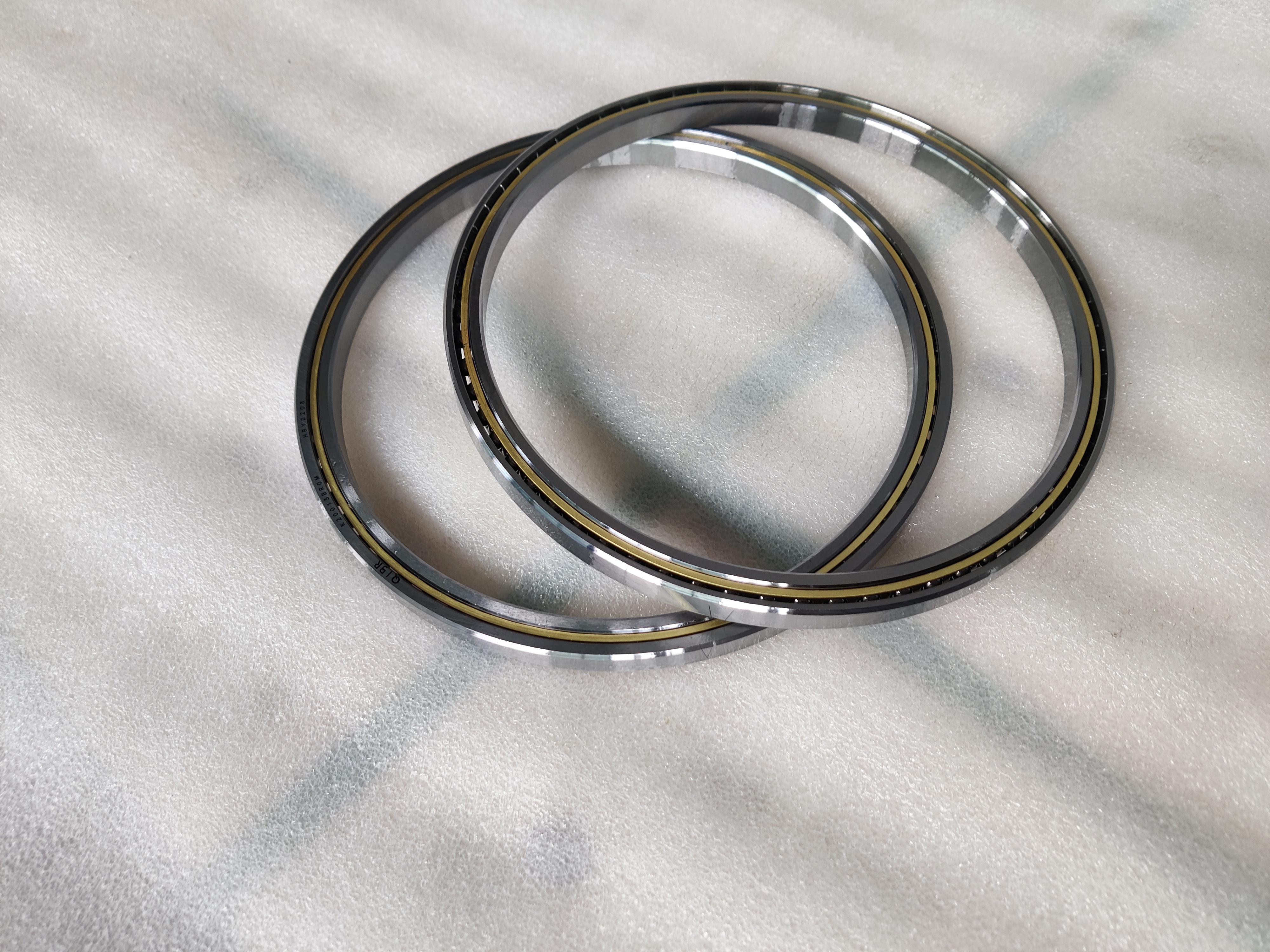
The RE series thin section crossed roller bearings (split inner ring type) also feature a split inner ring and a single-piece outer ring, making them ideal for applications requiring high outer ring rotational accuracy.
The SX series (two-half outer ring type, inner ring rotating, ultra-thin) has a structure similar to the RB series, employing an ultra-thin design with a smaller cross-sectional size than the RB series. The outer ring is divided into two halves, while the inner ring is a single piece, connected by three retaining rings. There are no mounting holes on the outer and inner rings; flanges and support seats are required for installation. It is suitable for applications requiring high inner ring rotation precision. 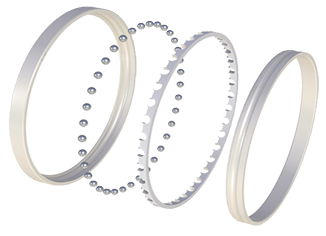
Deep groove ball bearings: Series 6900, 6800, 6700, 618, and 619 are all thin section bearings.
There are also many other thin section models from overseas.
thin section angular contact ball bearings: Series 718 and 719 are also thin section ball bearings.
A thin section ball bearing is one where the ratio of the bearing's inner diameter to its outer diameter is less than a specified value. A ratio of 1.25 or less is called a thin section ball bearing, indicating a very small outer diameter - inner diameter value and a very thin bearing wall. thin section ball bearings require high precision due to their thin walls, resulting in low load capacity and poor impact resistance. Therefore, selection must be based on the application environment.
Thin section ball bearings have a simple structure and are easy to use. They are primarily used to bear radial loads, but by increasing the radial clearance, they exhibit some performance characteristics of angular contact ball bearings, capable of withstanding combined radial and axial loads. They can also be used to bear pure axial loads at high speeds where thrust ball bearings are unsuitable. Compared to other types of bearings of the same size, these bearings have a low coefficient of friction and a high limiting speed. However, they are not impact-resistant and are not suitable for heavy loads. 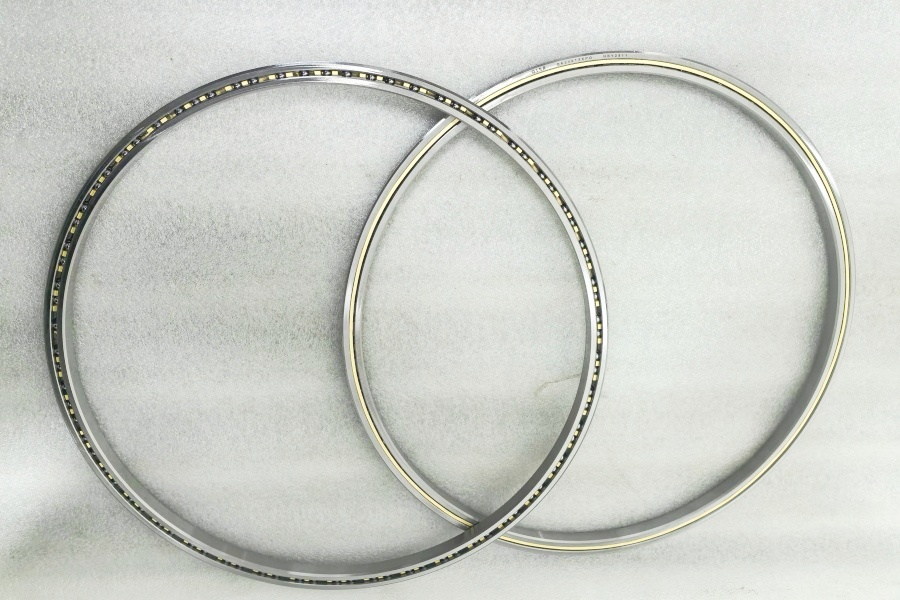
Applications: Model airplanes, remote-controlled cars, machine tools, motors, water pumps, agricultural machinery, textile machinery, laser printers, instruments, measuring instruments, electronic components, motors, etc.
Thin section ball bearings (constant cross-section thin section bearings) have the same structure as angular contact ball bearings, but with thinner walls and narrower widths, making them more difficult to manufacture. Constant cross-section thin section ball bearings are mainly used in aerospace, medical machinery, and robotics industries, where extremely strict requirements exist for installation space. Due to their high precision requirements and complex manufacturing processes, thin section ball bearings with uniform cross-sections are still primarily imported. Luoyang Huigong Bearing has been developing these bearings for over three years, consistently supplying well-known domestic companies, and its product quality has received high praise from customers. 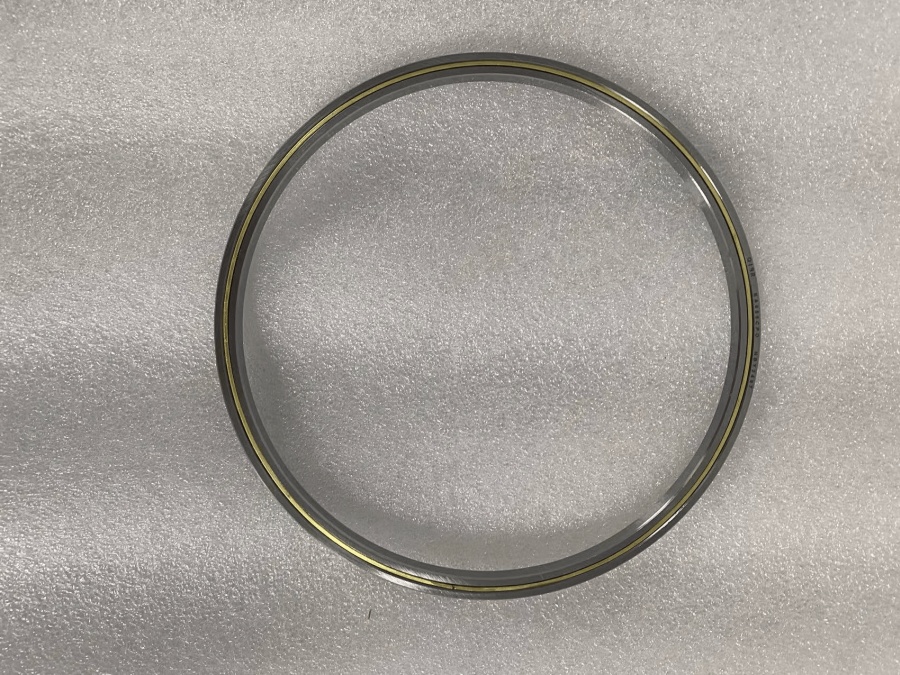
Thin section ball bearings are characterized by high precision, extremely quiet operation, and high load-carrying capacity. These ball bearings come in three designs and are extremely small, with most having a square cross-section. In these series, even with larger shaft diameters and bearing bores, the cross-section remains constant. These bearings are therefore called uniform cross-section bearings. This characteristic distinguishes thin section ball bearings in the standard ISO series from traditional bearings. Therefore, larger cross-sections and higher load-carrying capacities can be selected without changing the shaft diameter. thin section ball bearings can be designed to be extremely lightweight and require very little space.