Newsroom
How Does Shaft and Housing Accuracy Affect Thin-Section Ball Bearing Performance?
Thin-section ball bearings are widely used in robotics, semiconductor equipment, medical devices, optical systems, and precision automation. Their compact design, lightweight construction, and high rotational accuracy make them ideal for applications where space is limited and precision is essential.
However, even the highest-quality bearing cannot achieve its expected performance if the shaft and housing are not manufactured or assembled to the required accuracy. In many cases, premature bearing failure, excessive vibration, or poor positioning accuracy can be traced back to improper shaft or housing conditions rather than the bearing itself.
Why Are Shaft and Housing Accuracy Important?
A thin-section ball bearing is designed to operate with precise internal geometry. During installation, the shaft and housing become part of the bearing system, directly influencing load distribution, running accuracy, and service life.
If either component lacks sufficient accuracy, the bearing may experience uneven loading, increased friction, or elastic deformation during operation.
Proper shaft and housing accuracy helps ensure that the bearing performs as intended.
Common Accuracy Factors
Several factors should be considered when designing or machining shafts and housings for thin-section ball bearings.
Shaft Diameter Tolerance
The shaft diameter should match the recommended fit for the bearing.
If the shaft is oversized, excessive interference may increase internal stress and friction.
If the shaft is undersized, insufficient support may allow the inner ring to creep or rotate, reducing accuracy and accelerating wear.
Housing Bore Accuracy
The housing bore should provide proper support for the bearing's outer ring.
Poor dimensional accuracy or incorrect fits can distort the bearing rings, resulting in increased operating torque, vibration, and reduced bearing life. 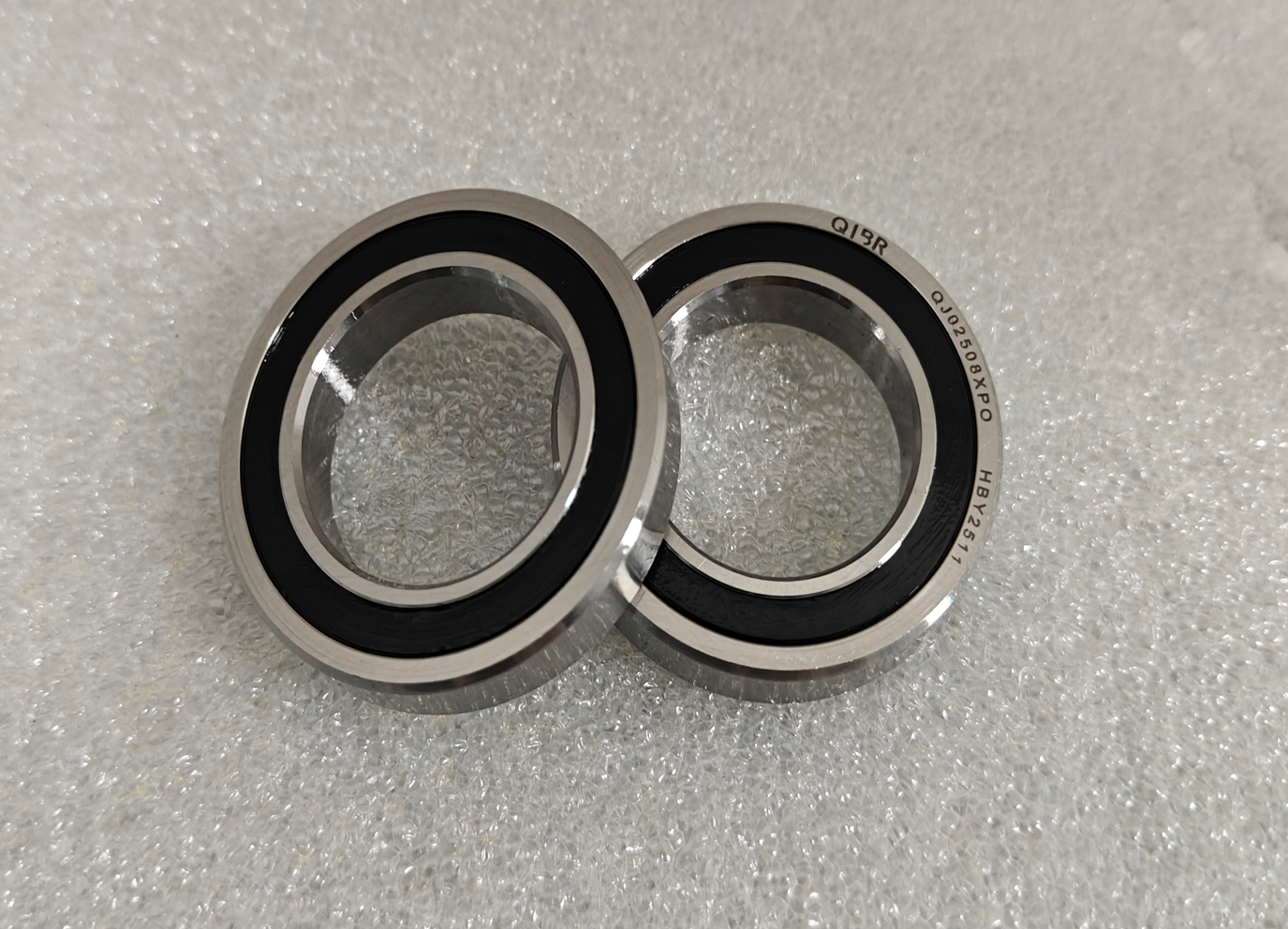
Roundness and Cylindricity
Even when dimensional tolerances are correct, poor roundness or cylindricity can affect bearing performance.
Out-of-round shafts or housings create uneven contact between the bearing rings and their mounting surfaces, causing localized stress concentrations and unstable operation.
Coaxial Alignment
The shaft and housing should be accurately aligned.
Misalignment may introduce additional radial or axial loads that the bearing was not designed to carry, reducing rotational accuracy and increasing wear.
For high-precision equipment, maintaining proper coaxiality is particularly important.
How Does Poor Accuracy Affect Bearing Performance?
Insufficient shaft or housing accuracy may lead to several problems:
- Increased vibration
- Higher operating temperature
- Greater friction
- Reduced positioning accuracy
- Uneven load distribution
- Premature bearing failure
- Shortened service life
These issues often become more significant in high-speed or high-precision applications.
Different Thin-Section Ball Bearings Have Different Requirements
Thin-Section Deep Groove Ball Bearings
Thin-section deep groove ball bearings are suitable for high-speed operation and primarily support radial loads.
To achieve smooth rotation, accurate shaft and housing fits are essential for minimizing vibration and maintaining running accuracy.
Thin-Section Angular Contact Ball Bearings
Thin-section angular contact ball bearings are commonly used in precision positioning systems where rigidity and accuracy are critical.
Improper shaft or housing accuracy may reduce preload effectiveness and negatively affect positioning performance.
Thin-Section Four-Point Contact Ball Bearings
Thin-section four-point contact ball bearings can support radial loads, axial loads in both directions, and moment loads.
Because these bearings are frequently used in rotary tables, robotic joints, and compact rotating assemblies, maintaining precise mounting accuracy is essential for achieving stable load distribution and reliable operation.
Best Practices for Installation
To maximize bearing performance, engineers should:
- Machine shafts and housings to the recommended tolerances.
- Ensure high roundness and cylindricity.
- Maintain proper coaxial alignment.
- Keep mounting surfaces clean and free from burrs.
- Avoid excessive installation force that may deform the bearing rings.
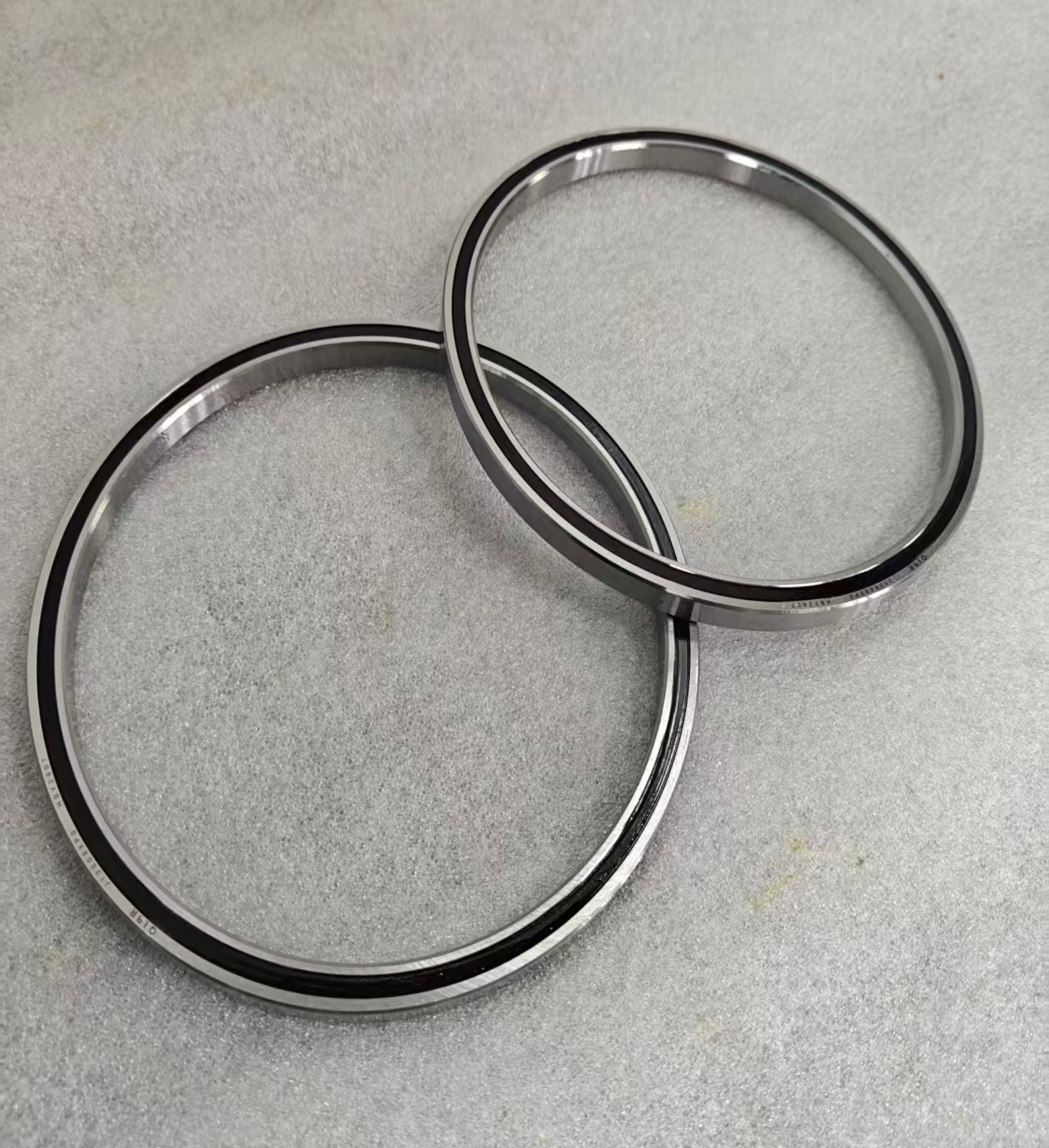
Careful attention during the installation process helps preserve the bearing's original accuracy and extends its service life.
Typical Applications
Accurate shaft and housing machining is especially important in:
- Industrial robots
- Collaborative robots
- Semiconductor manufacturing equipment
- Medical imaging systems
- Optical inspection equipment
- Precision rotary tables
- Aerospace positioning systems
In these industries, even small assembly errors can affect machine accuracy and long-term reliability.
Conclusion
The performance of a thin-section ball bearing depends not only on its design and manufacturing quality but also on the accuracy of the shaft and housing that support it.
Proper tolerances, alignment, and machining quality help ensure uniform load distribution, stable operation, and maximum bearing life.
Whether using Thin-Section Deep Groove Ball Bearings, Thin-Section Angular Contact Ball Bearings, or Thin-Section Four-Point Contact Ball Bearings, paying close attention to shaft and housing accuracy is an essential step toward achieving reliable, high-precision equipment performance.