Newsroom
How Do Thin-Section Ball Bearings Improve Equipment Reliability?
Equipment reliability is a critical factor in industries such as robotics, medical devices, semiconductor manufacturing, aerospace, and precision automation. Unexpected downtime, maintenance costs, and reduced productivity can all result from unreliable mechanical components.
As one of the core components in rotating systems, bearings play a vital role in ensuring long-term equipment performance. Thanks to their compact design, lightweight construction, and precision engineering, Thin-Section Ball Bearings help improve equipment reliability while meeting the demands of modern high-performance applications.
Why Is Equipment Reliability Important?
Reliable equipment offers significant advantages throughout its service life, including:
- Reduced unplanned downtime
- Lower maintenance costs
- Higher production efficiency
- Improved positioning accuracy
- Longer equipment service life
- Greater operational stability
For precision machinery, even minor bearing issues can affect the performance of the entire system. Selecting the right bearing is therefore essential for maintaining reliable operation.
How Do Thin-Section Ball Bearings Improve Reliability?
Optimized Load Distribution
Thin-section ball bearings are designed with precision raceways and carefully controlled internal geometry to distribute loads more evenly across the rolling elements.
Balanced load distribution helps reduce localized stress, minimizing wear and extending bearing life under normal operating conditions.
High Manufacturing Precision
Precision manufacturing directly contributes to bearing reliability.
Accurate raceway grinding, high-quality rolling elements, and strict dimensional control help ensure smooth rotation, consistent performance, and reduced vibration throughout the bearing's service life. 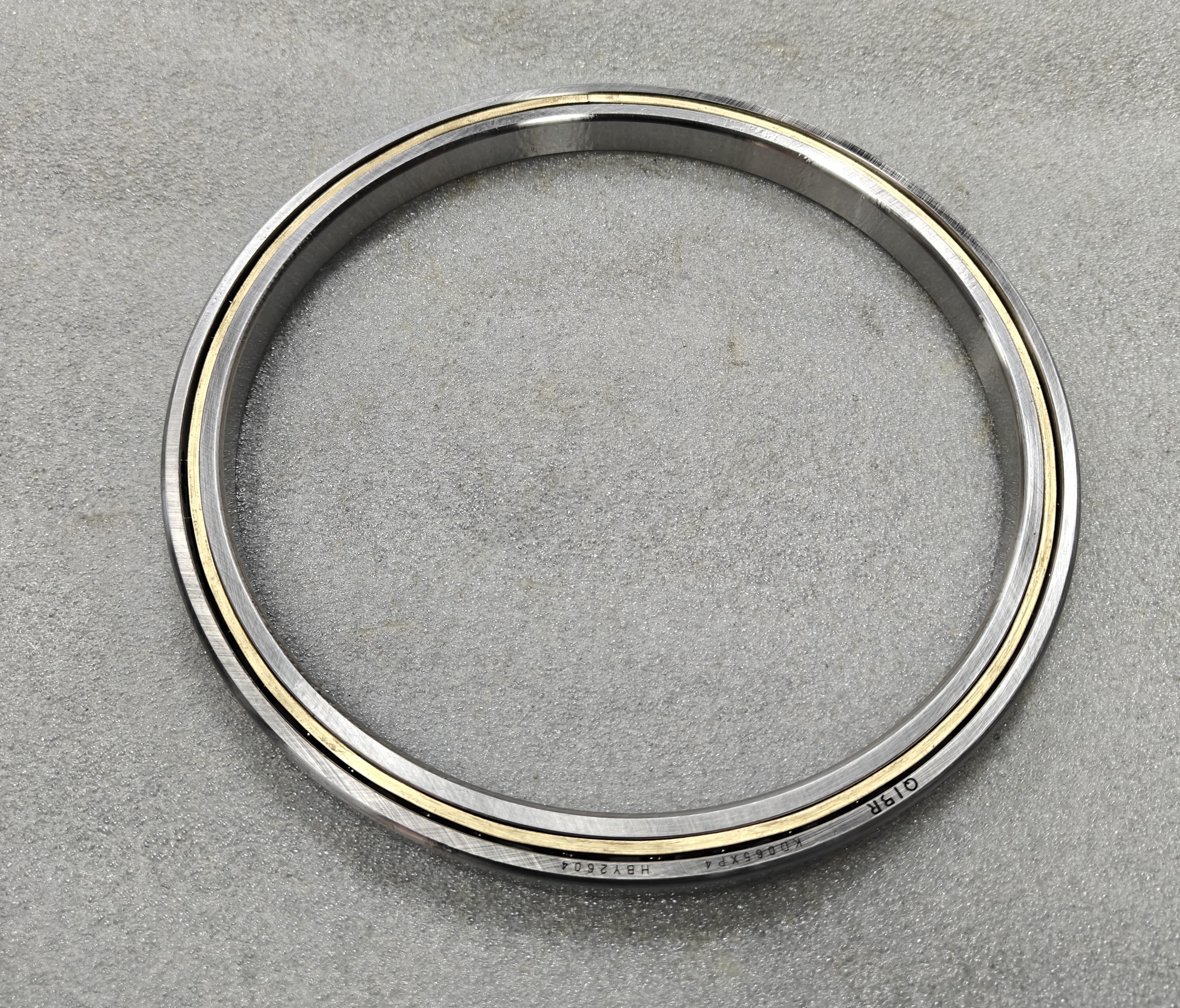
Lightweight Design
Compared with conventional bearings, thin-section ball bearings feature a smaller cross section and lower weight.
Lower rotational inertia reduces the load placed on motors and drive systems during acceleration and deceleration, helping improve overall system stability while reducing mechanical stress.
Stable Motion Performance
Reliable equipment requires smooth and consistent motion.
Thin-section ball bearings are designed to provide stable rotational performance, supporting precise positioning and repeatable movement in high-accuracy applications.
This is particularly important in robotics, optical equipment, and semiconductor manufacturing systems.
Space-Saving Design
Modern equipment continues to become more compact.
The slim profile of thin-section ball bearings allows engineers to reduce equipment size without sacrificing performance. A more compact mechanical structure often improves overall rigidity while simplifying system design and assembly.
Choosing the Right Bearing Type
Different thin-section ball bearing designs are optimized for different operating conditions. Selecting the appropriate type helps maximize equipment reliability.
Thin-Section Deep Groove Ball Bearings (Type C)
Thin-Section Deep Groove Ball Bearings (Type C) are primarily designed for radial loads and high-speed operation.
Their simple internal structure provides smooth rotation, low friction, and dependable performance, making them suitable for electric motors, automation equipment, and precision instruments.
Thin-Section Angular Contact Ball Bearings (Type A)
Thin-Section Angular Contact Ball Bearings (Type A) support combined radial and axial loads while offering higher rigidity and positioning accuracy.
They are commonly used in robotic joints, medical equipment, precision positioning systems, and machine tools where stable performance is essential.
Thin-Section Four-Point Contact Ball Bearings (Type X)
Thin-Section Four-Point Contact Ball Bearings (Type X) are capable of supporting radial loads, axial loads in both directions, and moment loads within a single bearing.
Their compact design allows one bearing to replace more complex bearing arrangements, reducing component count and improving overall system reliability.
Additional Factors That Affect Reliability
Although bearing quality is important, long-term reliability also depends on proper application and maintenance.
Key considerations include:
- Correct bearing selection
- Appropriate lubrication
- Proper preload
- Accurate shaft and housing machining
- Correct installation procedures
- Suitable operating conditions
- Regular inspection and maintenance
Considering these factors together helps maximize bearing performance and service life. 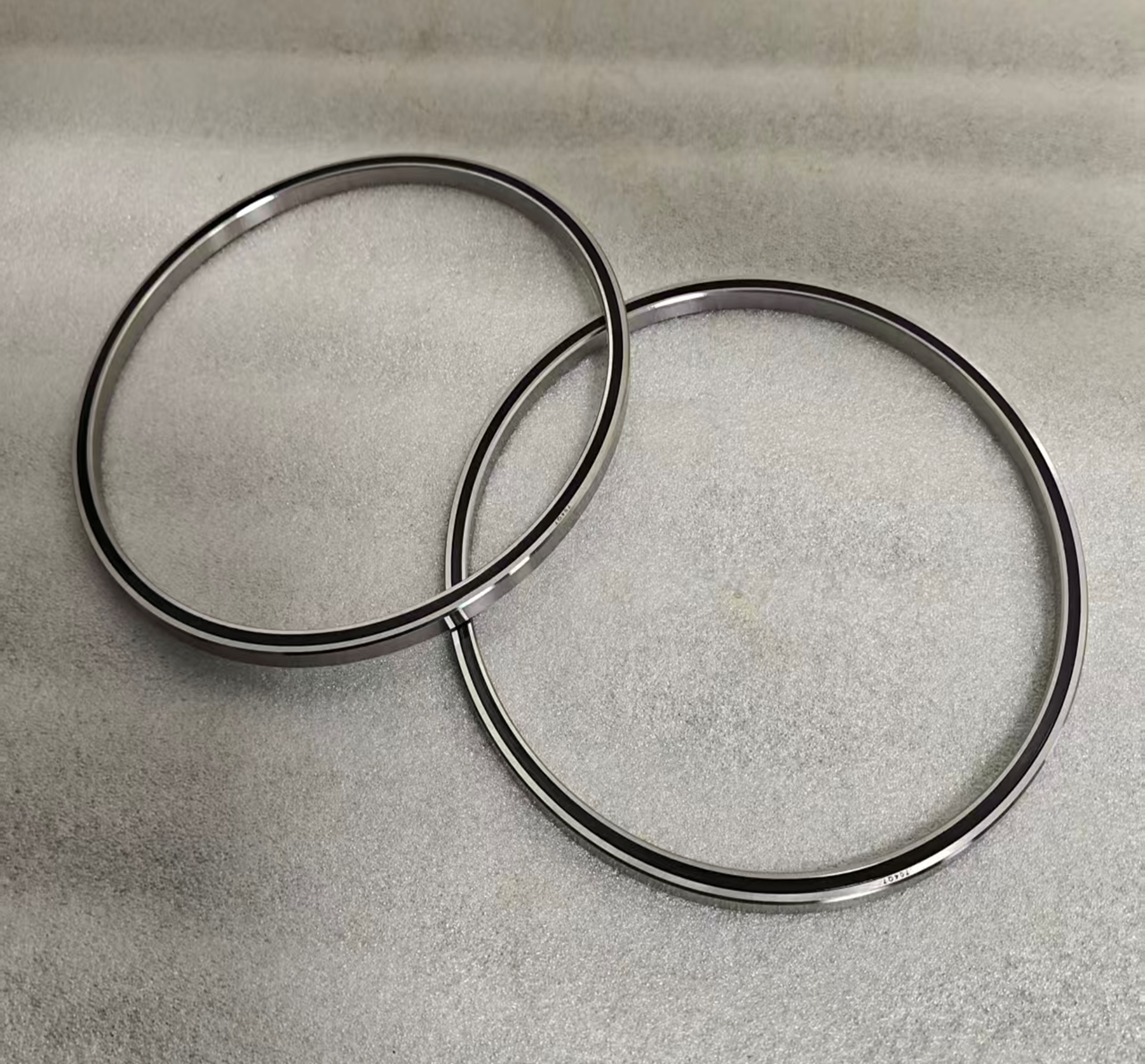
Typical Applications
Thin-section ball bearings are widely used in applications requiring long-term reliability, including:
- Industrial robots
- Collaborative robots
- Medical imaging equipment
- Semiconductor manufacturing equipment
- Optical inspection systems
- Precision rotary tables
- Aerospace positioning equipment
In these industries, reliable bearing performance directly contributes to equipment accuracy, productivity, and reduced maintenance costs.
Conclusion
Equipment reliability depends on the performance of every critical component, and bearings are no exception.
With optimized load distribution, lightweight construction, precision manufacturing, and application-specific designs, Thin-Section Ball Bearings help improve operational stability, reduce maintenance requirements, and extend equipment service life.
Whether selecting Thin-Section Deep Groove Ball Bearings (Type C) for high-speed applications, Thin-Section Angular Contact Ball Bearings (Type A) for precision positioning, or Thin-Section Four-Point Contact Ball Bearings (Type X) for complex load conditions, choosing the right bearing is an important step toward building more reliable and efficient equipment.