Newsroom
How Do Thin-Section Ball Bearings Help Reduce Friction?
Friction is an unavoidable part of every rotating system, but excessive friction can reduce efficiency, generate heat, increase energy consumption, and shorten bearing service life. In industries such as robotics, medical devices, semiconductor manufacturing, and precision automation, minimizing friction is essential for achieving smooth, accurate, and reliable operation.
Designed with a compact cross section and optimized internal geometry, Thin-Section Ball Bearings help reduce friction while maintaining excellent load capacity and rotational accuracy. Their lightweight construction and precision design make them an ideal solution for modern high-performance equipment.
Why Is Low Friction Important?
Lower friction offers several advantages for precision equipment, including:
- Reduced operating temperature
- Lower energy consumption
- Smoother rotation
- Reduced vibration and noise
- Improved positioning accuracy
- Extended bearing service life
As equipment continues to become smaller, faster, and more precise, controlling friction has become a key consideration in bearing selection.
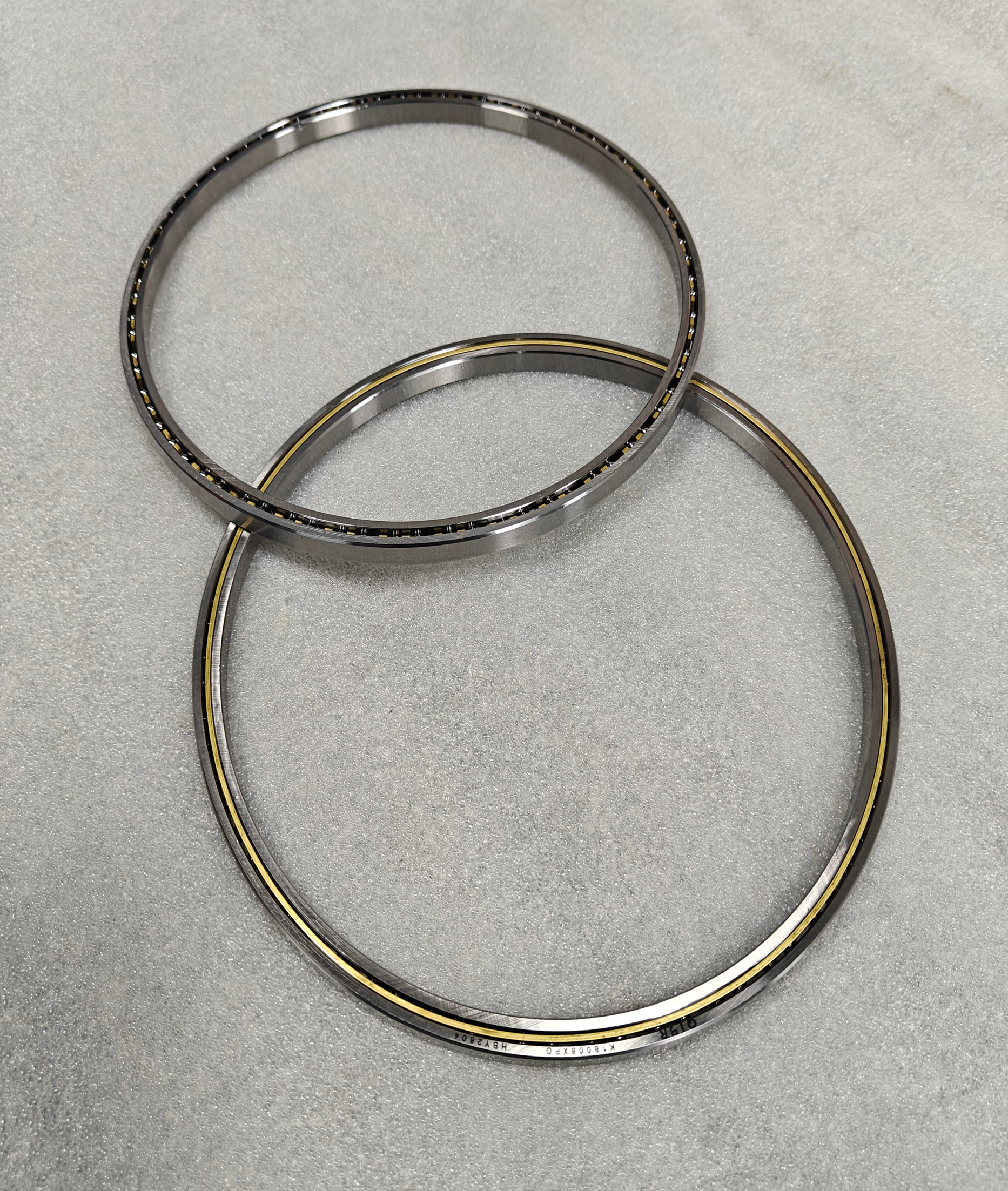
How Do Thin-Section Ball Bearings Reduce Friction?
Optimized Raceway Design
The raceways of thin-section ball bearings are precisely machined to provide smooth rolling contact between the balls and raceways.
Optimized raceway geometry reduces rolling resistance while ensuring stable load distribution, allowing the bearing to operate efficiently under a wide range of operating conditions.
Lightweight Construction
Compared with conventional bearings of the same bore size, thin-section ball bearings have a much smaller cross section and lower overall weight.
Reducing the rotating mass lowers rotational inertia, allowing machines to accelerate and decelerate more efficiently while reducing the energy required for operation.
This lightweight design also contributes to smoother motion and improved dynamic performance.
High Manufacturing Precision
Precision manufacturing plays a significant role in reducing friction.
Accurate raceway grinding, consistent ball dimensions, and strict dimensional tolerances help ensure smooth rolling motion with minimal resistance.
As a result, thin-section ball bearings are well suited for high-speed and high-precision applications.
Choosing the Right Bearing Type
Different thin-section ball bearing designs are optimized for different load conditions and operating requirements. Selecting the appropriate type helps achieve the best balance between friction, rigidity, and load capacity.
Thin-Section Deep Groove Ball Bearings (Type C)
Thin-Section Deep Groove Ball Bearings (Type C) are designed primarily for radial loads while providing excellent high-speed performance and low running friction.
Their simple internal structure minimizes rolling resistance, making them suitable for electric motors, automation equipment, precision instruments, and other applications requiring smooth, efficient rotation.
Thin-Section Angular Contact Ball Bearings (Type A)
Thin-Section Angular Contact Ball Bearings (Type A) are designed to support combined radial and axial loads.
Their contact angle provides greater rigidity and improved positioning accuracy. When properly installed and preloaded, they maintain smooth operation with controlled friction, making them ideal for robotic joints, machine tools, and precision positioning systems.
Thin-Section Four-Point Contact Ball Bearings (Type X)
Thin-Section Four-Point Contact Ball Bearings (Type X) are capable of supporting radial loads, axial loads in both directions, and moment loads within a single bearing.
Because one bearing can often replace more complex bearing arrangements, Type X bearings help simplify mechanical designs, reduce the number of components, and minimize additional friction generated by multiple bearing assemblies.
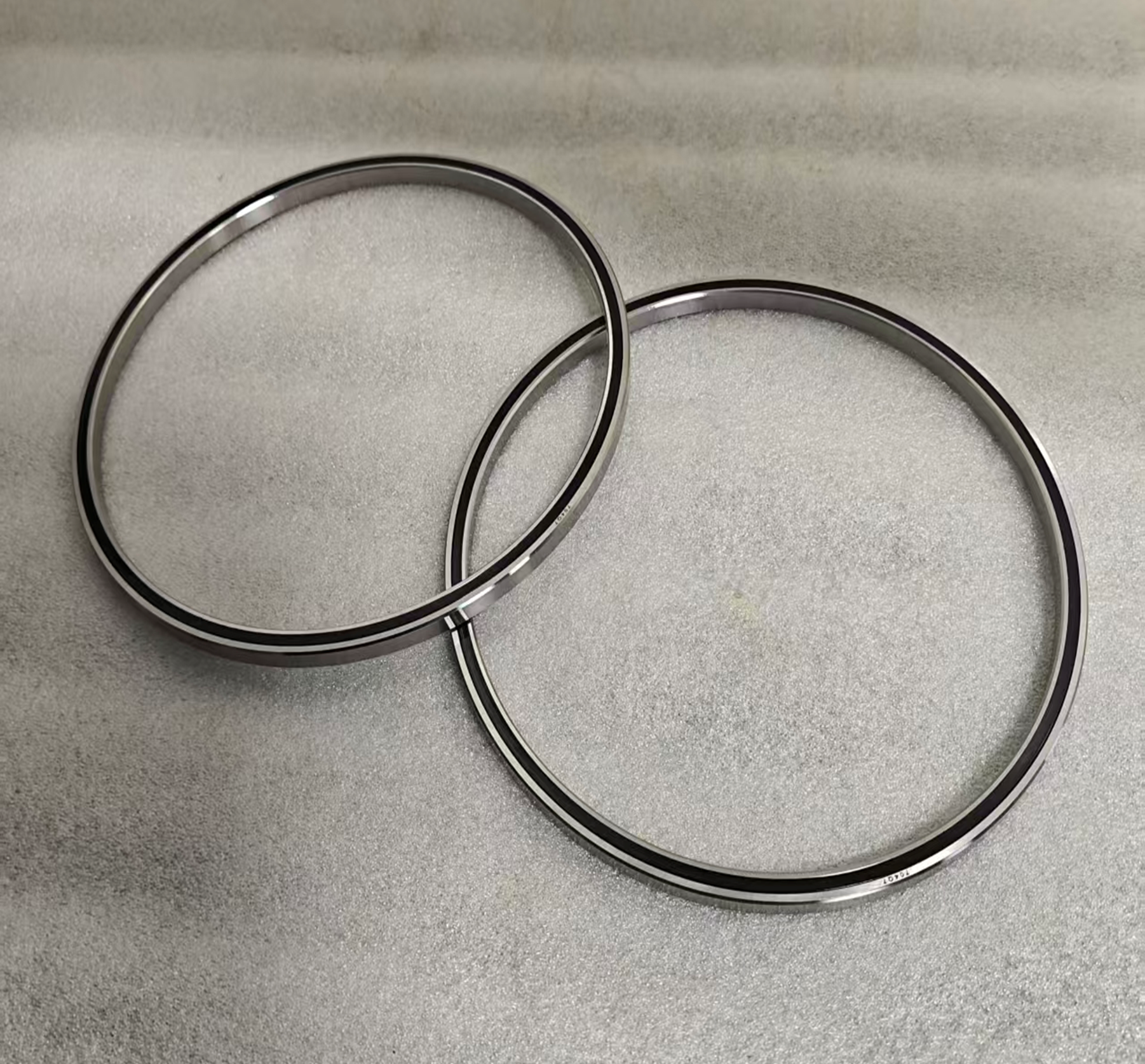
Other Factors That Influence Bearing Friction
Although bearing design is important, friction is also influenced by several external factors, including:
- Lubrication selection
- Bearing preload
- Shaft and housing accuracy
- Installation quality
- Operating load
- Rotational speed
- Working temperature
Proper installation and maintenance are just as important as selecting the right bearing.
Typical Applications
Thin-section ball bearings are widely used in applications where low friction and high precision are essential, including:
- Industrial robots
- Collaborative robots
- Medical imaging equipment
- Semiconductor manufacturing equipment
- Optical inspection systems
- Precision rotary tables
- Aerospace positioning systems
In these applications, reduced friction contributes to improved efficiency, smoother motion, lower power consumption, and longer equipment life.
Conclusion
Reducing friction is one of the most effective ways to improve the performance and reliability of precision machinery.
With optimized raceway geometry, lightweight construction, and precision manufacturing, Thin-Section Ball Bearings provide excellent low-friction performance while maintaining high accuracy and durability.
Whether you choose Thin-Section Deep Groove Ball Bearings (Type C) for high-speed operation, Thin-Section Angular Contact Ball Bearings (Type A) for precision positioning, or Thin-Section Four-Point Contact Ball Bearings (Type X) for applications requiring combined load capacity, selecting the right bearing type helps maximize equipment efficiency, reliability, and service life.