Newsroom
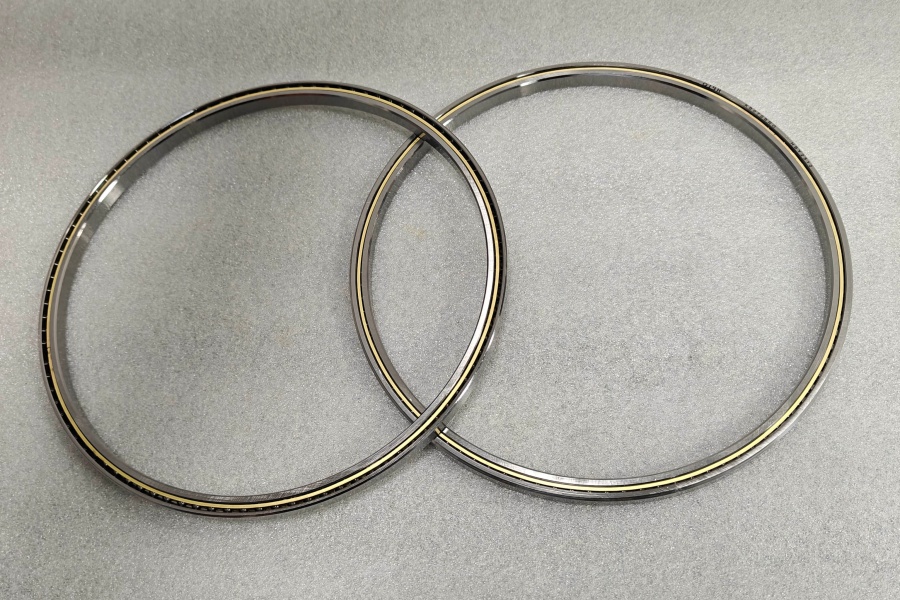
Four-Point Contact Thin Section Ball Bearings for Space-Saving and High-Load Applications
2026-09-18Modern machinery is becoming increasingly compact, lightweight, and precise. At the same time, many mechanical systems need to withstand radial loads, axial loads, and overturning moments within a limited installation space. These requirements can make conventional bearings difficult to integrate into compact equipment.
Four-Point Contact Thin Section Ball Bearings provide a flexible solution for applications where space efficiency, combined-load capability, and reliable rotational performance are important.
With their compact cross-sectional design and four-point contact raceway geometry, these bearings are widely considered for applications including robotics, industrial automation, medical equipment, optical systems, semiconductor equipment, rotary positioning systems, and other space-constrained machinery.
1.What Are Four-Point Contact Thin Section Ball Bearings?
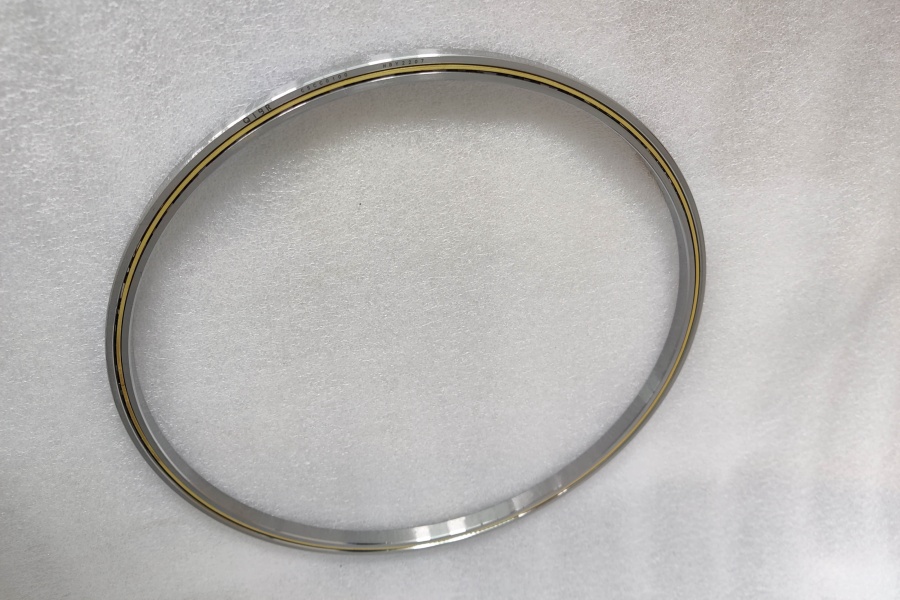
Four-point contact thin section ball bearings are specialized ball bearings designed to provide load-carrying capability in a relatively compact cross section.
The four-point contact raceway geometry allows the bearing to accommodate loads acting in different directions. Depending on the bearing design and operating conditions, it can support combinations of radial loads, axial loads, and moment loads.
The thin-section construction reduces the radial space required for the bearing, making it particularly useful when equipment designers need to minimize the size and weight of rotating components.
Compared with using multiple conventional bearings, a four-point contact arrangement can sometimes simplify the mechanical design by allowing a single bearing to accommodate different load directions.
2. Key Applications of Four-Point Contact Thin Section Ball Bearings
The biggest advantage of these bearings is their adaptability to specialized mechanical applications. Below are some of the common application areas where Four-Point Contact Thin Section Ball Bearings can be considered.
i. CRobotic Joints and Robotic Arms
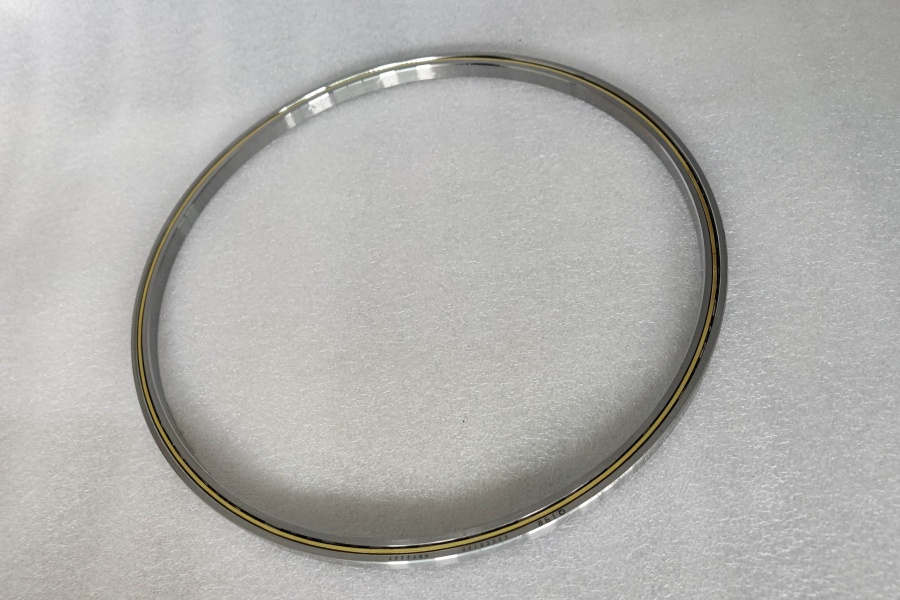
Robotics is one of the most demanding applications for compact bearings.
A robotic joint may experience radial forces, axial forces, and moment loads simultaneously. At the same time, the available installation space inside the joint is often extremely limited.
Four-point contact thin section bearings can help designers achieve a compact joint structure while accommodating combined loading conditions.
- Typical applications include:
- Industrial robot joints
- Collaborative robots
- Robotic arms
- Pick-and-place robots
- Automated assembly robots
- Precision positioning robots
- Service and inspection robots
For robotic applications, bearing selection should consider not only static and dynamic load capacity but also rotational accuracy, friction, stiffness, speed, lubrication, and expected service life.
ii. Industrial Automation Equipment
Automation equipment often requires compact rotating mechanisms that operate continuously in production environments.
Space-saving bearings can be used in:
- Rotary positioning mechanisms
- Automated assembly equipment
- Indexing tables
- Pick-and-place systems
- Material handling equipment
- Packaging machinery
- Inspection machines
- Automated production lines
In these systems, reducing bearing cross section can help engineers save installation space and potentially reduce the overall size of the machine.
Where standard bearings do not fit the available housing dimensions, customized four-point contact thin section bearings can be developed according to the required bore, outside diameter, width, clearance, and internal construction.
iii. Rotary Tables and Positioning Systems
To Precision rotary tables require bearings that can support loads while maintaining controlled rotational movement.
A rotary positioning system may experience:
- Radial loads from the mounted components
- Axial loads from the workpiece
- Moment loads caused by an offset load
A four-point contact bearing can be considered when these different loads need to be accommodated within a compact bearing arrangement.
Applications include:
- CNC rotary tables
- Precision positioning platforms
- Indexing tables
- Automated inspection platforms
- Laser positioning equipment
- Assembly positioning systems
For precision applications, factors such as bearing runout, preload, internal clearance, mounting accuracy, and system stiffness should be evaluated together.
iv. Medical and Laboratory Equipment
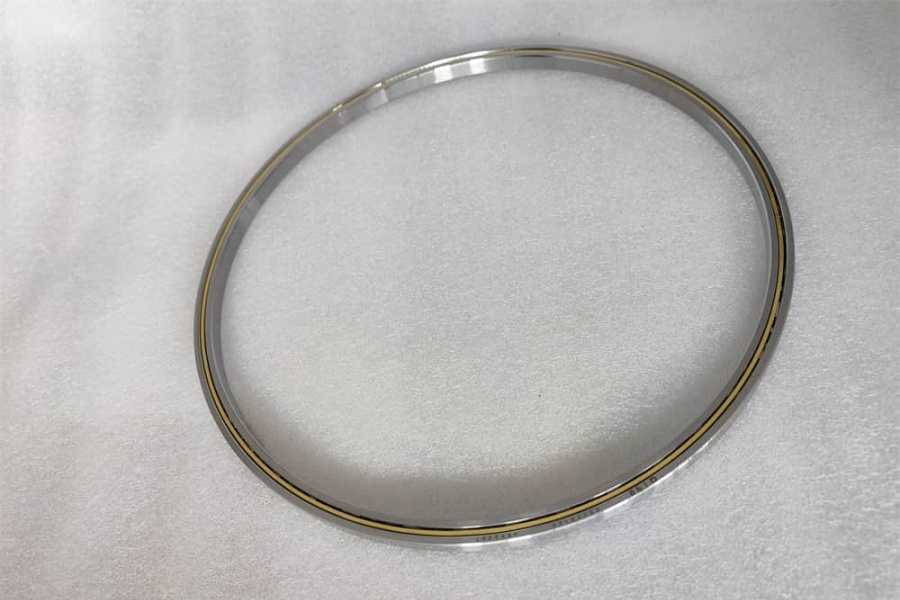
Medical and laboratory equipment often combines compact mechanical structures with requirements for smooth and reliable movement.
Examples include:
- Medical imaging equipment
- Laboratory automation systems
- Diagnostic equipment
- Robotic medical mechanisms
- Sample handling equipment
- Precision positioning equipment
In these applications, the bearing may need to operate smoothly while occupying very little installation space.
Depending on the operating environment, designers may also consider special lubrication, stainless steel materials, sealed configurations, or other customized bearing solutions.
5. Conclusion
Four-Point Contact Thin Section Ball Bearings are designed for applications where conventional bearing arrangements may not provide the required combination of compact dimensions and multi-directional load capability.
Their potential applications cover a wide range of industries, including robotics, industrial automation, rotary tables, medical equipment, optical systems, semiconductor machinery, aerospace equipment, antenna positioning systems, packaging machinery, and compact actuators.
The right bearing depends on the complete operating conditions rather than the bearing dimensions alone. Load, speed, temperature, lubrication, mounting conditions, required life, and available installation space should all be considered during the selection process.
For applications with unusual dimensional or performance requirements, customized Four-Point Contact Thin Section Ball Bearings can provide greater flexibility for equipment manufacturers and mechanical designers.
If you are developing a new machine or replacing an existing bearing, providing the bearing drawing, dimensions, load information, speed, and application details can help determine a suitable bearing solution.