Newsroom
Four-Point Contact Thin Section Ball Bearings: Design and Selection Guide
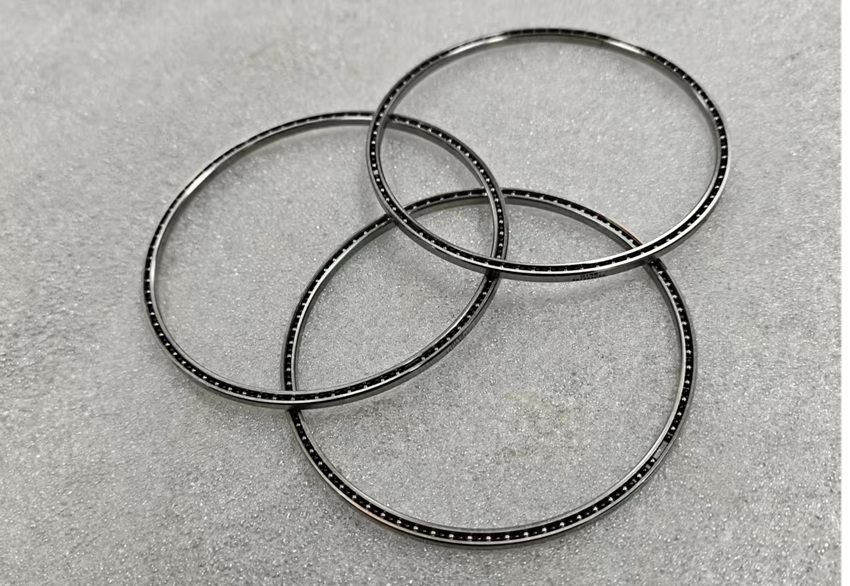
2026-09-24Four-Point Contact Thin Section Ball Bearings combine a four-point contact raceway with a thin-section design. This structure allows engineers to achieve a compact bearing arrangement while managing radial and axial loading through a carefully designed raceway and ball geometry.
For applications requiring a non-standard bearing solution, understanding the internal design and key selection parameters is essential before choosing a suitable bearing.
1.How Does a Four-Point Contact Bearing Work?
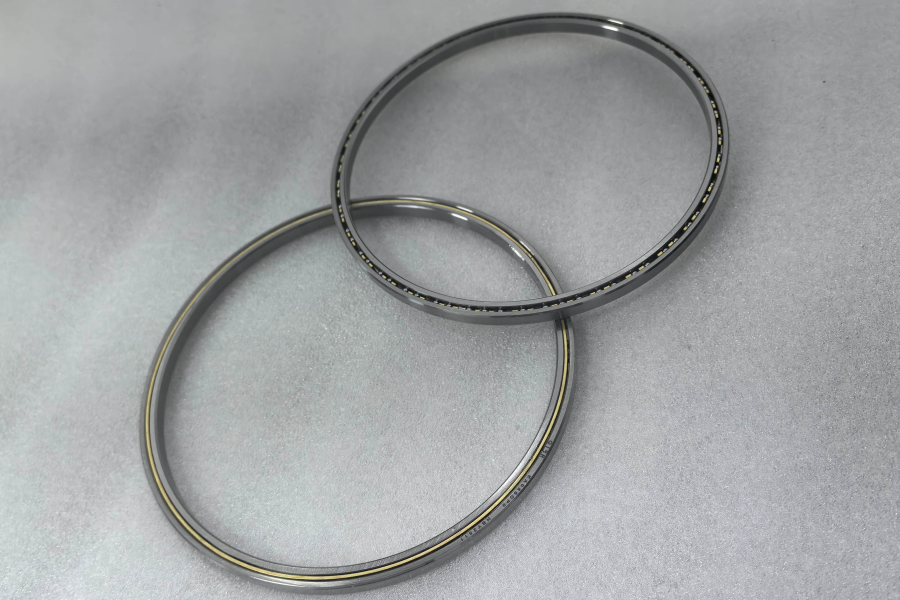
The main difference between a four-point contact bearing and a conventional deep groove ball bearing is the geometry of the raceway.
In a four-point contact design, each ball can form contact with the inner and outer raceways at multiple points depending on the loading condition. This allows the bearing to accommodate axial loads in both directions while maintaining a relatively compact cross-section.
The contact angle is one of the important design parameters. It influences how the bearing distributes radial and axial loads and should therefore be selected according to the actual operating conditions.
2. Why Is the Thin-Section Design Important?
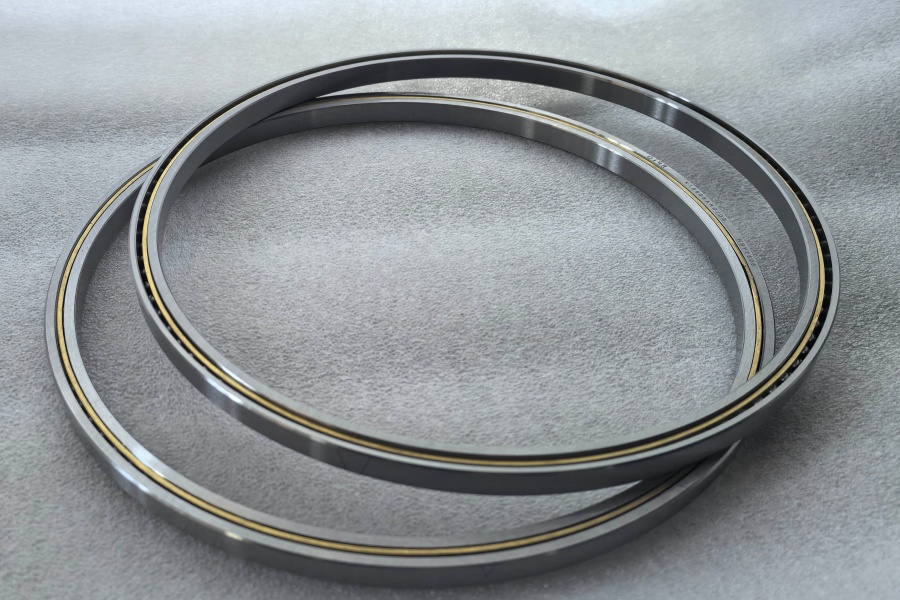
For thin-section bearings, reducing the cross-sectional size is not simply a matter of making the rings thinner. The raceway, ball diameter, ring geometry, cage design, and manufacturing tolerances must work together.
A well-designed thin-section ball bearing needs to maintain sufficient:
- Raceway strength
- Contact stability
- Rotational accuracy
- Load capacity
- Rigidity
- Manufacturing consistency
Therefore, thin-section bearing design requires careful control of both geometry and manufacturing tolerances.
3. Important Parameters When Selecting Four-Point Contact Thin Section Bearings
i. Bearing Dimensions
The bore diameter, outside diameter, and width determine whether the bearing can be properly installed. For customized bearings, mounting dimensions and surrounding components should also be considered.
ii. Contact Angle
The contact angle directly affects the bearing's load distribution. Different contact angles can be selected depending on whether radial or axial loading is more significant.
iii. Internal Clearance
Internal clearance affects bearing rotation, temperature, vibration, and load distribution. The appropriate clearance should be determined according to operating temperature, mounting conditions, load, and speed.
iv. Bearing Precision
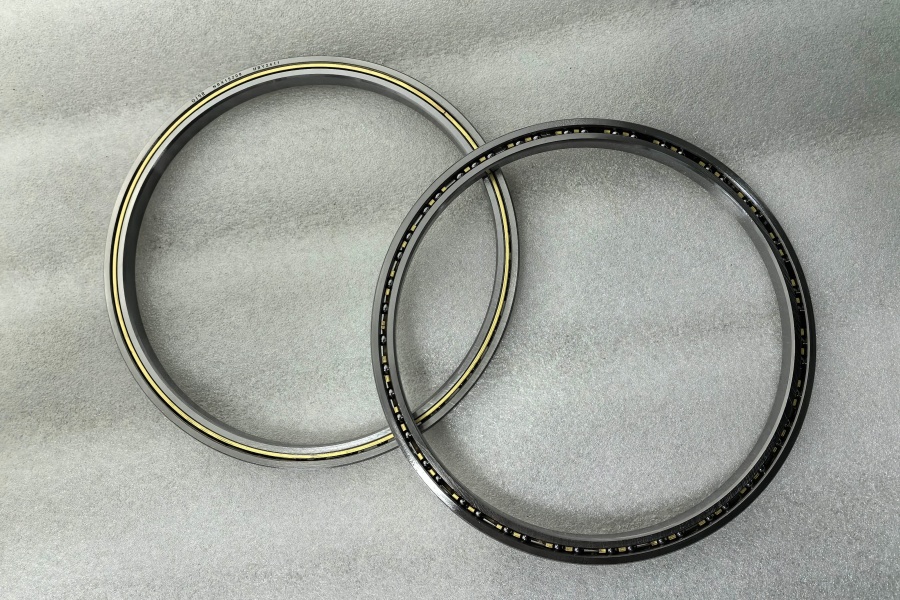
For precision equipment, dimensional accuracy and rotational accuracy are important considerations. The required tolerance class should be determined according to the actual mechanical requirements rather than selected simply by default.
4. Four-Point Contact vs. Conventional Deep Groove Bearings
Although both bearing types can accommodate radial and axial loads, their internal geometries are different.
A deep groove ball bearing is generally designed around continuous deep-groove raceways, while a four-point contact bearing uses a specially designed raceway profile to create four-point contact characteristics.
The choice between the two should therefore be based on the actual load direction, space limitations, rotational requirements, and bearing arrangement.
Using a four-point contact bearing simply because it has a smaller cross-section does not necessarily guarantee better performance. Bearing geometry must match the actual operating conditions.
5. What Makes a Good Customized Four-Point Contact Bearing?
For non-standard requirements, customization should begin with the operating conditions rather than only the required dimensions.
Important information includes:
- Bearing dimensions
- Radial and axial loads
- Rotational speed
- Operating temperature
- Required clearance
- Precision requirements
- Lubrication conditions
- Seal requirements
- Expected service life
Based on these parameters, the manufacturer can evaluate the raceway geometry, contact angle, ball size, cage structure, clearance, and other technical details.
If you are developing a new machine or replacing an existing bearing, providing the bearing drawing, dimensions, load information, speed, and application details can help determine a suitable bearing solution.
6.Conclusion?
Four-Point Contact Thin Section Ball Bearings require more than a compact ring design. Their performance depends on the relationship between raceway geometry, contact angle, rolling elements, internal clearance, cage structure, and manufacturing accuracy.
For standard requirements, selecting the correct bearing specification is essential. For non-standard equipment, a customized design can provide greater control over dimensions and internal parameters.
By evaluating the complete operating conditions before production, manufacturers can develop a Four-Point Contact Thin Section Ball Bearing that is better matched to the mechanical system and its performance requirements.