Newsroom
Do Thin Section Bearings Need Seals?
Thin section bearings are widely used in robotics, medical devices, semiconductor equipment, aerospace systems, and precision automation machinery. Their compact design and lightweight structure make them an ideal solution where space and weight are critical considerations.
When selecting a thin section bearing, engineers often focus on load capacity, accuracy, and installation space. However, another important question is frequently overlooked:
Does a thin section bearing need sealing or additional protection?
The answer depends largely on the operating environment and application requirements.
Why Bearing Protection Matters
Although thin section bearings are designed for precision performance, they remain vulnerable to contamination, moisture, and lubricant loss.
Particles such as dust, metal debris, or process contaminants can enter the bearing raceway and affect smooth operation. In demanding environments, insufficient protection may lead to increased wear, reduced accuracy, and shorter service life.
Therefore, bearing protection should be considered during the initial design stage rather than after problems occur.
Open Thin Section Bearings
Most thin section bearings are supplied in an open configuration. 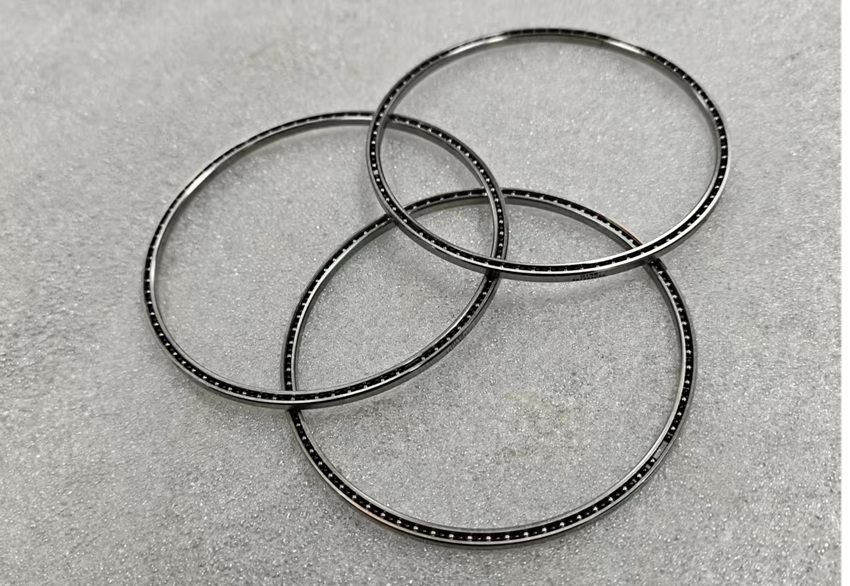
This design offers several advantages:
- Lower rotational friction
- Smooth running performance
- Higher speed capability
- Easier inspection and relubrication
Open bearings are commonly used in applications where the operating environment is clean and controlled.
Typical examples include:
- Semiconductor equipment
- Optical systems
- Precision measuring instruments
- Laboratory automation equipment
For these applications, maximizing precision and minimizing friction are often more important than environmental protection.
When Additional Protection Is Recommended
Not every application operates in a clean environment.
In industrial automation, robotics, packaging equipment, and outdoor systems, bearings may be exposed to:
- Dust
- Moisture
- Process contaminants
- Cleaning agents
In these situations, additional protection can help preserve bearing performance and extend operating life.
Protection methods may include:
- Integrated sealing solutions
- External sealing structures
- Protective covers
- Specialized lubrication systems
The most suitable solution depends on the application's environmental conditions and maintenance strategy.
How Protection Affects Bearing Performance
While additional protection improves contamination resistance, it may also influence certain operating characteristics.
Engineers must balance:
- Rotational speed
- Friction level
- Maintenance requirements
- Service life expectations
For example, a clean-room robot joint may prioritize low friction and high precision, while an industrial robot operating in a dusty factory may prioritize contamination resistance and long-term reliability.
Selecting the right protection strategy helps achieve the best overall performance. 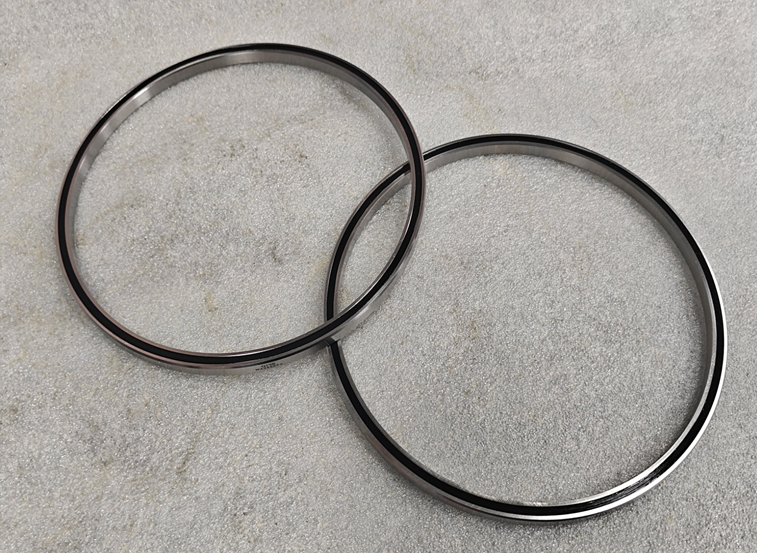
Thin Section Bearing Types and Protection Requirements
Different thin section bearing designs may have different protection requirements.
Thin Section Deep Groove Ball Bearings
Typically used in high-speed applications with predominantly radial loads.
Protection requirements are often determined by environmental cleanliness and maintenance intervals.
Thin Section Angular Contact Ball Bearings
Frequently used in precision positioning systems and applications with combined radial and axial loads.
These systems often require a balance between rigidity, accuracy, and environmental protection.
Thin Section Four-Point Contact Ball Bearings
Commonly used in robotic joints, rotary tables, and compact rotary systems.
Because these applications may experience complex loading conditions, both bearing protection and lubrication management become critical factors.
Conclusion
There is no universal answer to whether a thin section bearing needs sealing or additional protection.
The right choice depends on the operating environment, maintenance conditions, performance requirements, and expected service life.
By considering protection requirements early in the design process, engineers can improve bearing reliability, reduce maintenance costs, and maximize the performance of their equipment.
For demanding applications, selecting the appropriate bearing protection strategy can be just as important as selecting the bearing itself.