Newsroom
Can One Thin-Section Four-Point Contact Bearing Replace Two Angular Contact Bearings?
In compact and precision equipment, engineers often need to support radial, axial, and moment loads while keeping the mechanism lightweight and space-saving.
So, can one Thin-Section Four-Point Contact Ball Bearing (Type X) replace two Angular Contact Ball Bearings (Type A)?
The answer is: sometimes, but not in every application.
Why Choose Type X?
Thin-Section Four-Point Contact Ball Bearings (Type X) are designed to support:
- Radial loads
- Axial loads in both directions
- Moment loads
A single Type X bearing can handle multiple load directions, making it useful for compact rotating mechanisms.
It can also reduce the number of components and simplify the housing design, saving both space and weight.
When Can Type X Be an Alternative?
Type X can be considered when the application requires:
Compact Installation
One bearing can take the place of a more complex bearing arrangement, helping reduce axial space and overall system size.
Multi-Directional Load Support
When radial, axial, and moment loads occur simultaneously, Type X can provide a practical single-bearing solution.
Simplified Design
Using one bearing can reduce component count, assembly requirements, and mechanical complexity. 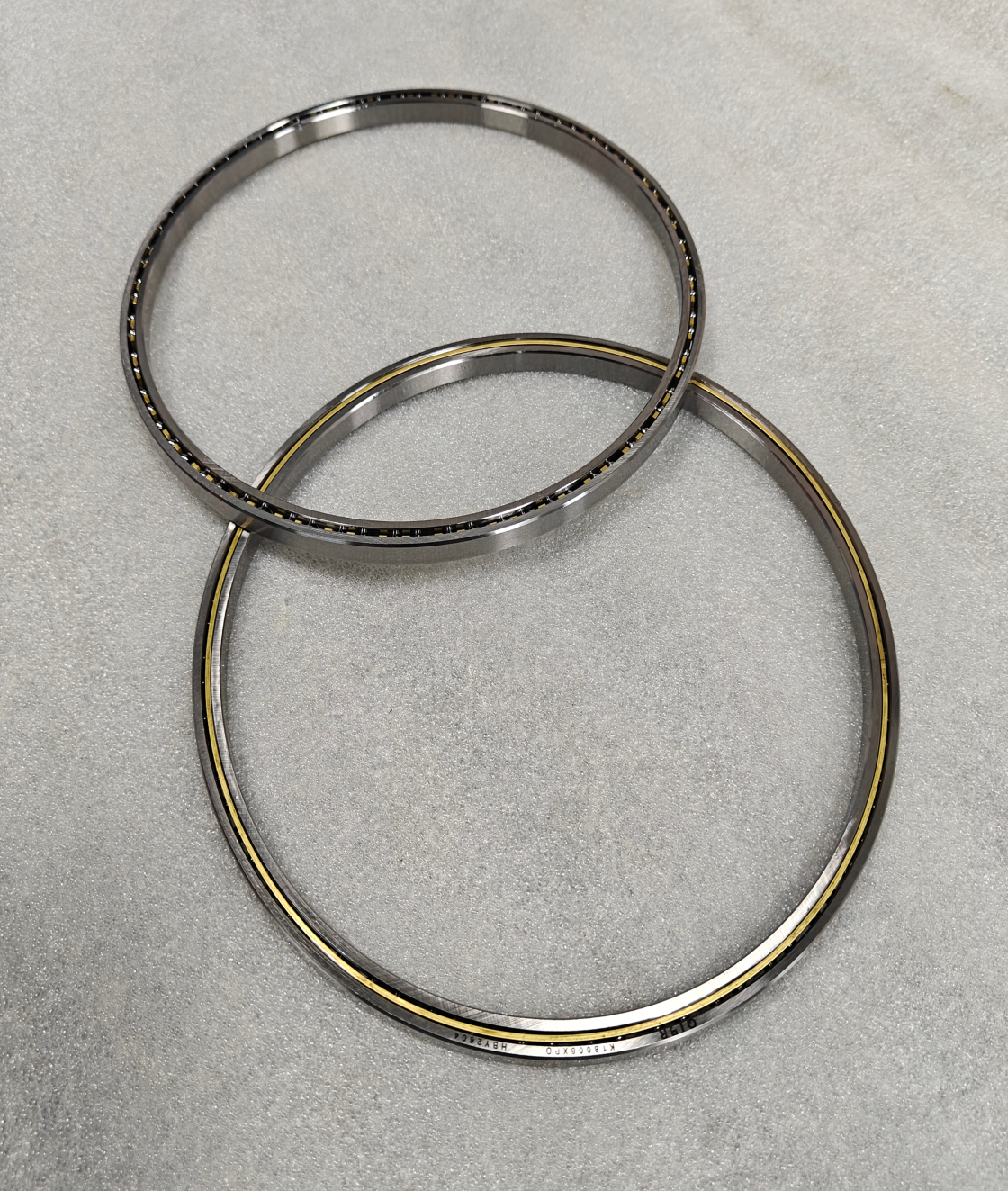
When Are Two Type A Bearings Better?
Thin-Section Angular Contact Ball Bearings (Type A) may be preferable when the application requires:
- Higher rigidity
- Higher axial load capacity
- Precise positioning
- Specific preload arrangements
- High-speed performance
For precision machine tools and demanding positioning systems, a pair of Type A bearings may provide better control and rigidity.
Type X vs. Two Type A Bearings
| Feature | Type X | Two Type A |
|---|---|---|
| Radial load | ✓ | ✓ |
| Axial load | Both directions | Depending on arrangement |
| Moment load | ✓ | ✓ |
| Space requirement | Lower | Higher |
| Component count | Lower | Higher |
| Rigidity | Application-dependent | Often higher |
Actual performance depends on bearing size, load, speed, preload, and mounting conditions.
Conclusion
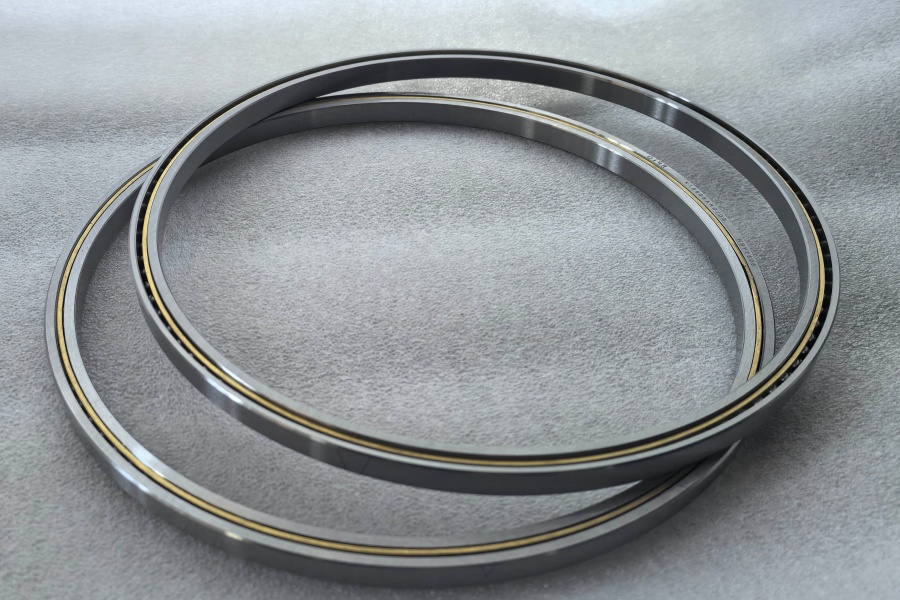
One Type X bearing can replace two Type A bearings in certain applications, but it is not a universal replacement.
If compactness, weight reduction, and multi-directional load capacity are the priorities, Type X may be an excellent choice.
If high rigidity, high axial capacity, or precise bearing arrangement is more important, two Type A bearings may be more suitable.
The best solution always depends on the specific operating conditions and performance requirements of the equipment.