Newsroom
Applications of Thin Section Ball Bearings in Robotics
2026-05-29Thin section ball bearings, with their three core advantages of ultra-thin cross-section, lightweight design, and high precision, have become key components in the joints, reducers, and precision motion units of industrial and humanoid robots, directly determining the robot's compactness, response speed, and positioning accuracy.
I. Core Advantages Adapting to Robot Needs
Extremely Compact, Space-Saving: With a cross-sectional thickness only 1/3–1/5 that of standard bearings and an outer diameter/inner diameter ratio typically less than 1.25, they can accommodate motors, reducers, and sensors within confined spaces such as joints, facilitating miniaturization and lightweight robot design. 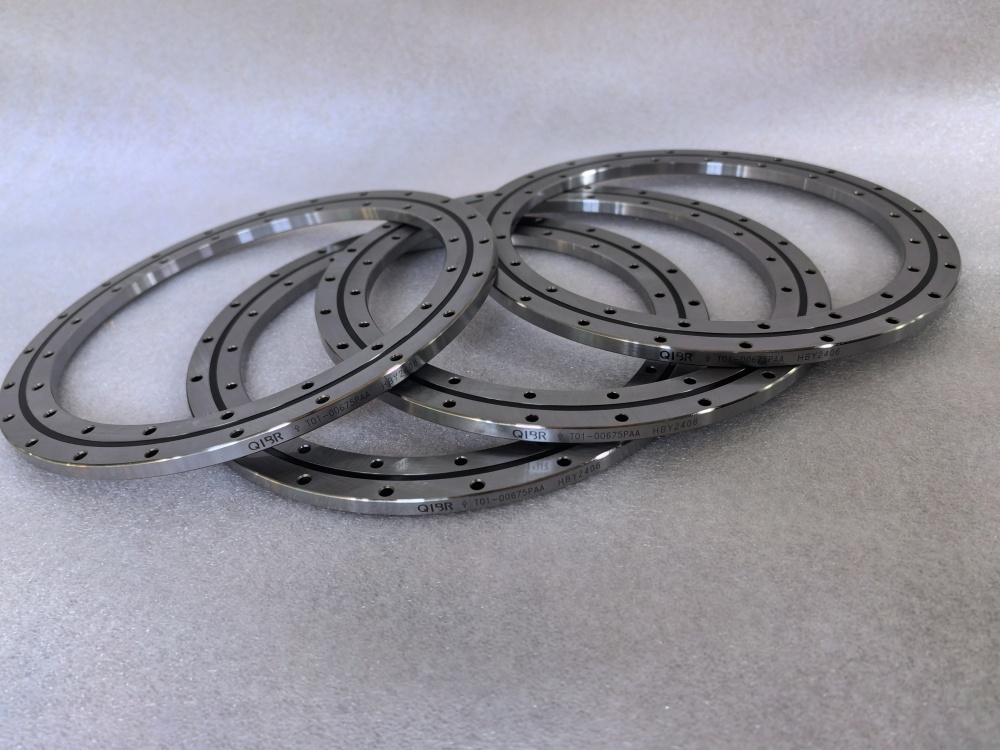
Lightweight and Low Inertia, Enhanced Dynamic Performance: Weighing 30%–50% less than standard bearings of the same inner diameter, they significantly reduce motion inertia, resulting in faster joint response, smoother start-stop, and reduced energy consumption, while improving endurance and load capacity.
High Precision and Low Friction, Ensuring Motion Quality: Rotational accuracy reaches the micron level, with a low coefficient of friction, resulting in smooth motion, low vibration, and minimal heat generation, meeting the positioning and repeatability requirements of high-precision scenarios such as assembly, welding, and medical surgery.
Composite load-bearing capacity, adaptable to complex working conditions: Deep groove ball bearings, angular contact bearings, and four-point contact bearings can simultaneously withstand radial and axial loads and overturning moments, adapting to multi-directional forces and complex movements of robot joints. 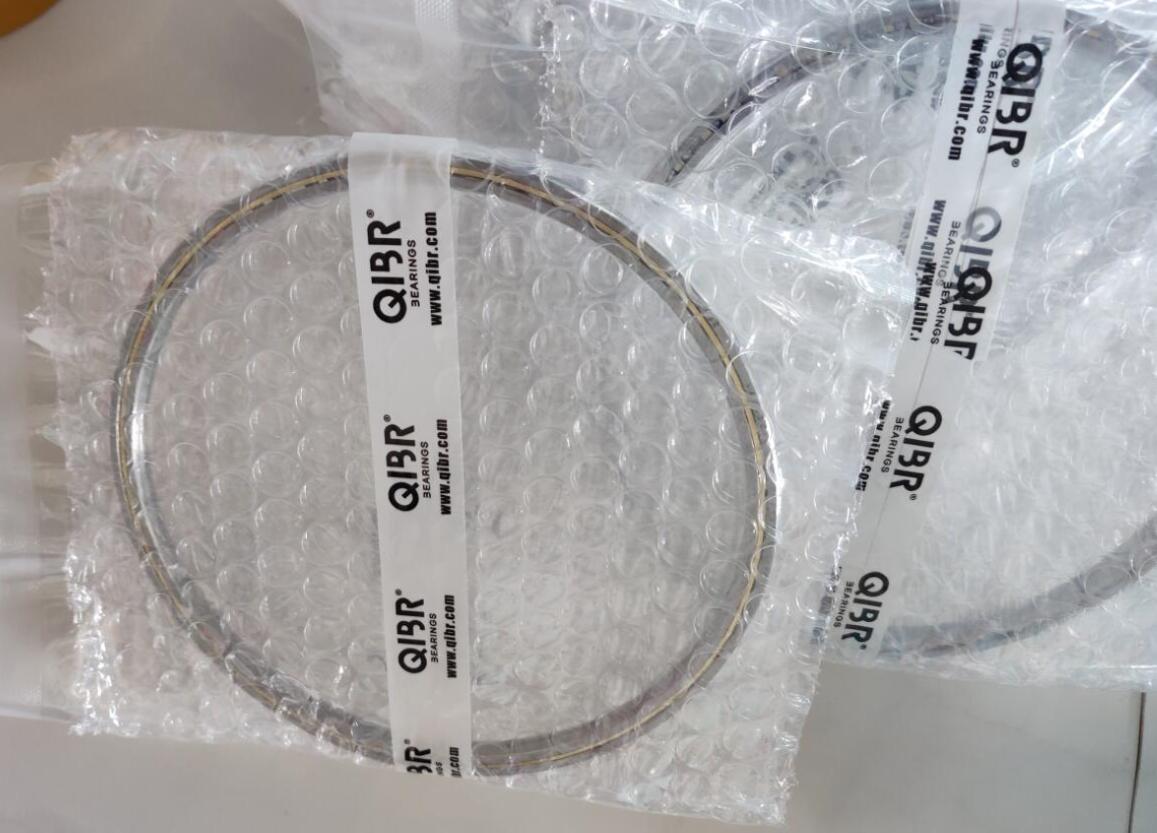
II. Typical Application Scenarios
Industrial Robot Joints: Shoulder, elbow, and wrist joints of robotic arms extensively utilize 68/69 series thin section deep groove ball bearings to achieve 360° rotation and high-precision oscillation, suitable for high-intensity operations such as welding, painting, and material handling.
Humanoid Robot Motion Joints: Hip, knee, ankle, and finger joints utilize thin section bearings with uniform cross-sections, achieving large-angle biomimetic movements while maintaining lightweight design. Examples include ±120° pitch and 360° rotation for the shoulder joint, and miniature bearings for finger flexion and extension.
Reducers and Precision Transmissions: Harmonic reducers and RV reducers integrate thin section bearings to support high-speed shafts and flexible components, ensuring reduction accuracy and transmission efficiency while minimizing reducer size. 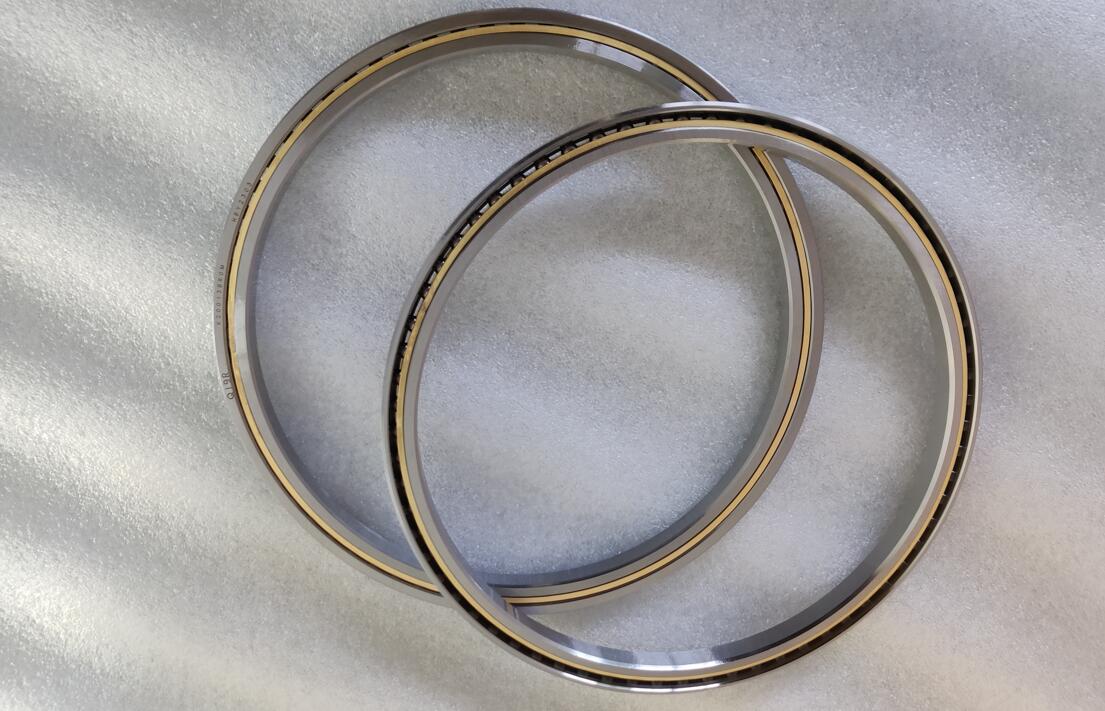
Medical and Collaborative Robots: Minimally invasive surgical robots and exoskeleton robots utilize miniature thin section bearings, which offer low friction, low noise, and high cleanliness, meeting the safety requirements of sterile environments and human-robot collaboration.
III. Application Value and Development Trends: Thin section ball bearings, through space optimization, weight reduction, efficiency improvement, and precision assurance, help robots enhance load capacity, dynamic performance, and reliability, while reducing design and maintenance costs. With the development of humanoid robots and precision industrial robots, bearings will evolve towards smaller cross-sections, higher precision, longer lifespans, and customization, employing ceramic balls, special lubrication, and sealing technologies to adapt to more demanding operating conditions.